
APEX EcoBuilt
Leading Manufacturer of Aluminum Systems & Modular Housing
APEX EcoBuilt
Leading Manufacturer of Aluminum Systems & Modular Housing
 20 Jul, 2026Knowledges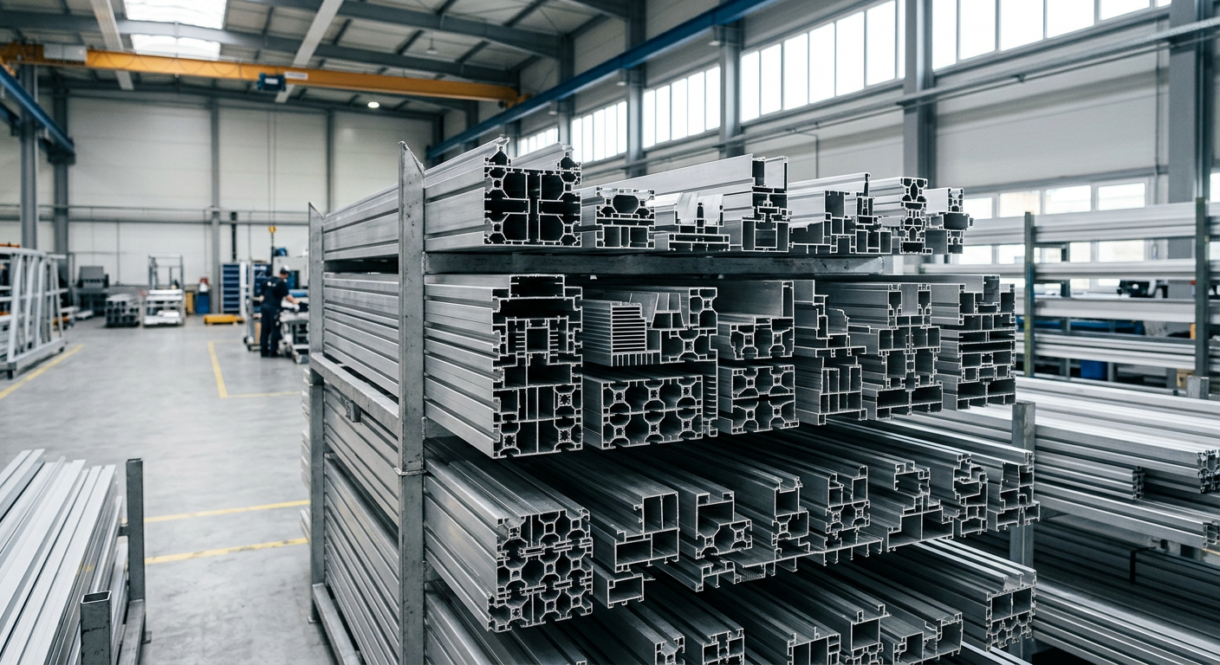
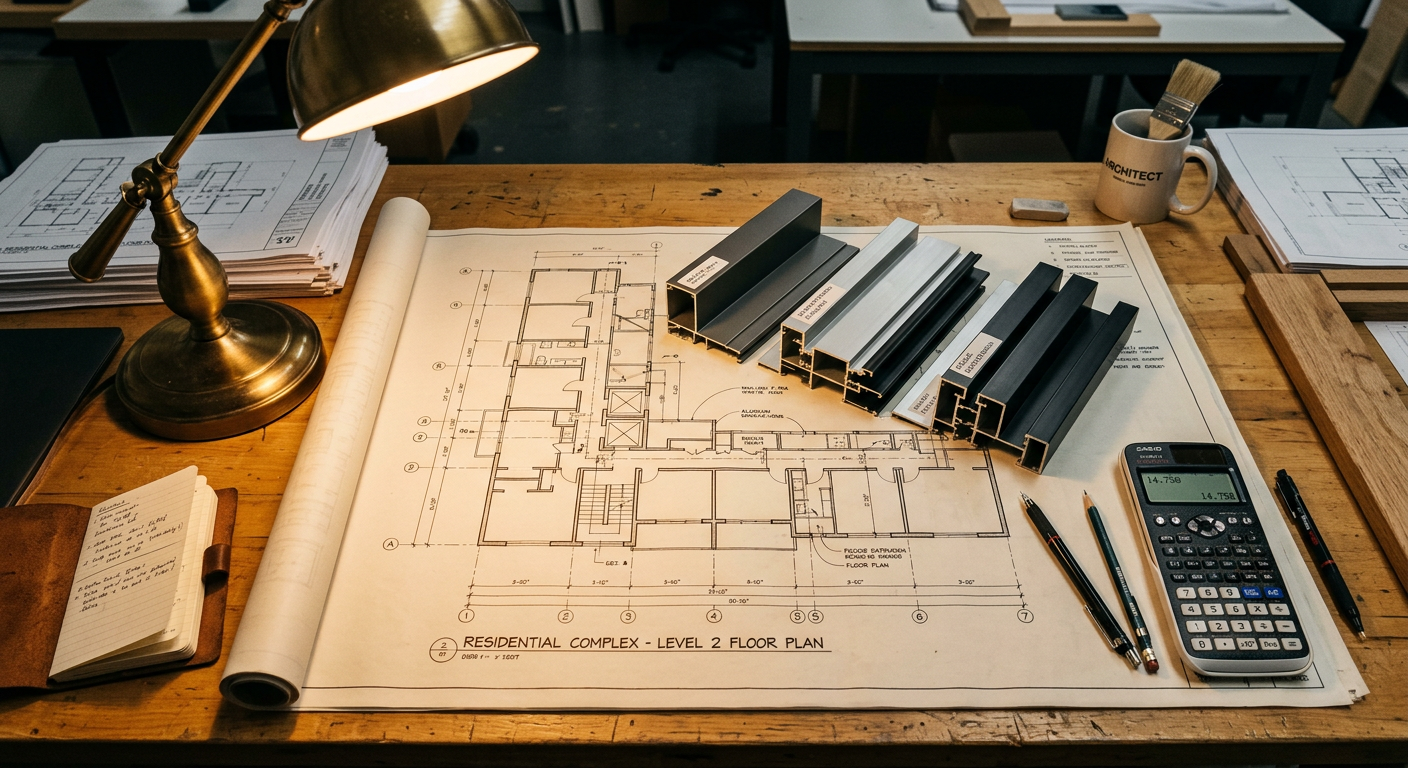
If you’re specifying aluminum for an architectural project, 6063 should be your default for extruded profiles — frames, mullions, decorative trim — and 6061 belongs where you need structural strength, like brackets, anchors, and load-bearing members. Most architects over-specify 6061 out of habit, pay more, and end up with worse anodized finishes. This guide unpacks why, with the mechanical numbers, finishing realities, and project-level decisions that should drive your spec.
Here’s the short version before we go deeper. 6063 is the architectural workhorse — it extrudes into thin-walled, complex profiles, anodizes beautifully, and resists corrosion. That’s why 90%+ of curtain wall mullions, window frames, and storefront systems use 6063, typically in T5 or T6 temper.
6061 is stronger but also stiffer to extrude, meaning you can’t get the intricate hollow profiles architects love without compromising tooling life and surface quality. Reserve it for structural connections, sub-framing, brackets, balcony rails that double as load paths, and anywhere bolt-bearing strength matters.
If you specify 6061-T6 for a window frame because you read “higher strength is better,” you’ll get a frame that costs more, anodizes unevenly, and offers no real performance benefit. The frame isn’t the bottleneck — the glass, gaskets, and anchors are.
The 6000 series is aluminum-magnesium-silicon alloy. Both 6061 and 6063 share the same family — the difference is composition ratios and how that translates to mechanical behavior.
The thing most spec writers miss: a curtain wall mullion isn’t strength-limited under wind load — it’s deflection-limited. You’re sizing to L/175 or stricter, which is governed by section modulus and elastic modulus. Both alloys have nearly identical Young’s modulus (~69 GPa). So upgrading from 6063-T6 to 6061-T6 doesn’t make your mullion stiffer. It just makes it stronger past a yield point you’ll never reach.
That’s the spec mistake we see most often on tender drawings.
Aluminum’s appearance after anodizing depends heavily on alloy purity and grain structure. 6063 has lower iron and manganese content, which produces a cleaner, more uniform anodic film. Architects get the deep, consistent bronze, black, or champagne finishes they actually want.
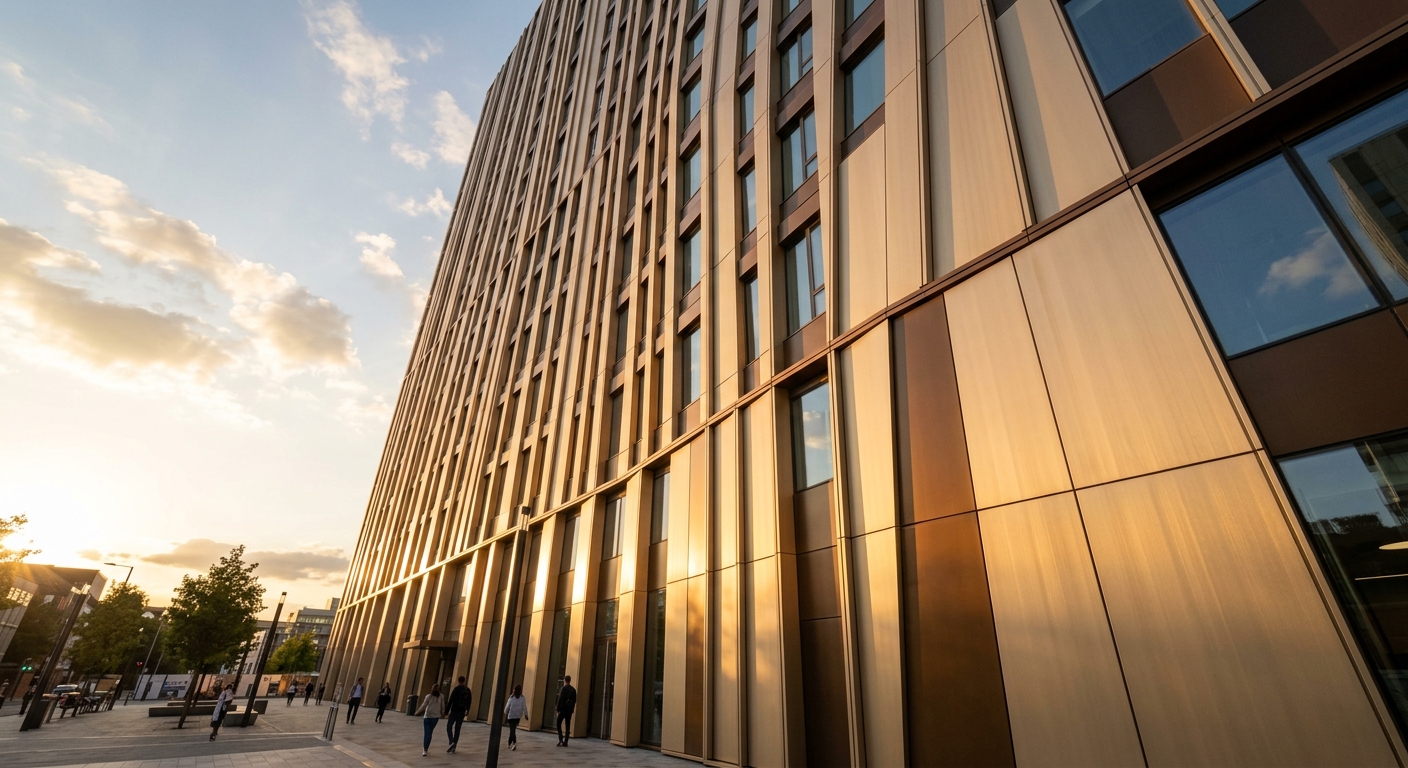
6061 contains more alloying elements, especially copper traces, which can cause streaking, mottling, or color shifts after anodizing. On a 40-story tower with thousands of mullions in direct sun, those inconsistencies become visible from across the street.
For powder-coated finishes the gap narrows — coating hides surface variation. But for clear or color anodizing, 6063 is genuinely better, not just cheaper. We’ve had clients insist on 6061 for the “quality feel,” then reject the finish samples. The metallurgy doesn’t care about your intuition.
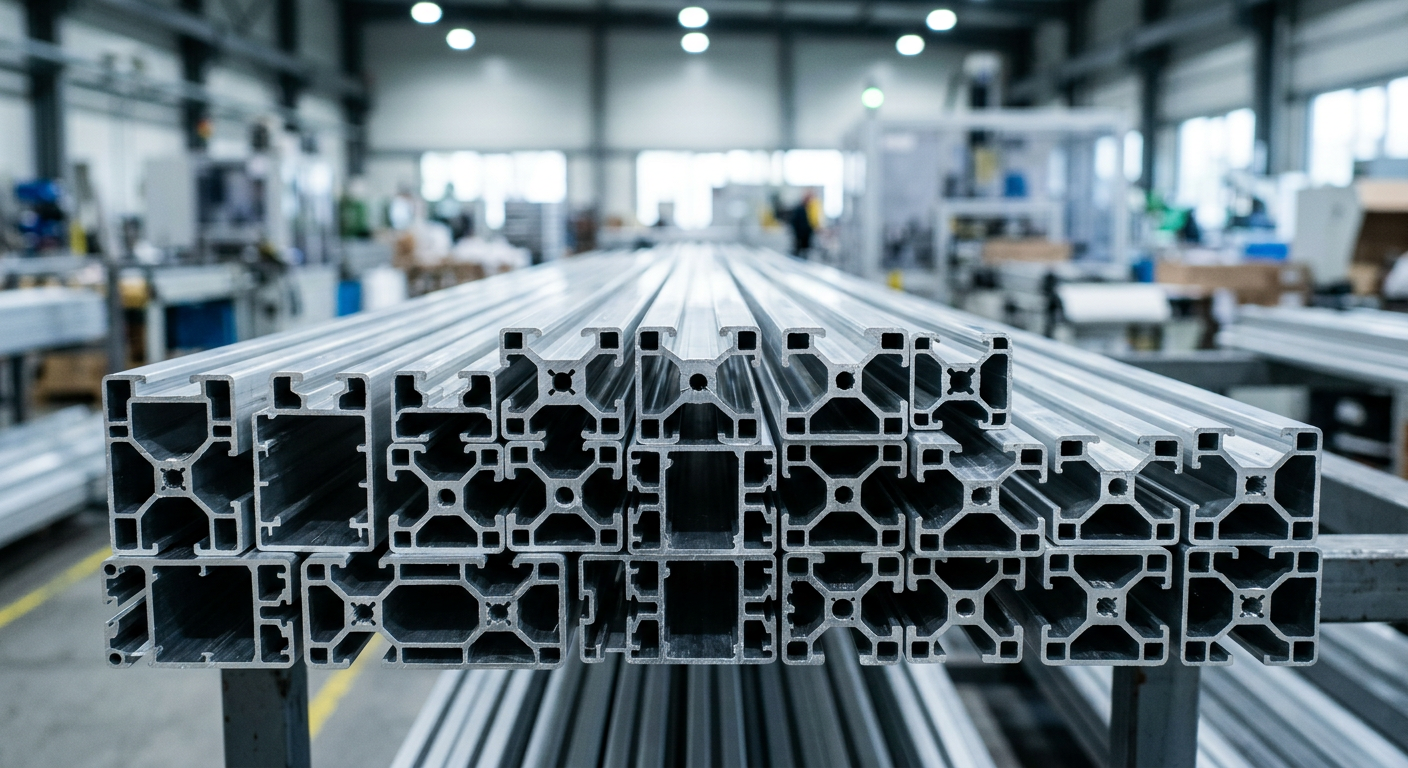
Extrusion is where these two alloys really diverge. 6063 flows through dies at lower pressure, allowing thinner walls (down to 1.0 mm), tighter tolerances, and complex multi-cavity hollow shapes. 6061 needs higher billet temperatures, higher press loads, and slower exit speeds — which means shorter die life and limits on profile complexity.
For a thermally broken curtain wall mullion with internal pockets for polyamide strips, drainage channels, and snap-in glazing beads, 6063 is essentially the only viable option. You physically cannot extrude that geometry in 6061 at production speed without distortion or surface tearing.
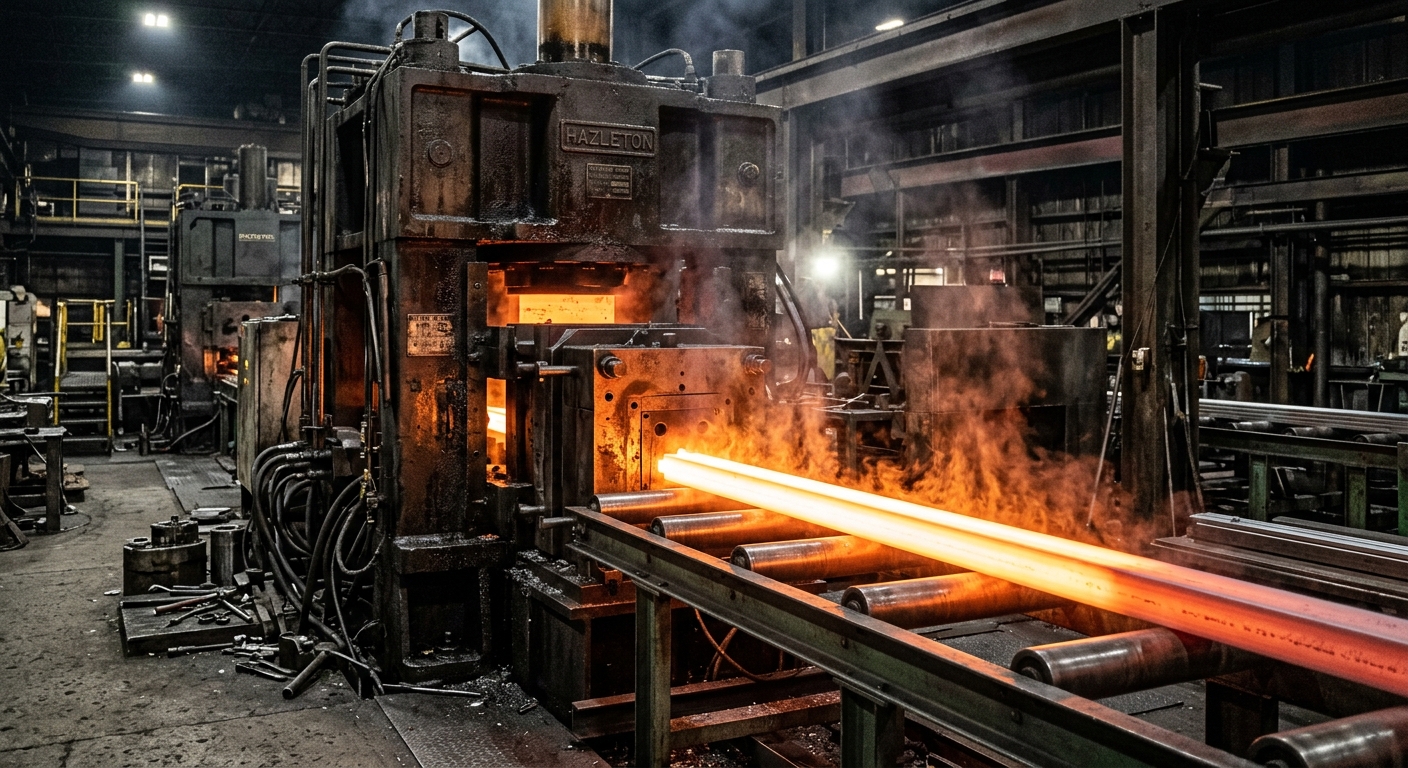
This is why our manufacturing operations run dedicated press lines for 6063 architectural sections and separate setups for 6061 structural shapes. They’re not interchangeable on the factory floor.
Don’t take this as “always use 6063.” There are clear cases where 6061 is the correct call:
For instance, a developer building modular hotel units in Saudi Arabia recently asked us to switch all extrusions to 6063 to save cost. We pushed back on the unit chassis — those carry the floor and roof loads, and 6063 wasn’t appropriate. We kept 6061-T6 on the chassis and used 6063-T6 for window and door frames. Net cost savings of about 11%, no compromise on structural integrity.
Picking the alloy is half the spec. Temper — the heat treatment state — is the other half.
For a 30-story curtain wall, specify 6063-T6 minimum. For low-rise storefronts, 6063-T5 saves money without performance loss. Don’t blindly write “6063” on a drawing without a temper — your supplier will deliver T5, and your engineer’s calculations may have assumed T6.
Raw billet cost between 6061 and 6063 differs by only about 4–7%. The bigger spread comes from extrusion economics. 6063 runs faster, with longer die life and higher yield, so finished extrusion pricing typically lands 12–18% lower than equivalent 6061 sections — sometimes more for complex hollow profiles.
On a 50,000 m² curtain wall project, switching from over-specified 6061 to correctly specified 6063-T6 has saved clients $180,000–$320,000 on extrusion costs alone, plus another 5–8% on finishing because anodize rejects drop sharply. Those numbers come from real projects we’ve supplied across the Middle East and Southeast Asia.
If you’re benchmarking quotes, see our breakdown on specifying curtain walls for harsh climates — alloy choice interacts with thermal performance in ways that aren’t always obvious from a unit price.
Vague specs invite substitution. Tight specs get what you drew. Here’s the language we recommend on tender documents:
A common pitfall: writing “6063 or equivalent” on a spec. There is no equivalent in the architectural extrusion world. That phrase opens the door for cheap substitutes with unknown chemistry and inconsistent finishes. Delete it.
Both alloys can be made from high recycled content — typically 60–85% post-consumer scrap — without affecting mechanical properties, because the alloying process re-balances chemistry to spec. If you’re chasing LEED, BREEAM, or EU Taxonomy compliance, ask your supplier for an Environmental Product Declaration (EPD) that lists embodied carbon per kg of finished extrusion.
Standard primary aluminum extrusion runs ~12–16 kg CO₂e/kg. High-recycled-content 6063 from hydro-powered smelters can drop to 2.5–4 kg CO₂e/kg. That’s a 70%+ reduction with no spec change — just supply chain choice. We cover this trade-off in more depth in our piece on modular vs traditional eco construction carbon savings.
Spec 6063-T6 for curtain wall mullions, window frames, and architectural trim. Spec 6061-T6 for brackets, structural sub-framing, and load-bearing modular chassis. Always pair the alloy with a temper and a finish standard. Always ask for the EPD.
Get those four decisions right and you’ll avoid the most common — and most expensive — aluminum specification mistakes on architectural projects.
If you’d like a project-specific recommendation, our engineering team reviews drawings and produces alloy-and-temper schedules tailored to load, climate, and finish requirements. Browse our extrusion products and delivered projects for reference, or send us your spec for a technical review.




Arabic

English

Spanish
Fill out the form below and our team will get back to you within 24 hours with a tailored solution.
