
APEX EcoBuilt
Fabricante líder de sistemas de aluminio y viviendas modulares
APEX EcoBuilt
Fabricante líder de sistemas de aluminio y viviendas modulares
 27 jul, 2026Empresa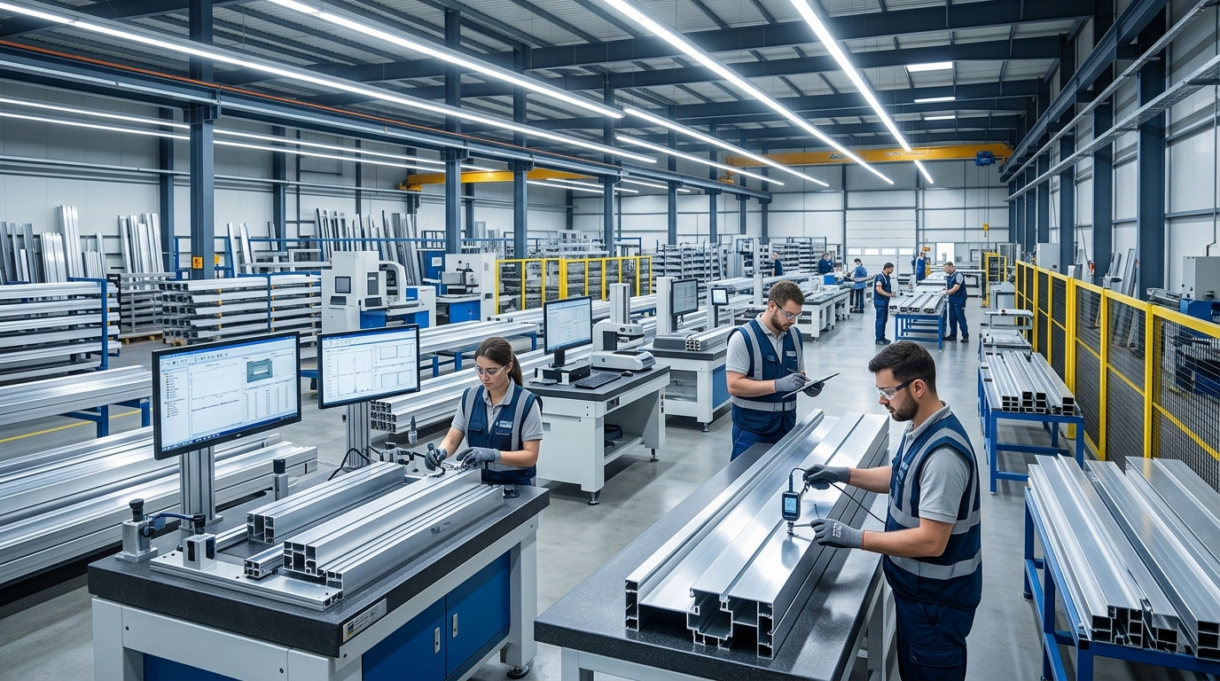
Las más de 179 patentes de Apex Eco Built no son trofeos en una pared, sino que están integradas en el utillaje, los métodos de inspección y los controles de proceso que producen cada perfil de aluminio, unidad de muro cortina y estructura modular que sale de nuestra fábrica de 150.000 m². El resultado: tolerancias de extrusión más ajustadas (±0,08 mm en perfiles críticos frente a la norma del sector de ±0,20 mm), películas anodizadas más gruesas y uniformes, y conjuntos de rotura de puente térmico que superan las 3.000+ horas de prueba de niebla salina. Así es como esto se traduce en sistemas en los que su proyecto puede confiar realmente.
La mayoría de los compradores asumen que las patentes significan diseños de productos novedosos. En la fabricación de aluminio, el valor real reside en las patentes de proceso, y ahí es donde se encuentra la mayor parte de las nuestras.
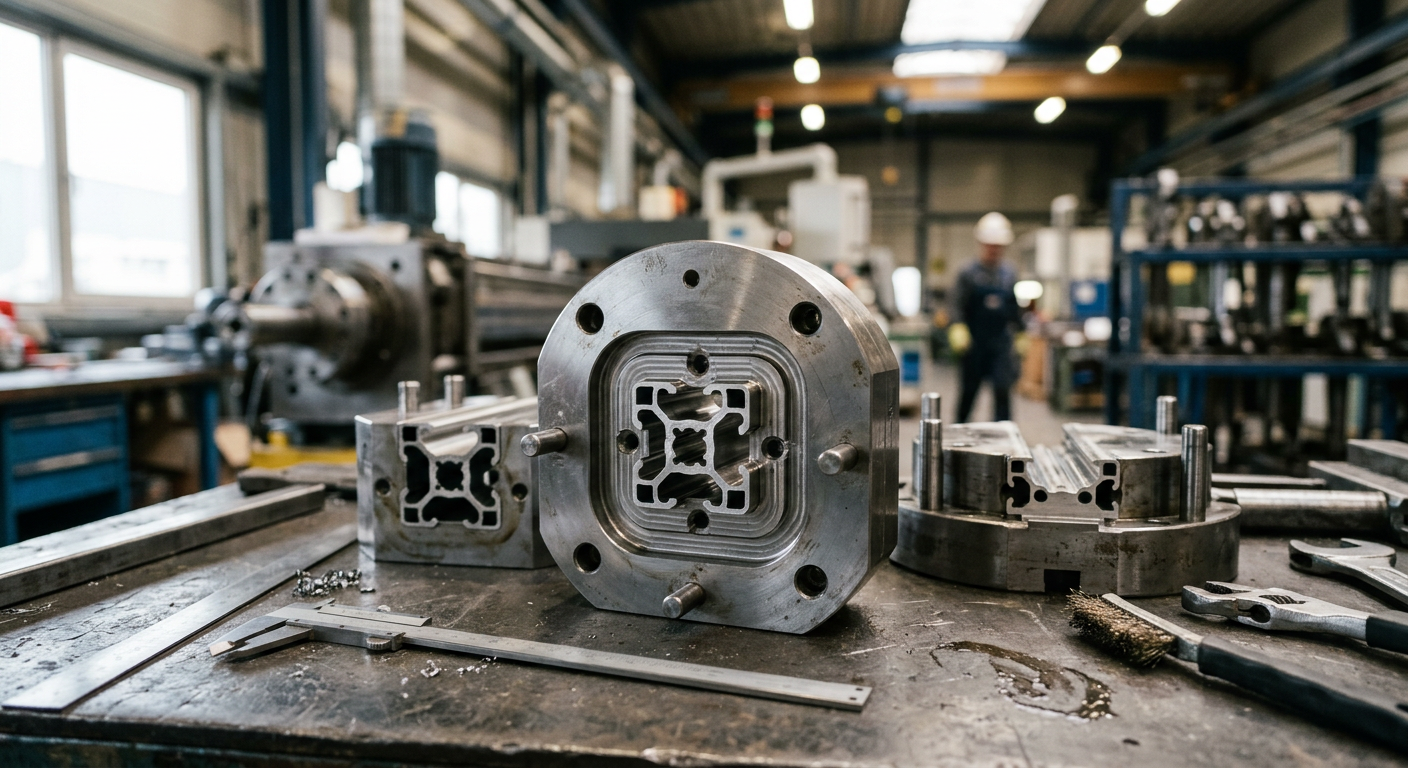
Aproximadamente dos tercios de nuestra cartera cubren métodos de fabricación: técnicas de enfriamiento de matrices que reducen la deriva dimensional, ajustes en la química del baño de anodizado que producen películas más uniformes, secuencias de inyección de rotura de puente térmico que eliminan la formación de huecos. El tercio restante cubre innovaciones estructurales: juntas de muro cortina unitizado entrelazadas, conexiones de esquina modulares y geometrías de herrajes que mejoran la estanqueidad al aire y al agua.
¿Por qué es importante esta distinción? Porque una patente de producto beneficia a un SKU. Una patente de proceso beneficia a todo lo que pasa por ese proceso. Cuando patentamos una forma más inteligente de templar una extrusión, cada perfil aguas abajo sale más recto. Ese efecto compuesto es el verdadero motor detrás de una calidad constante a escala, algo que exploramos más a fondo en nuestra descripción general de capacidades de fabricación overview.
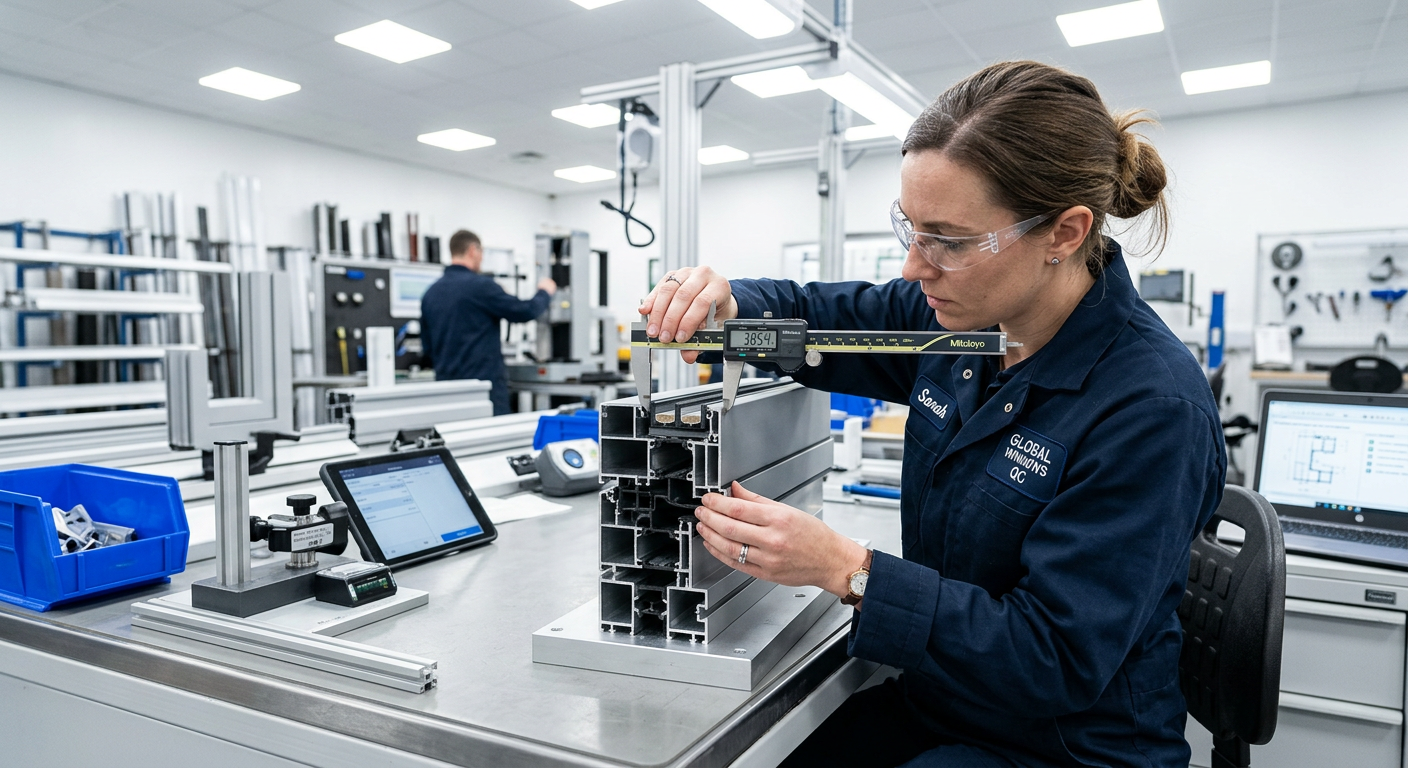
La calidad no es una inspección final. Son cinco puertas separadas, cada una con sus propios criterios de apto/no apto.
Cada tocho de 6063-T5 o 6061-T6 se somete a un análisis espectrométrico de la composición de la aleación antes de tocar una prensa. Rechazamos cualquier cosa fuera de ±0,05% en magnesio y silicio, los dos elementos que más afectan a la extruibilidad y la resistencia final.
Los perfiles se miden con láser en tres puntos a lo largo de su longitud en los 30 segundos posteriores a la salida de la prensa. Las secciones fuera de tolerancia se marcan antes de que el metal se enfríe y fije el defecto.
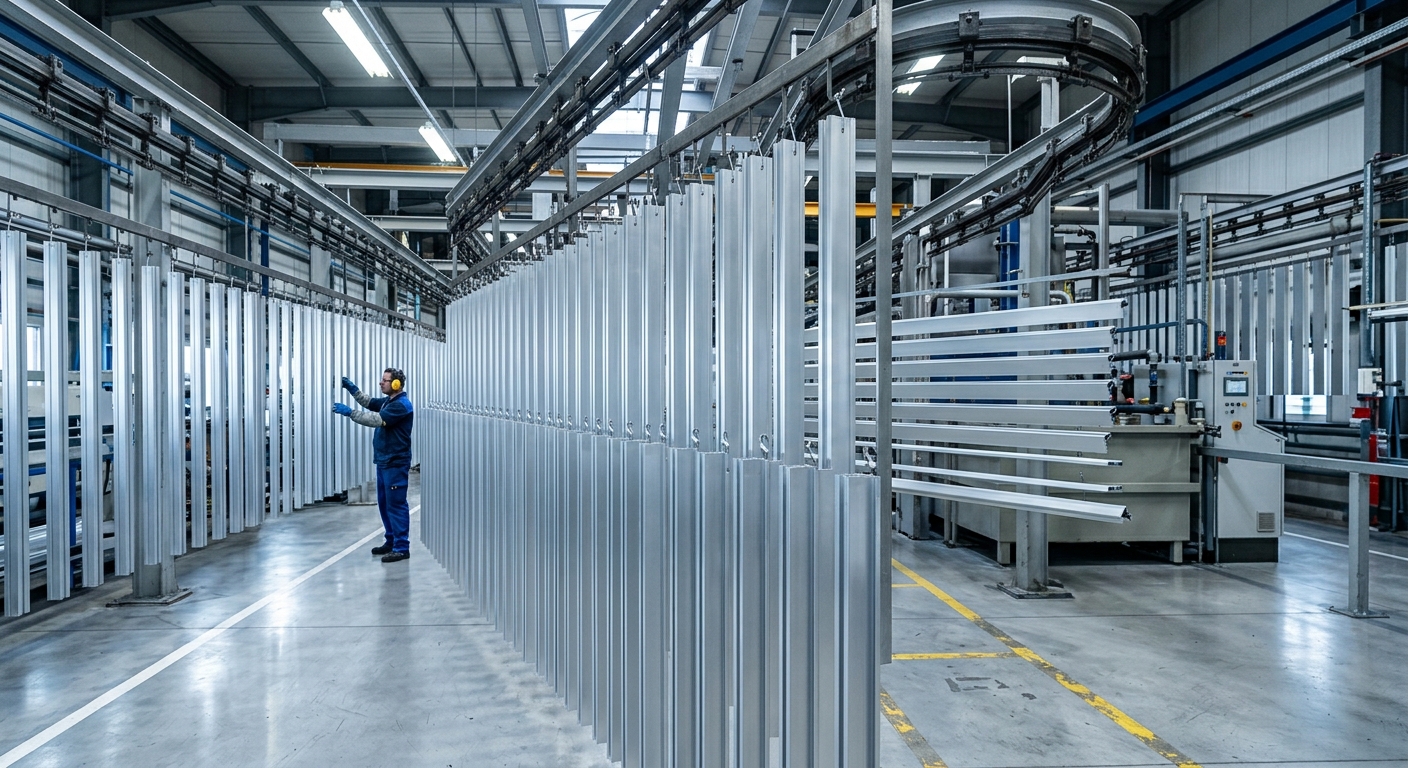
El espesor de la película anodizada se mide en cinco puntos por perfil utilizando calibres de corrientes de Foucault. Los recubrimientos en polvo se verifican en cuanto a espesor de película, brillo y adherencia (prueba de cinta de corte en cruz).
Las tiras de poliamida se someten a pruebas de cizallamiento por lote. Rechazamos si la resistencia al cizallamiento es inferior a 24 N/mm, muy por encima del mínimo de 24 N/mm a temperatura ambiente de la norma EN 14024.
Se extrae un 5% aleatorio de cada pedido para una reinspección completa. Si dos unidades fallan, se revisa todo el lote.
Una desviación de 0,1 mm parece insignificante. En un muro cortina unitizado de 40 plantas, no lo es.
Apile 60 plantas de paneles unitizados y una deriva vertical constante de 0,15 mm por junta se convierte en 9 mm de desalineación acumulada en la parte superior, suficiente para arruinar la compresión de la junta y dejar pasar el agua. Nuestro proceso patentado de enfriamiento de matrices mantiene la rectitud vertical crítica del montante dentro de 0,5 mm por cada 6 m de longitud, aproximadamente la mitad del estándar de la industria de 1,0 mm.
Para un contraste real: un promotor de Oriente Medio que trabajó con nosotros en una torre de 180 m descubrió que unas tolerancias más ajustadas en los montantes redujeron su mano de obra de calce en obra en aproximadamente un 40% en comparación con un proveedor anterior. Eso no es un número de marketing, es un jefe de proyecto comparando dos partes de horas. Para proyectos en climas adversos específicamente, consulte nuestro desglose sobre especificación de muros cortina para condiciones de Oriente Medio.
Dos perfiles anodizados pueden tener el mismo aspecto y un rendimiento totalmente diferente. La variable es el espesor de la película y la calidad del sellado.
La especificación AAMA 611 define tres clases arquitectónicas: Clase II (mínimo 10 μm) para interiores o exteriores suaves, y Clase I (mínimo 18 μm) para exteriores severos. Muchos proveedores de bajo coste cotizan "anodizado" sin especificar la clase, y entregan películas de 8 a 12 μm que se desempolvan en cinco años en entornos costeros o desérticos.
Nuestro estándar es de 15 μm para sistemas interiores y 20–25 μm verificado para proyectos costeros, desérticos y de alta radiación UV. En recubrimiento en polvo, utilizamos sistemas de fluoropolímero (PVDF) clase AAMA 2605 que resisten más de 3000 horas de niebla salina y más de 10 años de exposición en el sur de Florida con un cambio de color inferior a 5 ΔE. ¿La patente? Un proceso de conversión de pretratamiento libre de cromatos que mejora la adherencia del recubrimiento en un 20% respecto a los métodos estándar, y además cumple con REACH.
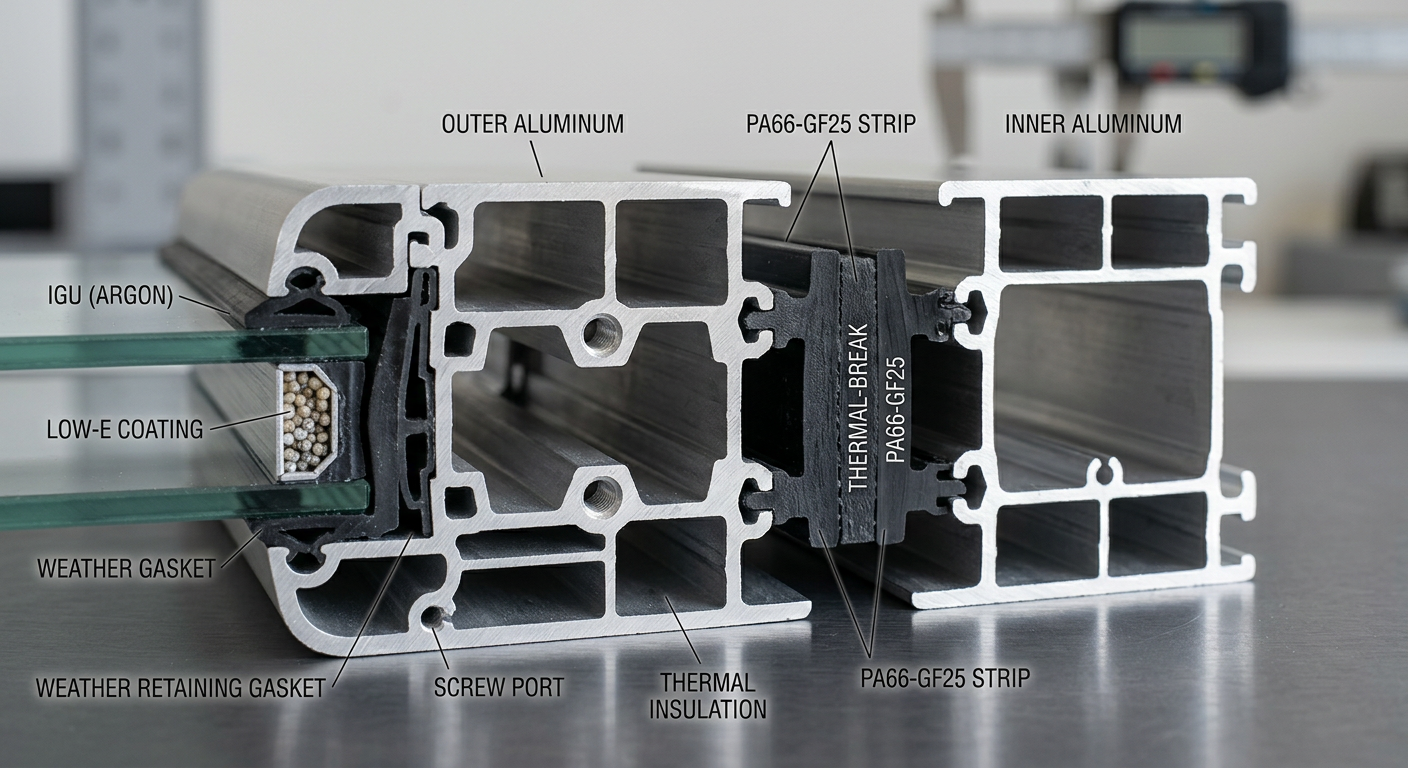
La tira de poliamida entre los perfiles de aluminio interior y exterior es el componente más propenso a fallos en un muro cortina térmico. Si se hace mal, el valor U se desploma entre un 30 y un 50%.
Tres cosas suelen salir mal: huecos en el proceso de laminado, pérdida de resistencia al corte a temperaturas elevadas y absorción de humedad que hincha la poliamida y tensiona el canal de aluminio. Nuestro proceso patentado de crimpado con doble rodillo aplica presión en dos etapas en lugar de una, eliminando los microhuecos que causan puntos fríos y vetas de condensación.
También realizamos una prueba de ciclo térmico Sabin (-40°C a +80°C, 100 ciclos) en cada nuevo conjunto de rotura de puente térmico antes de la producción en masa. Para una cadena de hoteles nórdicos a la que suministramos el año pasado, esto detectó un lote de poliamida que cumplía con las especificaciones de resistencia al corte a temperatura ambiente pero perdía un 18% de resistencia a -30°C, exactamente las condiciones que enfrentaría su sitio. Detectarlo antes de la producción evitó una costosa reparación de fachada de millones de dólares.
Para estructuras modulares, las patentes pasan de las herramientas de extrusión a la geometría de las conexiones y los detalles de impermeabilización.
Dos ejemplos: un acoplamiento de esquina patentado de ocho puntos que distribuye las cargas de apilamiento de manera más uniforme en edificios modulares de varias plantas (lo que nos permite enviar módulos prefabricados de seis pisos sin refuerzo en obra) y una junta de junta entre módulos tipo laberinto que alcanza un rendimiento Clase 4 frente a lluvia impulsada por viento según EN 12865, sin necesidad de sellador húmedo en obra.
Las implicaciones para el control de calidad son reales. Debido a que las conexiones están enclavadas mecánicamente y tienen tolerancias dimensionales ajustadas, nuestros equipos de instalación y clientes no dependen de la calidad del sellado para mantener los edificios estancos. Para operadores en sitios remotos (como campamentos mineros en Mongolia o viviendas para campos petroleros en los EAU), esa es la diferencia entre una vida útil de cinco años y una de quince años. Explore la gama completa de soluciones modulares para configuraciones específicas del sector.
Cada perfil que sale de nuestra fábrica lleva un ID grabado con láser que lo vincula al lote de tocho, la tirada de prensa, el operador, el lote de tratamiento superficial y el inspector final. Se tarda 30 segundos en consultarlo; puede ahorrarle seis cifras a un proyecto.
He aquí por qué: cuando un contratista de fachadas reporta un defecto de recubrimiento tres años después de la instalación, los proveedores genéricos se encogen de hombros y ofrecen un reemplazo simbólico. Con trazabilidad a nivel de perfil, podemos identificar exactamente qué lote estuvo involucrado, verificar si otros envíos del mismo lote están en riesgo y ofrecer una reparación quirúrgica en lugar de adivinar.
Aquí es también donde nuestros sistemas ISO 9001 e ISO 14001 hacen un trabajo real. Los auditores no solo verifican que tengamos procedimientos, sino que confirman que los registros digitales coinciden con el producto físico en el estante. Cada trimestre. Sin previo aviso.
Si está redactando una licitación o evaluando un proveedor, estas son las cuatro cláusulas de control de calidad que separan la calidad genuina de las afirmaciones de marketing:
Los proveedores que puedan responder a las cuatro sin titubear son los que vale la pena preseleccionar. Para conocer más errores comunes en la selección de proveedores, nuestro artículo sobre ventajas y desventajas de la construcción modular frente a la tradicional aborda algunos de los mismos temas desde una perspectiva de sostenibilidad.
La forma más rápida de evaluar a cualquier proveedor de aluminio es pedir un informe de auditoría de fábrica reciente y un registro de inspección de muestras de un proyecto comparable. Si dudan, ya tienes la respuesta. Si lo entregan con detalle por partida, probablemente has encontrado un socio que vale la pena especificar.
En Apex Eco Built, las más de 179 patentes, los cinco controles de calidad y el sistema de trazabilidad certificado ISO no son un discurso de ventas: son la forma en que seguimos entregando a desarrolladores, contratistas y propietarios de proyectos públicos en más de 80 países sin las reclamaciones y disputas de garantía que plagan esta industria. Si estás evaluando un muro cortina o un paquete modular y quieres ver cómo es la documentación de QC genuina, ponte en contacto con nuestro equipo de ingeniería o explora nuestros casos de estudio de proyectos actuales como referencia.


Árabe

Inglés

Español
Complete el formulario a continuación y nuestro equipo se comunicará con usted dentro de las 24 horas con una solución personalizada.
