
APEX EcoBuilt
Leading Manufacturer of Aluminum Systems & Modular Housing
APEX EcoBuilt
Leading Manufacturer of Aluminum Systems & Modular Housing
 06 May, 2026Industry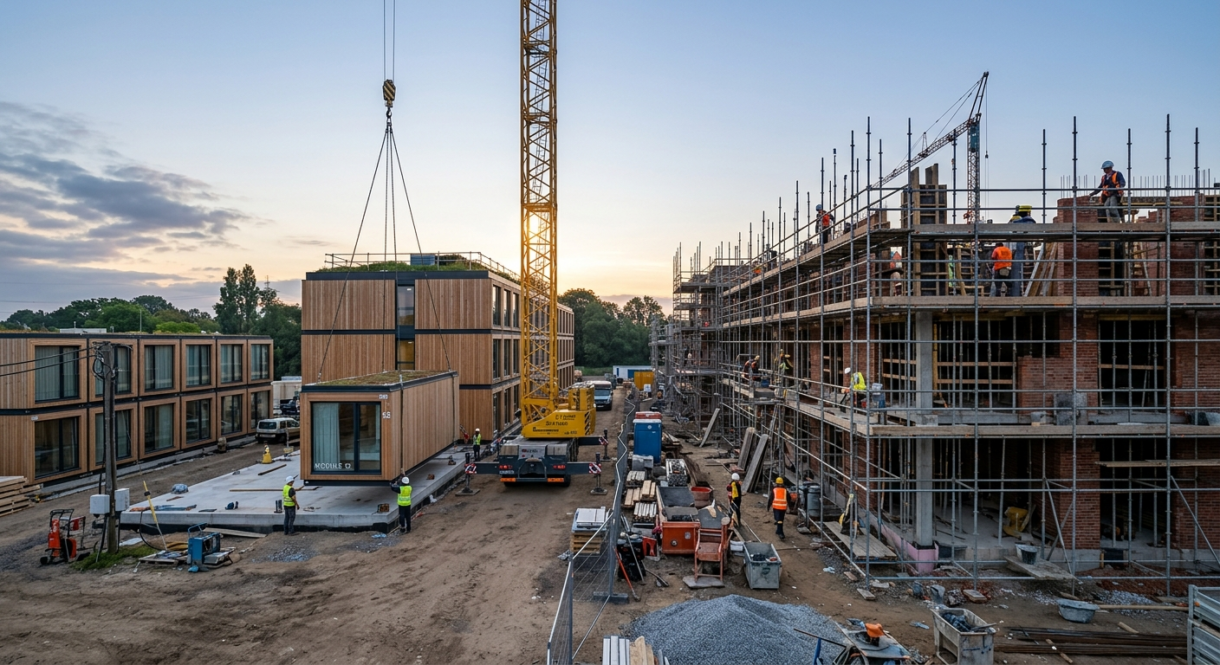
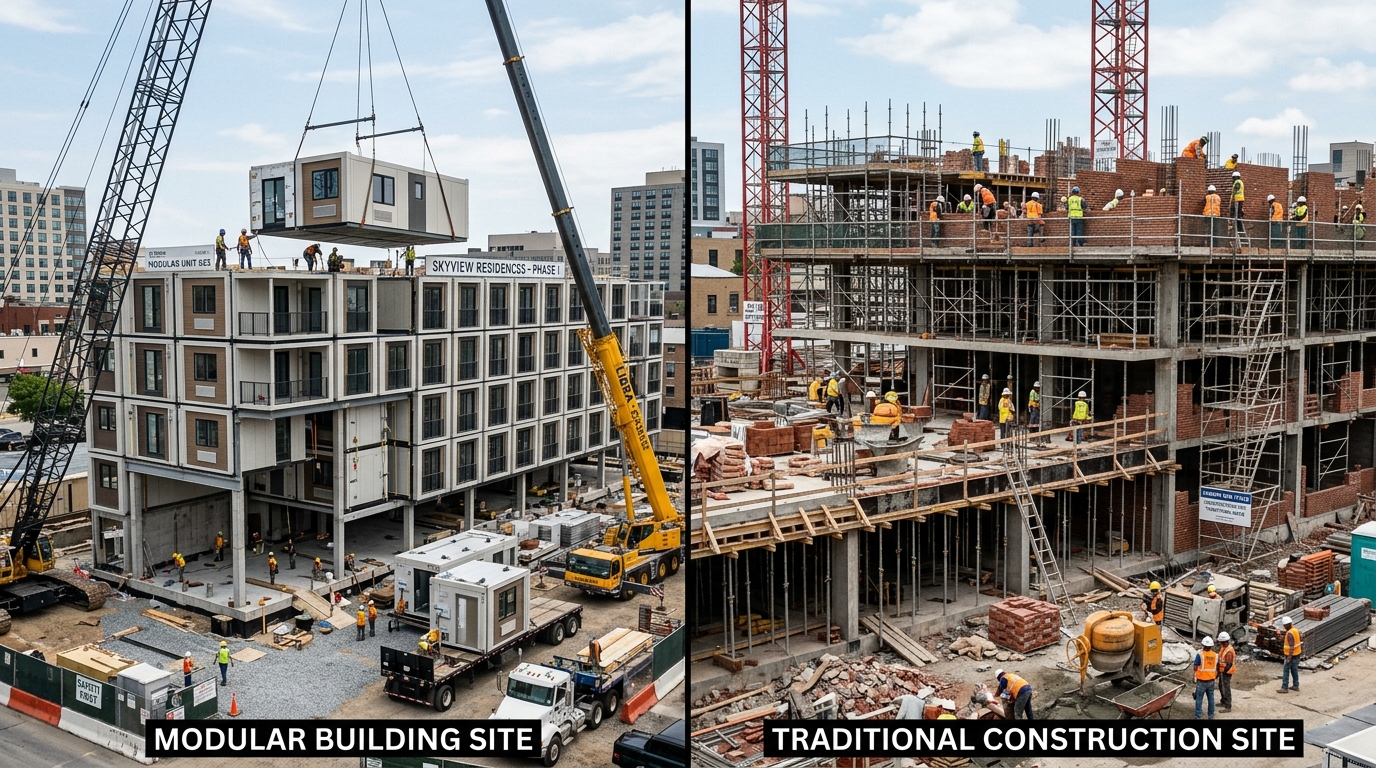
Modular eco construction generally saves more carbon than traditional site-built green projects — on average 30–45% less embodied carbon, up to 70% less on-site waste, and significantly shorter build cycles that cut fuel and energy use. But the gap narrows (or even flips) when modules travel long distances, when the factory runs on dirty grid power, or when the traditional project uses highly localized low-carbon materials. The honest answer: modular usually wins, but only if you design the whole supply chain around carbon, not just the building.
Most people assume modular is greener because it’s “prefab.” That’s lazy thinking. The real savings come from four specific places, and knowing them helps you spec a project properly.
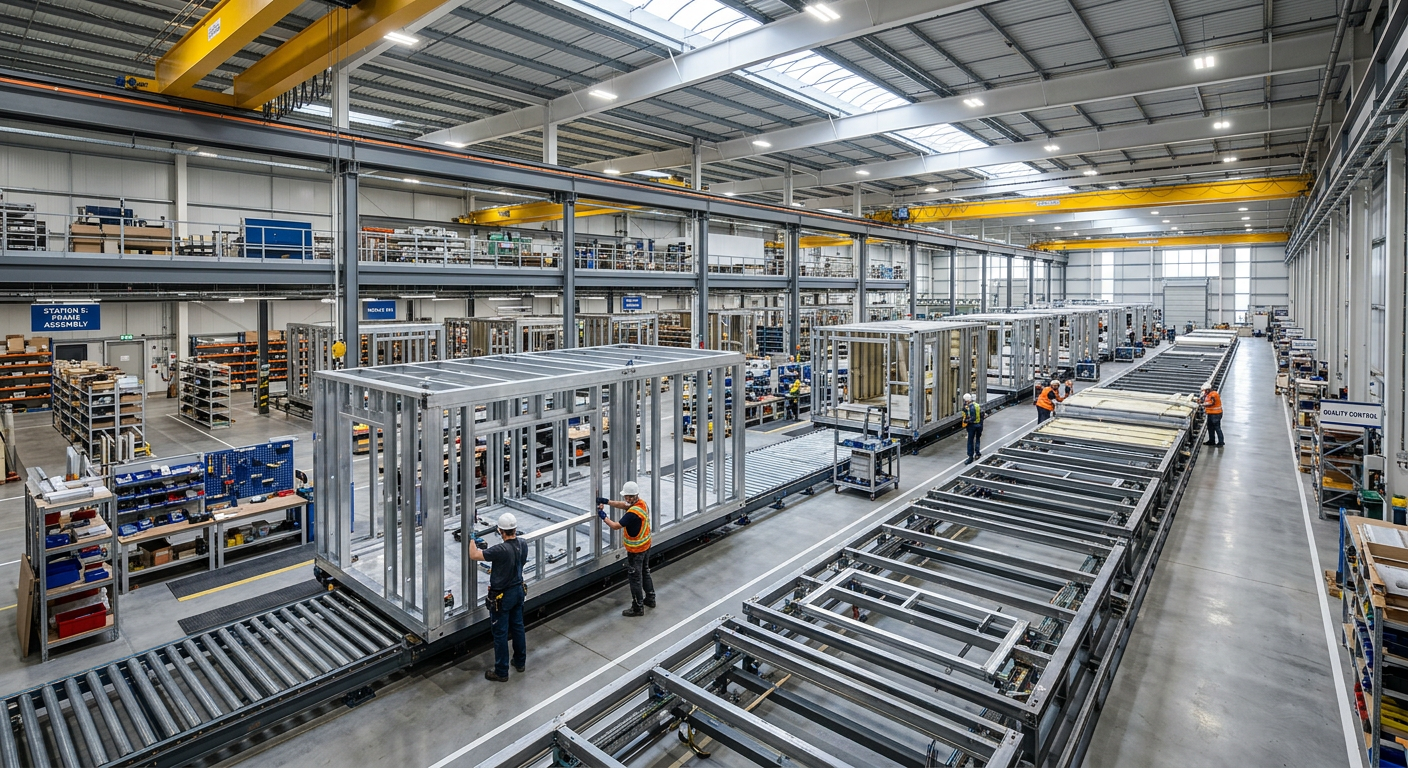
1. Material efficiency. Factory cutting reduces off-cuts from roughly 20–30% on site to 5–10% in a controlled line. For an average 100 m² modular hotel room module, that’s about 1.2–1.8 tonnes of material waste avoided.
2. Shorter site duration. A traditional eco building might take 12–18 months on site. A modular equivalent drops that to 3–6 months. Fewer diesel generators, fewer crane hours, fewer worker commutes.
3. Repeatable precision. When you make 200 identical wall panels, you optimize once and reap the carbon benefit 200 times. Traditional construction re-solves the same problem at every site.
4. Reusability. A steel-framed modular unit can be disassembled and redeployed. A cast-in-place concrete wall becomes rubble. That end-of-life difference is huge over a 60-year asset lifecycle.
Here’s a mistake I see in nearly every buyer’s sustainability brief: lumping all carbon into one number. You have to split it.
All the emissions from extracting, manufacturing, transporting, and assembling the materials. This is where modular shines — factory optimization, scrap reduction, and lighter structural systems (aluminum, cold-formed steel) cut 30–45% versus a traditional concrete-and-brick eco build.
The emissions from running the building — heating, cooling, lighting — over decades. Here the method matters less than envelope quality, glazing performance, and HVAC choice. A traditional build with a high-performance curtain wall system can match or beat a poorly-specified modular box.
The point: modular gives you a head start on embodied carbon, but you still have to design the envelope properly. Don’t let a factory’s brochure do your engineering for you.
Here’s how the two approaches stack up across the criteria that actually matter to developers, contractors, and project owners:
| Criteria | Modular Eco Construction | Traditional Eco Construction |
|---|---|---|
| Embodied carbon reduction | 30–45% lower | Baseline |
| On-site construction waste | ~5–10% | ~20–30% |
| Build time on site | 50–70% faster | Standard |
| Energy use during build | Lower, factory-controlled | Higher, weather-exposed |
| Transport emissions | Higher per trip | Lower, local materials |
| Design flexibility on site | Limited once fabricated | High |
| End-of-life reusability | High — relocatable units | Low — demolition |
| Best fit | Hotels, housing, remote sites | Complex one-off landmarks |
Read the table as a decision matrix, not a scoreboard. If your project is a remote resort in the desert, modular is an obvious call. If it’s a one-off civic landmark in a dense historic city center, traditional with bio-based materials may win on total footprint.
Modular isn’t automatically greener. The one scenario where traditional construction beats it on carbon is long-distance shipping of finished modules.
A 40-foot modular unit trucked 2,000 km can add 4–6 tonnes of CO₂e in transport alone. Ship it across an ocean, and you might burn through your factory savings before the building even lands.
The fix isn’t to abandon modular — it’s to plan smarter:
For context, our manufacturing facility was designed around exactly this logic: consolidate high-precision work, ship dense or flat-packed components, and minimize wasted volume in transit.

Let’s make this concrete. A resort developer in the Gulf region was weighing two options for a 120-room eco-resort on a coastal site 400 km from the nearest urban center.
Option A — Traditional: Reinforced concrete frame, locally-sourced stone cladding, site-built. Estimated build time: 22 months. Projected embodied carbon: roughly 680 kg CO₂e/m².
Option B — Modular: Aluminum-framed modular rooms fabricated in a regional factory, trucked in on flatbeds, assembled on a lightweight foundation. Estimated build time: 9 months. Projected embodied carbon: roughly 410 kg CO₂e/m².
The modular option came in 40% lower on embodied carbon, even after accounting for the 400 km truck haul. The decisive factors were the lightweight aluminum structure (vs. concrete), the 75% reduction in on-site waste, and the ability to open the resort 13 months earlier — which itself has a carbon cost avoided in temporary site infrastructure.
This kind of comparison is why we push clients to run the numbers per project rather than rely on industry averages. See similar deployments in our project portfolio for reference.
The building method matters, but the materials inside it matter more. Three choices swing the carbon math dramatically either way:
Recycled aluminum has roughly 5% the embodied carbon of primary aluminum. A modular frame using 70%+ recycled aluminum can actually outperform timber on a 60-year lifecycle when you factor in durability and recyclability. Primary (virgin) aluminum, on the other hand, is one of the most carbon-intensive materials out there — so always ask for recycled content percentage.
Double-glazed low-E is table stakes now. Triple-glazed with argon fill adds embodied carbon but repays it within 4–7 years through operational savings in cold or hot climates. For Middle East and European projects, specify solar-control coatings — they’re a bigger lever than wall insulation.
Mineral wool has about half the embodied carbon of foamed polyurethane for the same R-value. If carbon is the priority, default to mineral wool unless moisture or space constraints force a change.
Our integrated aluminum and envelope solutions let buyers specify these trade-offs at the design stage rather than discover them at delivery.
Every manufacturer claims to be “eco.” Most are lying, or at least stretching. Here’s how to verify:
For a rough benchmark: a credible low-carbon modular supplier should provide EPDs on at least their primary structural and envelope components, and be able to show recycled content percentages by weight. Anything less is marketing, not evidence.
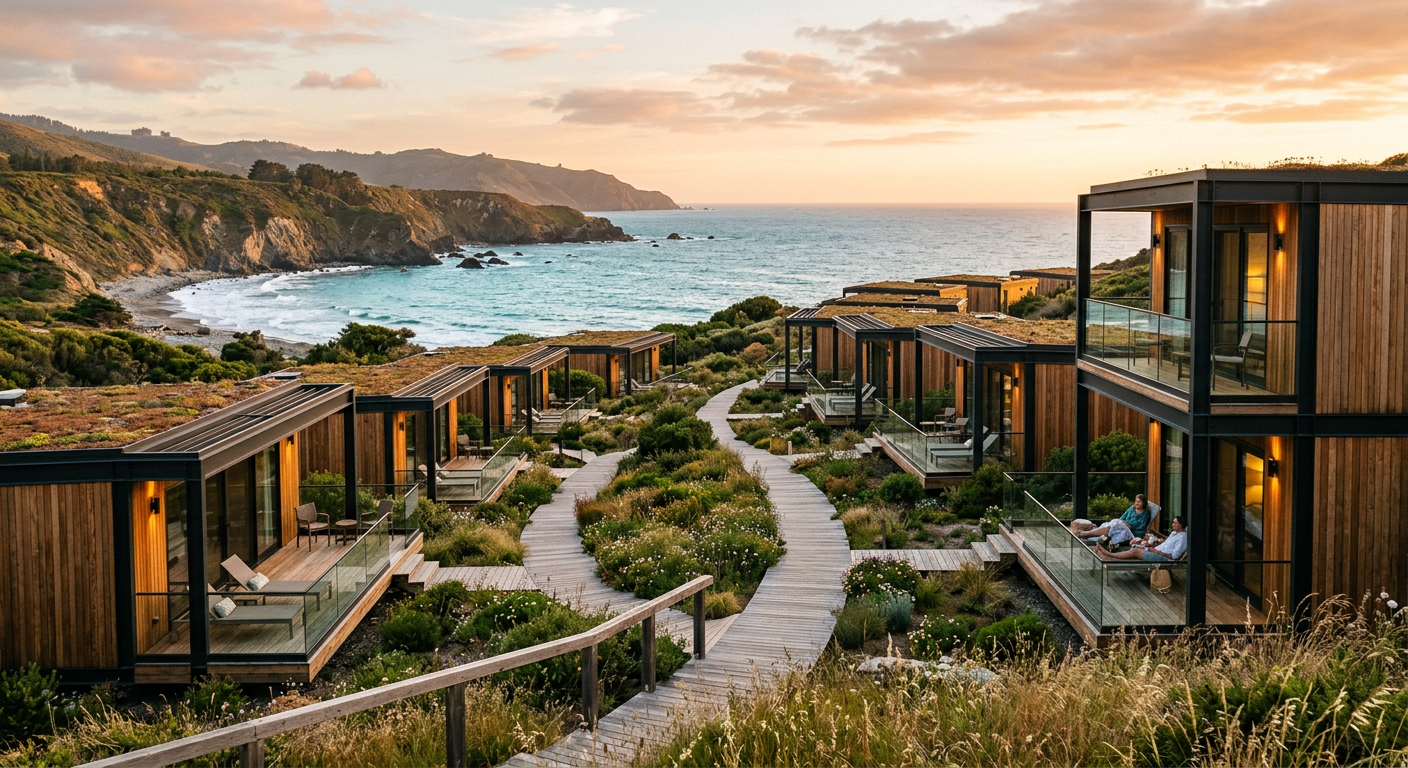
Default to modular eco construction if any of these describe your project:
Stick with traditional eco construction when:
For most commercial projects in our experience — hotels, housing developments, workforce accommodation, public buildings — modular wins on carbon, cost, and schedule simultaneously. The trick is picking a manufacturing partner who can document the claim.
If you’re evaluating modular for a live project, do three things before committing:
We’ve run this analysis for developers across 80+ countries and it almost always points the same way — but the “almost” matters, which is why we do the math project by project. If you’d like a carbon-benchmarked proposal for a specific site, get in touch with our team and we’ll put real numbers against your brief. You can also browse our application case studies to see how other clients have balanced carbon, cost, and schedule.




Arabic

English

Spanish
Fill out the form below and our team will get back to you within 24 hours with a tailored solution.
