
APEX EcoBuilt
Leading Manufacturer of Aluminum Systems & Modular Housing
APEX EcoBuilt
Leading Manufacturer of Aluminum Systems & Modular Housing
 27 Apr, 2026Industry
Modular hotels are replacing traditional construction in remote resort projects because they cut build times roughly in half, slash on-site labor needs by up to 80%, and sidestep the brutal logistics of pouring concrete in places where the nearest cement plant is a ferry and two truck rides away. For developers building on islands, mountainsides, desert edges, or jungle clearings, the math has simply stopped working for stick-built hotels. A factory-finished module arrives on a flatbed, craned into place, and is guest-ready within weeks — not years.
Building a conventional hotel 300 km from the nearest city is less a construction project and more a supply-chain nightmare. Every bag of cement, every length of rebar, every tile and tap has to be sequenced onto boats, barges, or narrow mountain roads — and a single missed shipment idles an 80-person crew for a week.
Then there’s the labor. Skilled trades don’t live in remote locations. Developers end up flying in welders, electricians, and finishers, then housing and feeding them for a year or more. Factor in per-diems, rotations, and attrition, and loaded labor costs often run 2–3x what they would in an urban project.
Modular construction flips this. Roughly 80% of the work happens inside a controlled factory — like our 150,000 m² facility — where skilled labor is already in place and materials flow through established supply chains. The remote site only sees a finished module arrive, get connected, and open for guests.
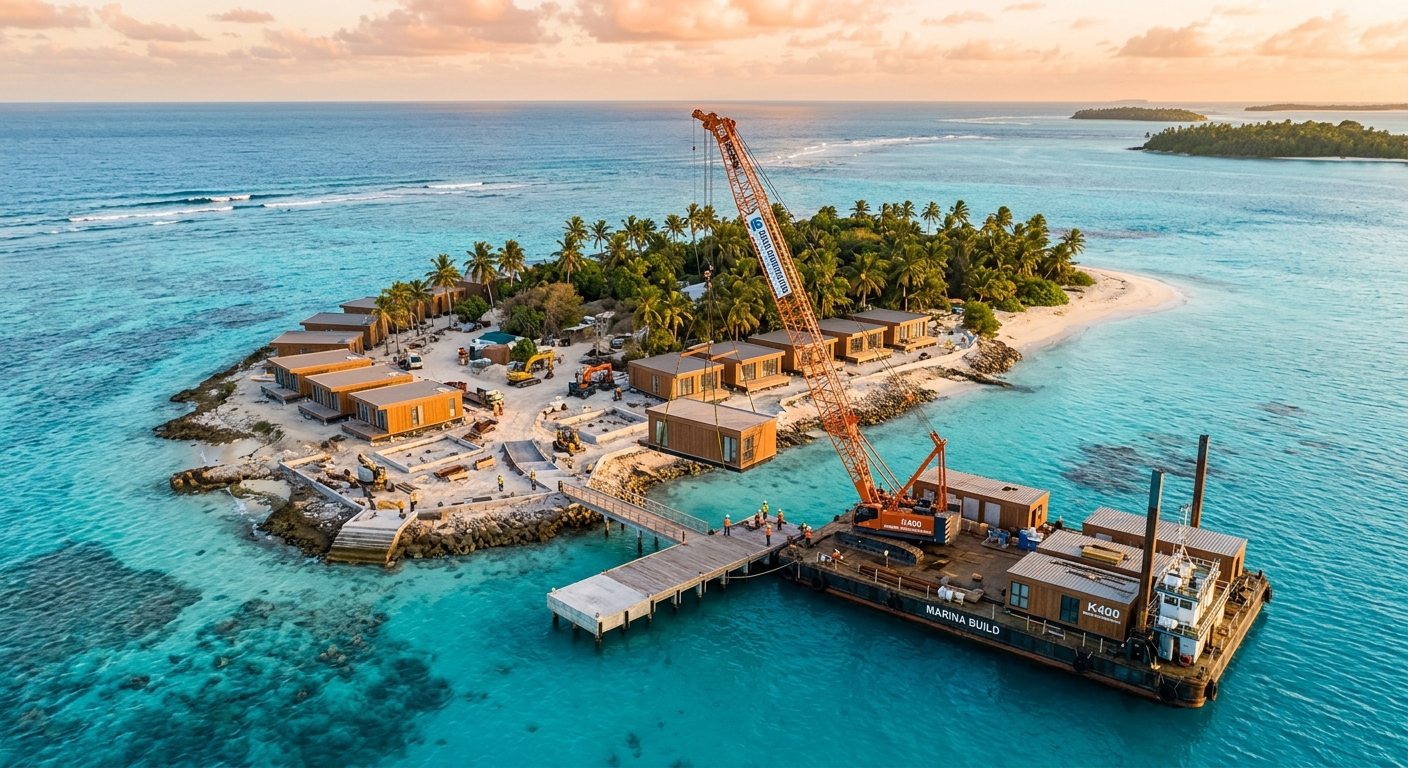
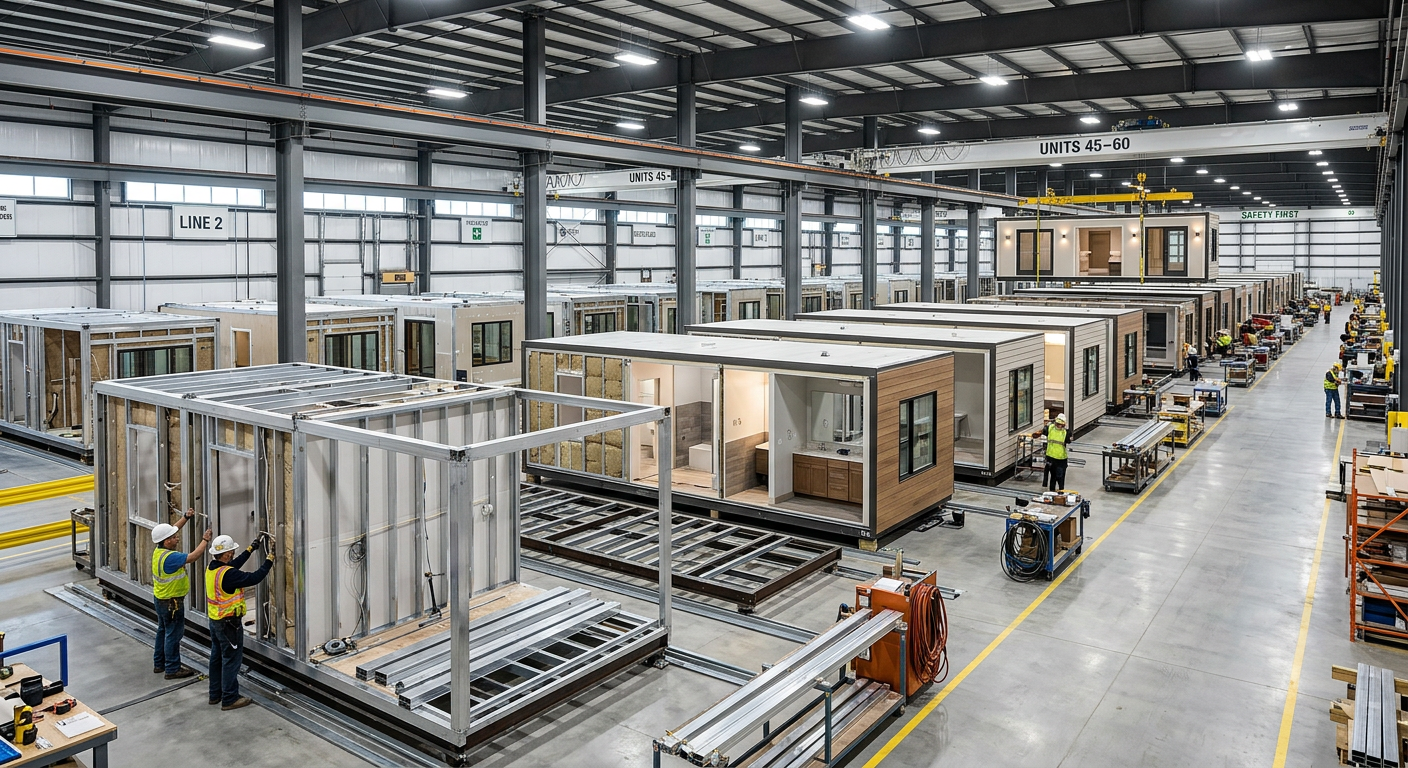
Here’s what most developers miss: modular doesn’t just build faster — it builds in parallel. While site prep, foundations, and utilities are being installed on the remote location, the guest rooms are simultaneously being fabricated 3,000 km away in a factory. Two critical paths run at the same time instead of one after the other.
A traditional 50-key resort typically takes 14–20 months from groundbreaking to soft opening. The same project delivered modular? 6–9 months, and that includes ocean freight. For a resort investor paying 8% on construction financing, shaving a year off the schedule is often worth more than the construction savings themselves.
Factory-based module production eliminates all four. Explore how our manufacturing capabilities compress these timelines through parallel production lines.
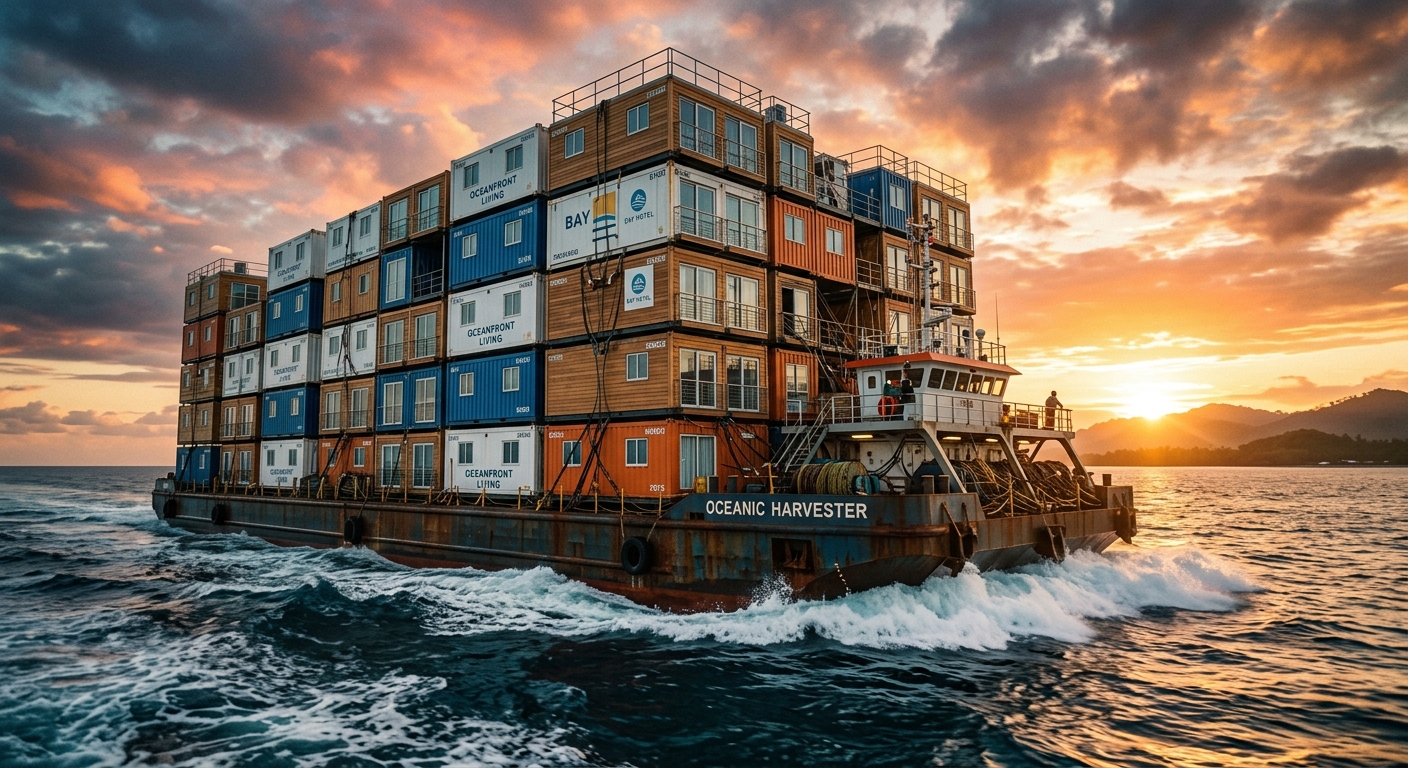
A conventional hotel build consumes thousands of individual deliveries over 18 months. Each one is a risk, a cost, and a coordination headache in a remote location. Modular projects consolidate that into a handful of planned shipments — typically 20–40 modules for a mid-sized resort, all arriving on a scheduled vessel or convoy.
For instance, a resort developer in the Maldives working with us on a 60-villa over-water project received the entire guest-unit structure across three dedicated barge shipments. Compare that to the 400+ individual material deliveries a traditional build would have required across coral-sensitive lagoon waters. The reduction in marine traffic alone was a condition of their environmental permit.
That consolidation also means fewer customs filings, fewer demurrage charges, and less exposure to port congestion — real issues for projects in the Middle East, Africa, and remote Pacific locations where integrated project solutions matter more than any single product spec.
A humid jungle clearing is not where you want to be installing curtain wall glazing or calibrating HVAC. Dust, moisture, temperature swings, and inconsistent workmanship all degrade quality — and every defect found after handover costs 5–10x what it would cost to fix in a factory.
Factory-built modules go through standardized QC gates: weld inspection, torque verification on structural connections, electrical continuity testing, pressure testing of plumbing, and final walk-through before the module ever leaves the line. Our production holds ISO9001 and ISO14001 certifications precisely because remote-site clients need assurance that the bathroom pod they can’t inspect before shipping will perform for 30 years.
Modular isn’t automatically cheaper per square meter of raw structure — sometimes the module itself costs slightly more than equivalent stick framing. The savings live elsewhere, and for remote resorts they compound fast.
For a 50-key resort in a remote location, our clients typically see 20–30% lower total delivered cost versus a traditional build — and that’s before pricing in the earlier revenue capture.
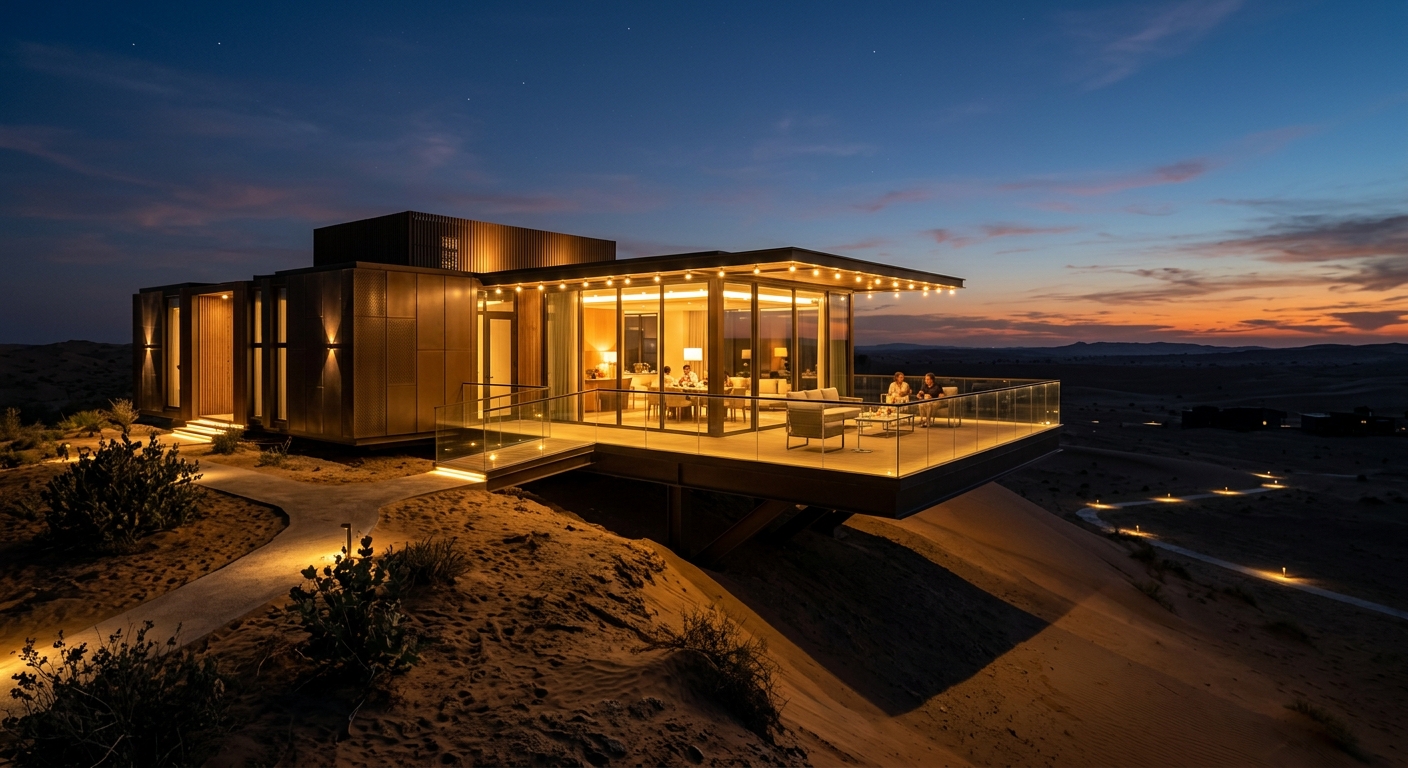
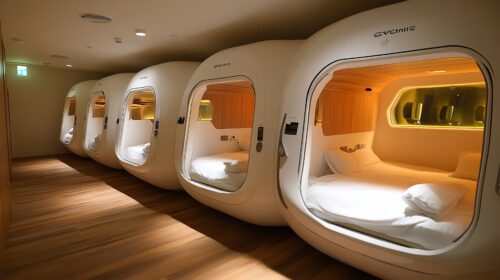
The biggest misconception still floating around the hospitality industry is that modular means shipping-container aesthetics. It doesn’t. Modern modular uses engineered aluminum framing systems that allow cantilevers, angled facades, floor-to-ceiling glazing, and irregular footprints that stick-built would struggle to match.
A resort client in the UAE designed villas with 12-meter cantilevered terraces over a dune edge — a geometry that required precision factory welding impossible to replicate on a windswept desert site. Another in Southeast Asia specified curved glass curtain walls on each over-water pavilion, delivered pre-installed in the module. Both projects would have been budget-impossible with traditional construction.
Customization runs deep: module dimensions, ceiling heights, facade cladding, interior finish packages, and MEP configurations are all project-specific. Browse completed hospitality projects to see the aesthetic range.
ESG-focused investors and lenders are increasingly making modular a precondition for financing remote resort projects, particularly in protected coastal and alpine zones. Why? The environmental footprint of a modular build is measurably smaller across almost every metric.
For projects pursuing LEED, BREEAM, or EDGE certification, modular construction contributes points across waste management, site sustainability, and materials sourcing categories — often the difference between a Silver and Gold rating.
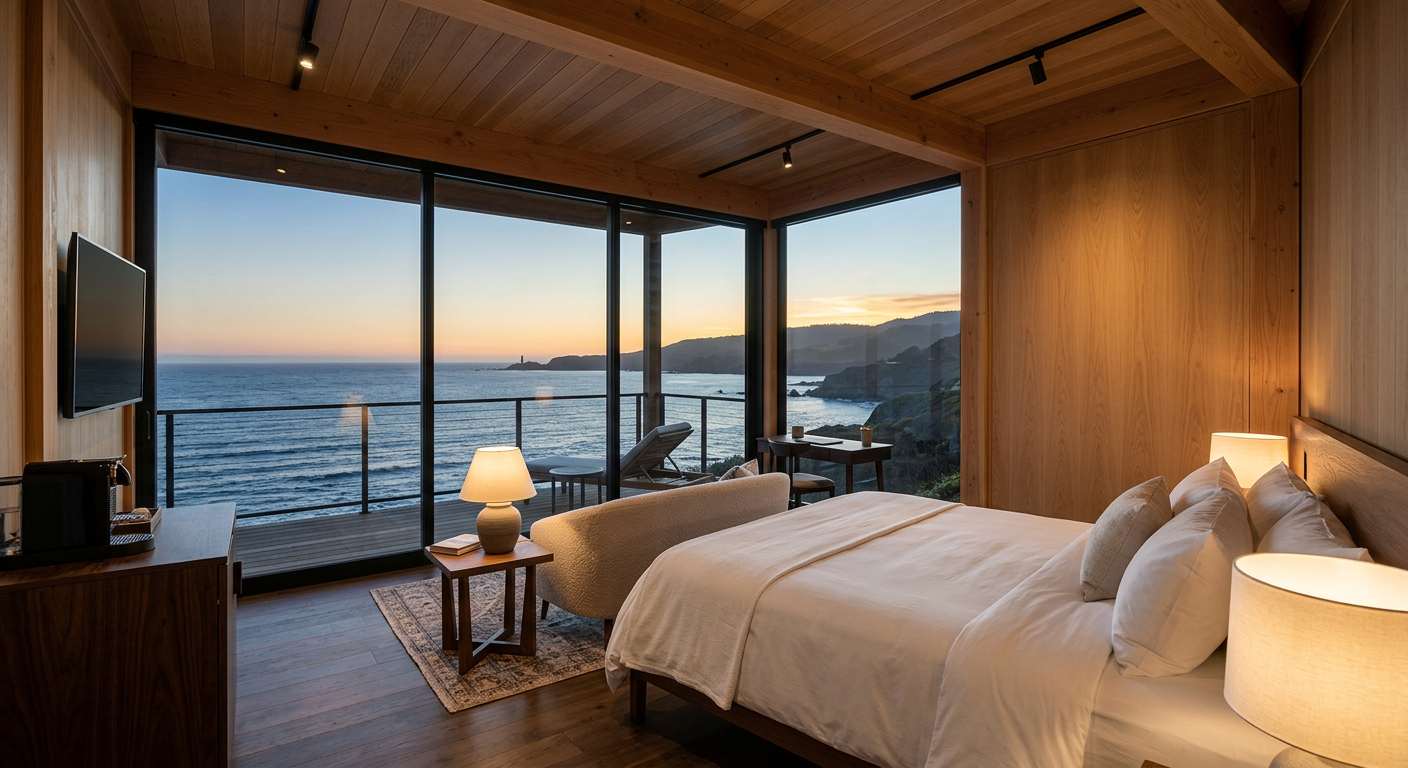
Here’s the argument that usually closes the deal with resort operators: a modular hotel isn’t finished when it opens. Need to add 20 keys after the first successful season? Order the modules, crane them in during the shoulder season, open in weeks. Try that with a traditional build — it’s an 18-month disruption to a running hotel.
Some operators go further and design modules to be fully relocatable. A glamping operator in Patagonia, for example, runs a seasonal circuit — modules spend summer in the south, winter further north. That kind of operational model is literally impossible with poured-concrete construction.
Decommissioning is cleaner too. When a resort’s leasehold ends or the market shifts, modules can be lifted, refurbished, and redeployed elsewhere. The residual value is real — something traditional construction can’t offer.
Not every modular manufacturer can deliver in remote locations. The capability gap between a regional prefab shop and a full-service global supplier shows up the moment a project hits real logistics or customization demands. Ask these five questions before signing:
Modular hotels have moved from an alternative approach to the default choice for remote resort projects because the numbers and the risk profile now favor it decisively — faster revenue, lower total cost, higher quality control, and design freedom that genuinely competes with traditional construction. If you’re evaluating a remote resort project and want a frank conversation about whether modular fits your program, get in touch with our team — we’ll walk you through feasibility, logistics, and realistic delivery timelines for your specific site.




Arabic

English

Spanish
Fill out the form below and our team will get back to you within 24 hours with a tailored solution.
