
APEX EcoBuilt
Leading Manufacturer of Aluminum Systems & Modular Housing
APEX EcoBuilt
Leading Manufacturer of Aluminum Systems & Modular Housing
 07 May, 2026Knowledges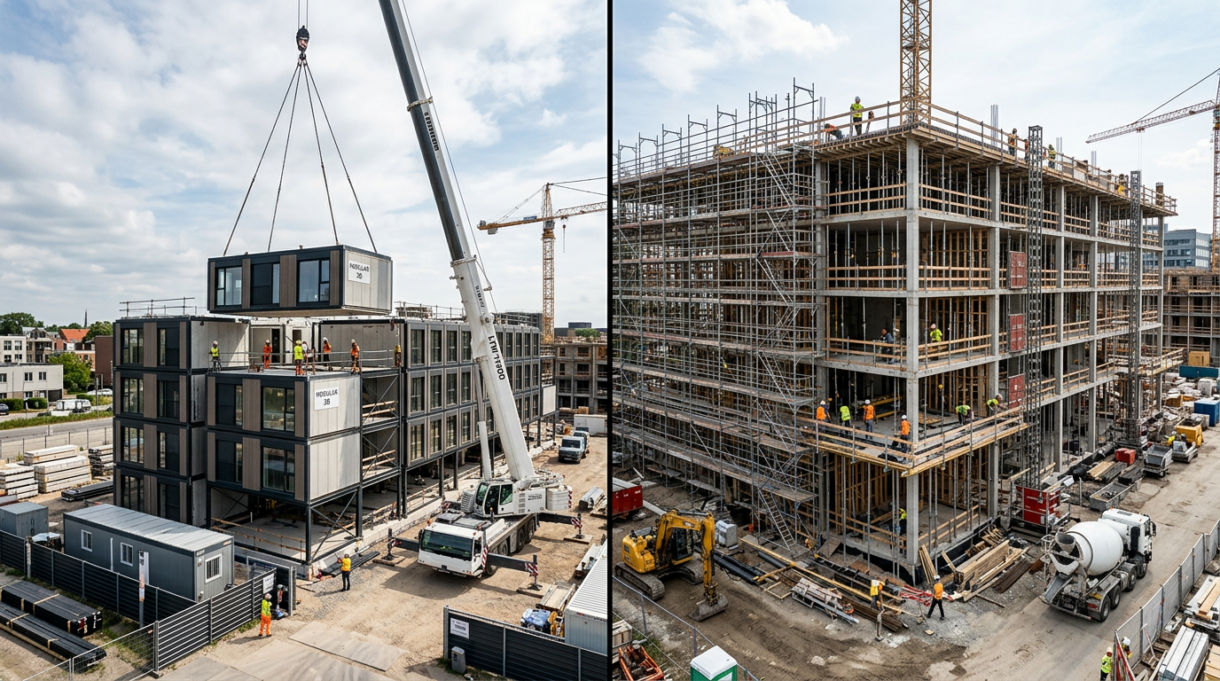
In 2026, prefab construction saves most buyers 15–25% on total project cost and 30–50% on timeline compared to traditional site-built construction — but only when the project type fits. For repeatable units like hotels, worker housing, schools, and mid-rise residential, prefab wins clearly. For one-off custom villas with irregular geometry, traditional still holds its ground. The real question isn’t which is cheaper on paper — it’s which is cheaper for your specific project.
Forget the marketing slides. Here’s what real 2026 project data looks like.
A traditional 3-star hotel build in Southeast Asia runs roughly $900–$1,300 per square meter, all-in, with an 18–24 month schedule. The same hotel built using volumetric modular construction — with modules manufactured in a controlled factory and craned into place on a prepared foundation — lands at $700–$1,000 per square meter with a 9–12 month schedule. That’s a 20% cost delta and roughly half the time.
Where does the money come from? Three main buckets:
The catch? Transportation and crane mobilization can eat 5–8% of project cost if the site is far from the factory or hard to access. That’s why prefab savings shrink on remote mountain sites and grow on urban infill.
Prefab isn’t universally better. It’s better for specific project patterns.
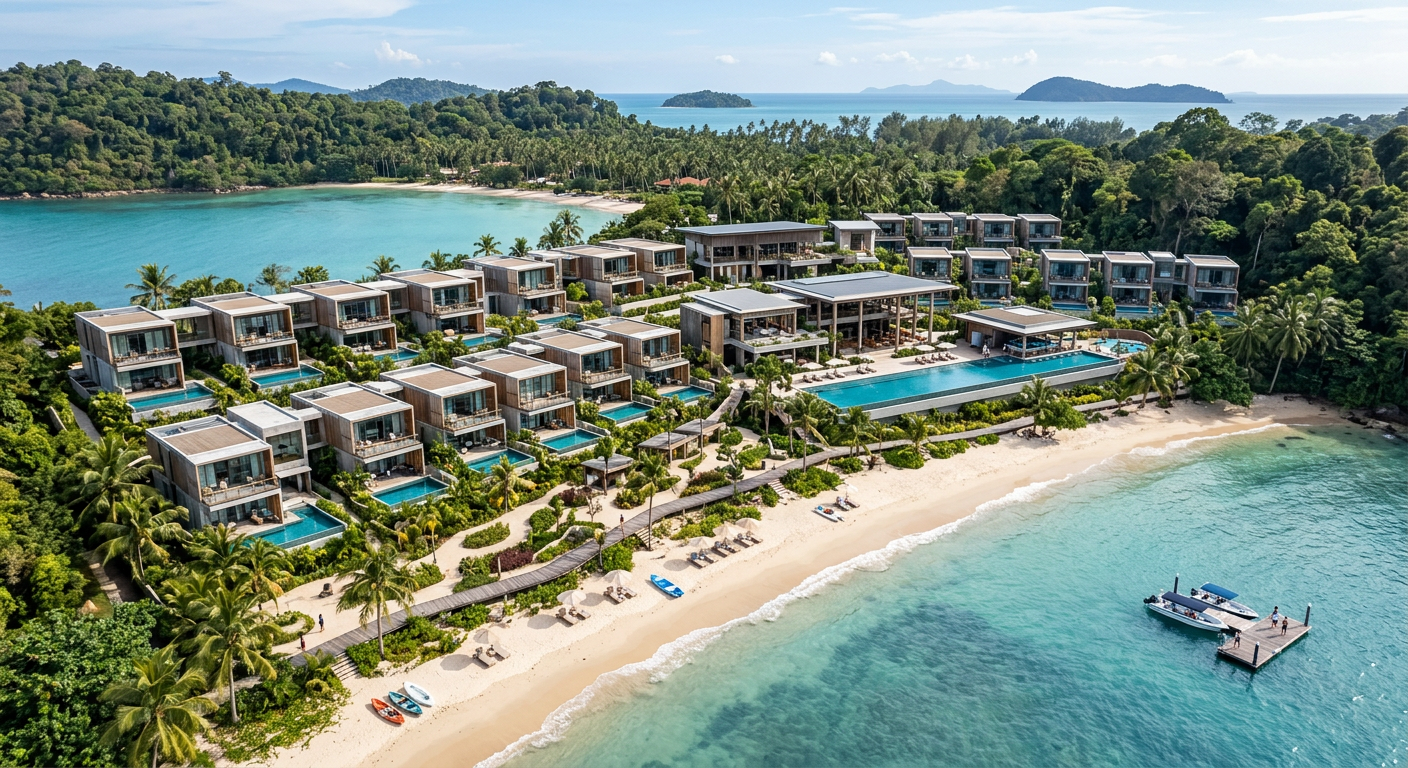
For example, a developer we worked with built a 180-room resort in the Maldives using modular units shipped in containers. Ground-up to opening day: 11 months. A traditional build on the same site would have taken 22+ months with twice the freight runs.
Here’s the quick-reference breakdown for buyers weighing both options in 2026:
| Criteria | Prefab / Modular | Traditional Site-Built |
|---|---|---|
| Total Cost (avg.) | 15–25% lower | Baseline |
| Timeline | 30–50% faster | Standard schedule |
| Weather Delays | Minimal (factory-built) | Frequent |
| Design Flexibility | High with modular systems | Maximum (fully bespoke) |
| Quality Control | Factory-grade consistency | Varies by crew |
| Waste Generated | Up to 90% less | High (10–15% materials) |
| Best For | Hotels, remote sites, multi-unit | Custom villas, complex geometry |
| Financing Readiness | Improving, still patchy | Well-established |
The column on the right isn’t losing on every line — it’s just that prefab’s wins happen to stack up faster for most commercial and institutional projects in 2026.
Here’s the detail most buyers miss: prefab doesn’t just build faster — it builds in parallel.
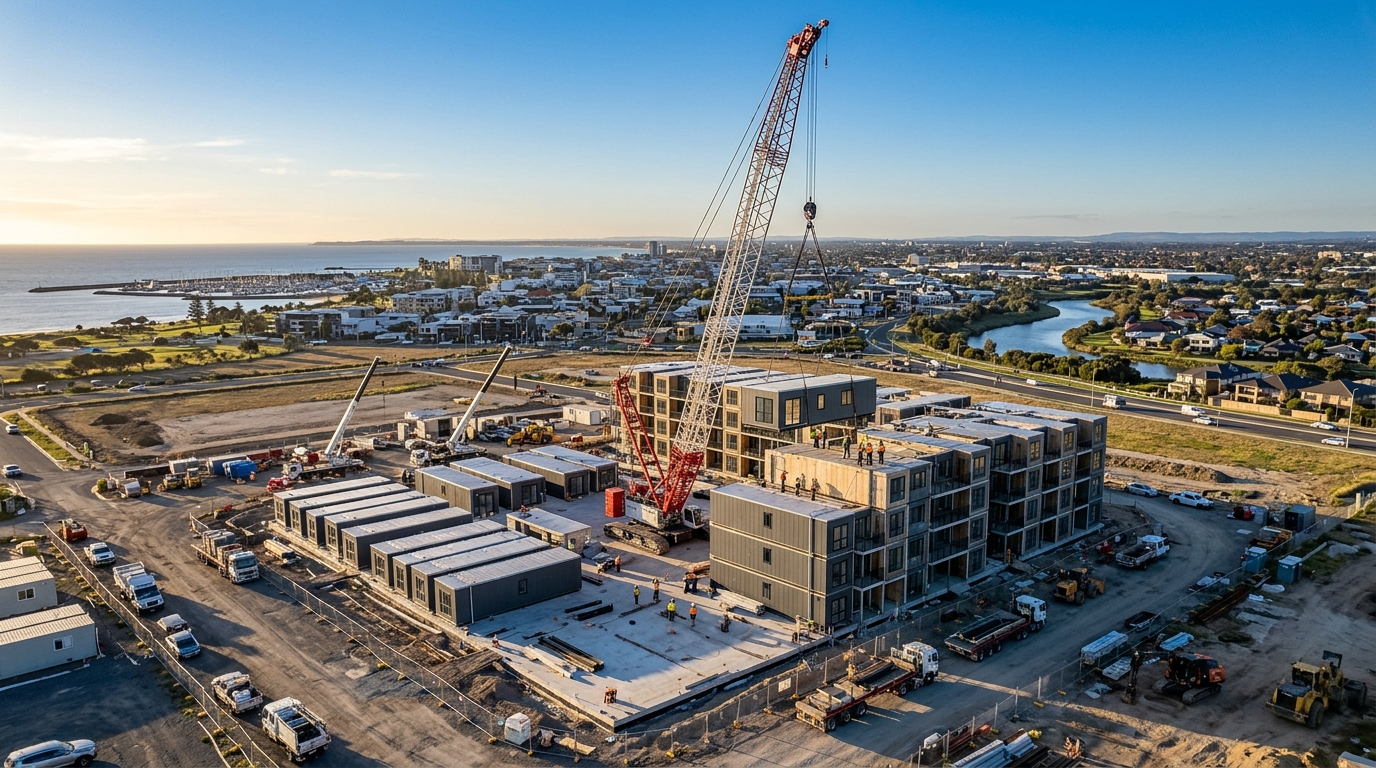
On a traditional project, work is sequential. You excavate, pour foundations, frame, close in, then start MEP, then finishes. Each phase waits for the previous one. On a modular project, the foundation work happens on-site while modules are being built 2,000 km away in the factory. By the time your slab cures, the modules are ready to crane in — already containing plumbing, wiring, drywall, flooring, and bathrooms.
A realistic schedule comparison for a 5,000 m² mid-rise:
That 12-month delta isn’t just about finishing early. For a hotel owner, it’s an extra year of revenue. For a developer, it’s an extra year of occupancy before interest compounds further. That’s often where the real savings live — not in the line-item budget.
Apex’s 150,000 m² factory runs parallel production lines that let us deliver multi-module orders in as little as 60–90 days after design lock.
Twenty years ago, prefab meant trailers and temporary classrooms. That reputation lingers. It’s also wrong.
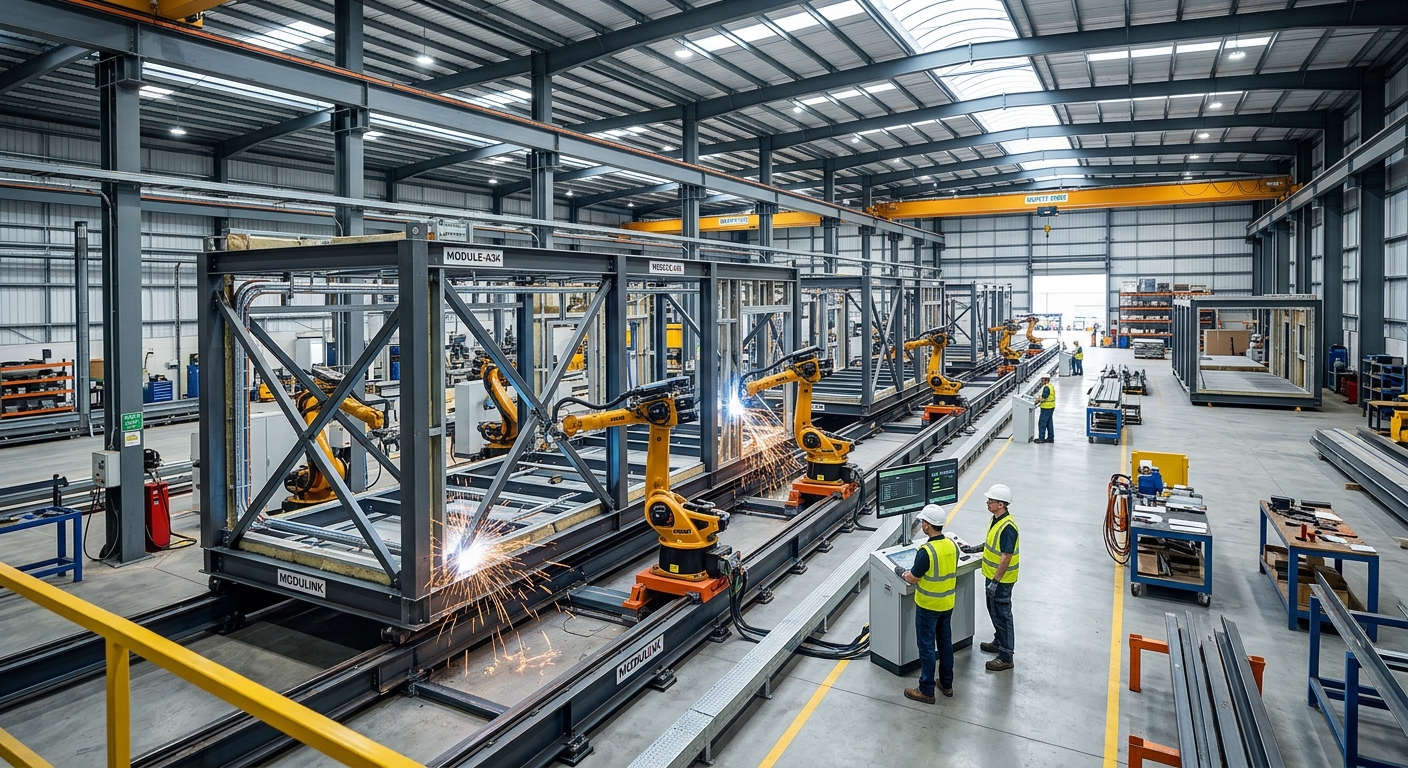
Modern modular manufacturing uses laser-cut steel frames, CNC-processed aluminum, and automated quality checkpoints at every station. Tolerances sit at ±2mm — tighter than most site-built structures manage. Every module gets inspected under controlled lighting before it ships, not after it’s buried behind drywall on a windy construction site.
The honest comparison: a well-built traditional project and a well-built modular project are indistinguishable to occupants. The difference is consistency. On a 200-unit modular project, every unit meets the same spec. On a 200-unit traditional project, unit #47 depends on whether the crew that framed it was having a good week.
Certifications matter here. Look for ISO 9001 (quality management), ISO 14001 (environmental), and CE marking for European projects. Any serious manufacturer should hand you those documents before you ask. Apex’s systems are built to all of the above — details are on our company overview.
Both systems have cost traps that don’t show up in the first quote.
Rule of thumb: if you can commit to a design and not change your mind, prefab saves significantly. If you’re the kind of client who redesigns the lobby twice during framing, traditional may actually cost you less.
In 2026, sustainability isn’t a soft bonus — it’s a line item on financing.
European and Middle Eastern lenders increasingly require embodied carbon reporting for projects above $10M. Green-certified projects (LEED, BREEAM, EDGE) unlock interest-rate discounts of 25–75 basis points. On a $30M loan, that’s real money over a 20-year term.
Prefab has a structural advantage here:
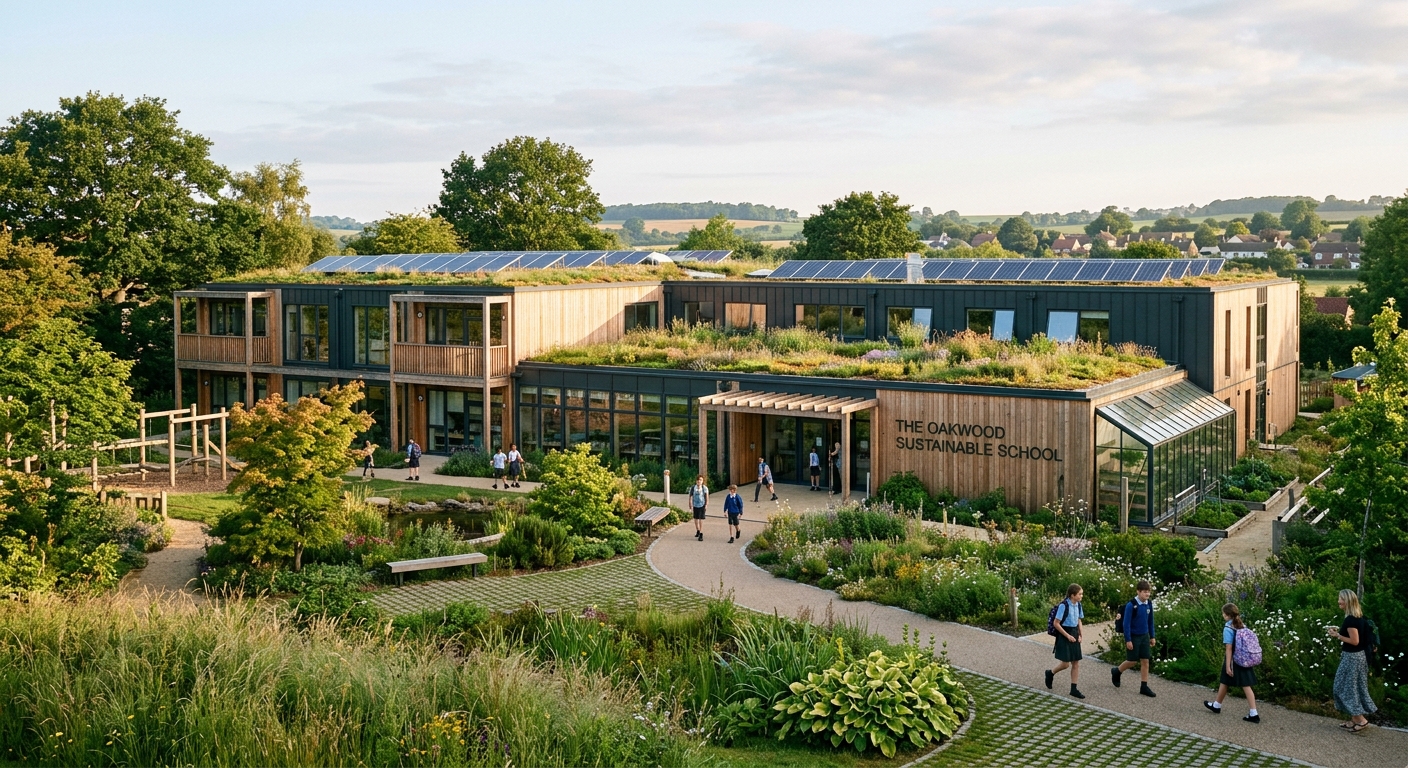
A recent project example: a government agency commissioned 120 prefab classrooms across rural provinces. Using modular aluminum-framed units, the project logged 62% lower embodied carbon than a traditional equivalent and qualified for sustainability-linked financing. That’s a direct financial outcome from the construction method choice.
Explore how our integrated building solutions align with international sustainability standards.
Skip the generic pros-and-cons list. Answer these five questions instead:
If three or more answers point toward prefab, request a detailed modular quote before committing to traditional. The numbers often surprise buyers who assumed prefab was only for budget projects.
Prefab wins on cost and speed for most commercial, institutional, and multi-unit projects in 2026 — typically 15–25% cheaper and 30–50% faster. Traditional construction still has a place for truly bespoke, one-off buildings or sites with severe access constraints. The cost gap between the two continues to widen as factory automation improves and labor costs rise globally.
The smartest move? Don’t default to either method. Get real quotes for both, compare the all-in cost including financing carry and operational revenue impact, and decide based on your specific project math — not industry habit.
If you’re weighing a modular approach for a hotel, housing, institutional, or remote-site project, our team can build a side-by-side cost and timeline model tailored to your site. Browse live project case studies or get a project-specific quote to see where the numbers land for you.




Arabic

English

Spanish
Fill out the form below and our team will get back to you within 24 hours with a tailored solution.
