APEX EcoBuilt
Leading Manufacturer of Aluminum Systems & Modular Housing
APEX EcoBuilt
Leading Manufacturer of Aluminum Systems & Modular Housing

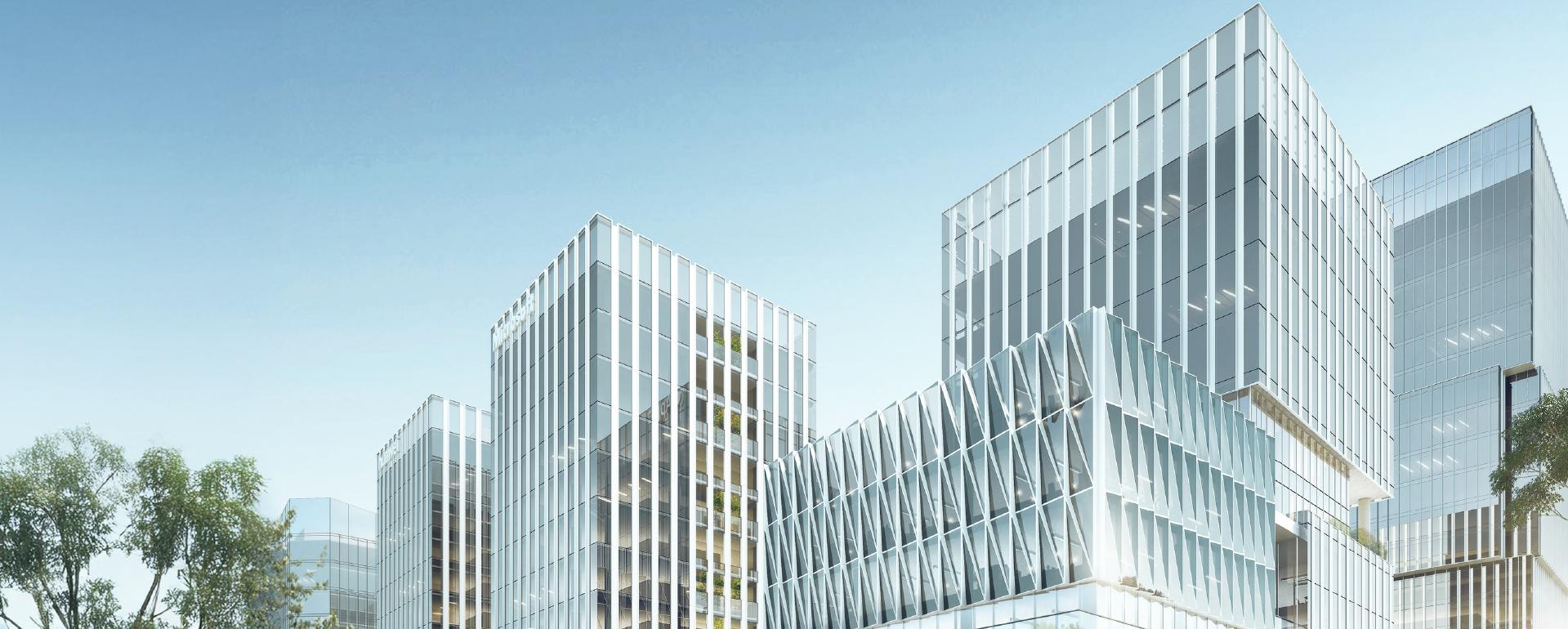
Factory-assembled facade units for mid- and high-rise construction: glazed, framed, and sealed in a controlled plant, then shipped as complete panels for floor-by-floor installation.
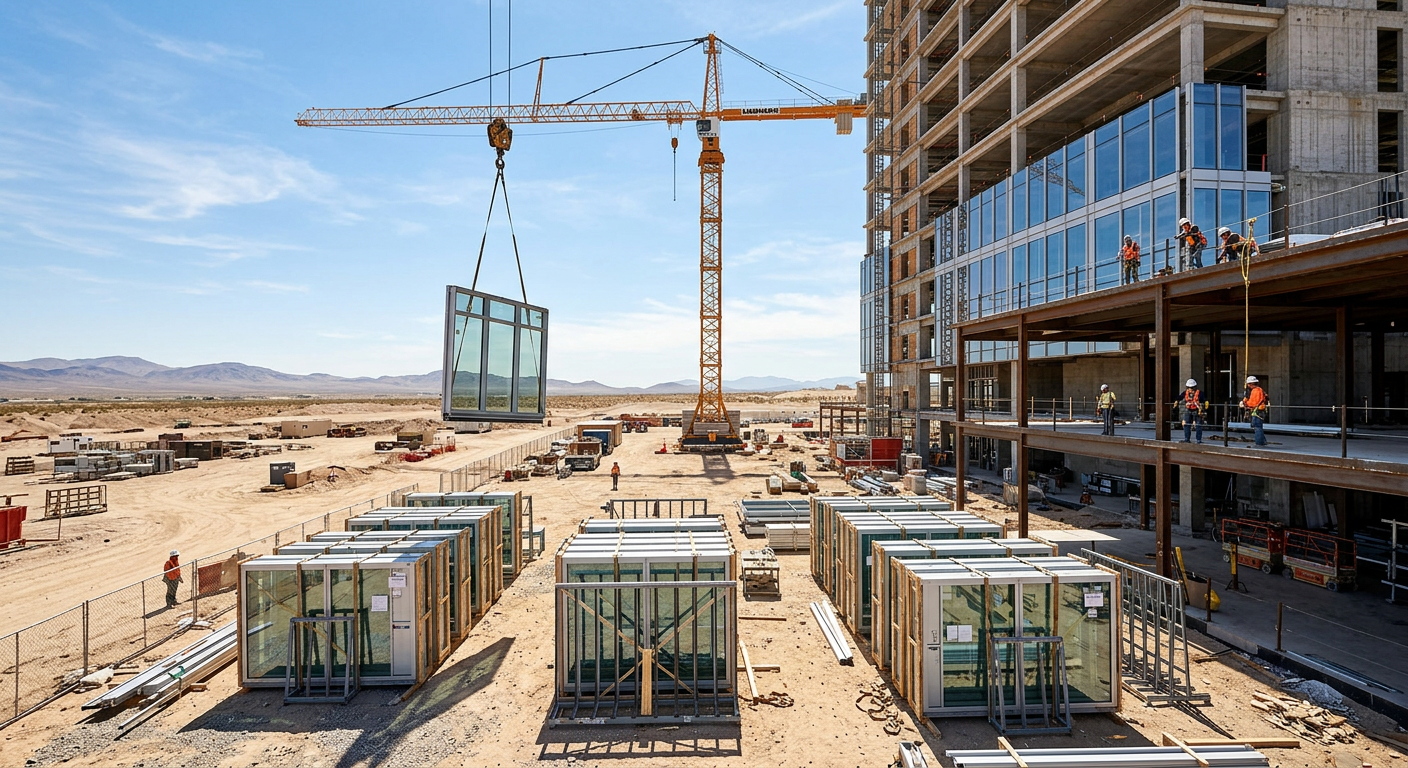
A unitized curtain wall system arrives on site as a finished module — aluminum framing, infill, gaskets, and sealant already assembled in the factory. Crews hoist and connect each panel directly to the structure floor by floor, rather than building the frame piece by piece on scaffolding. That shift moves most of the quality control off the site and into the plant, before the panel ever reaches height.
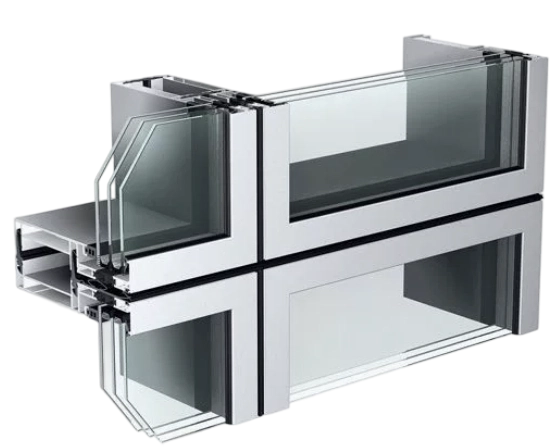
APEX fabricates unitized panels with BIM/FEA modeling used to shape mullion and transom design around wind, thermal, and seismic movement before extrusion. Configurations include:
| Configuration | Frame Type | Infill Options | Engineering Basis |
|---|---|---|---|
| High-rise unitized | Concealed frame | Glass, aluminum panel, stone | BIM/FEA-modeled mullion & transom for wind, thermal, seismic movement |
| Hidden-frame unitized | Fully concealed frame | Glass, aluminum panel | Same BIM/FEA engineering process |
| Channel-type embedded anchor | Unitized, embedded anchor plate | Glass, aluminum panel, stone | Anchor detail engineered to the embedded channel connection |
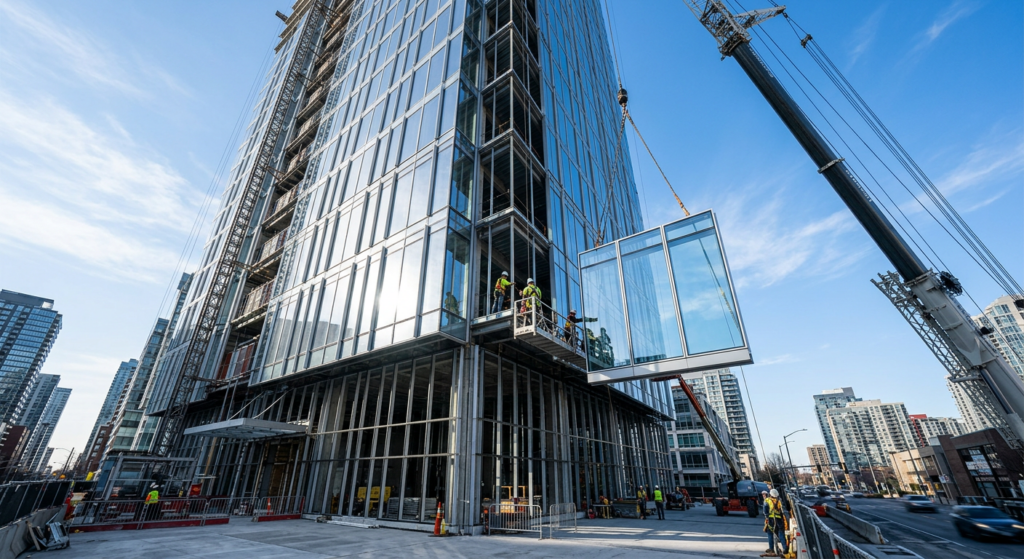
Unitized construction suits tall buildings with tight schedules, where factory glazing improves panel-level consistency and floor-by-floor installation reduces work at height. Stick-built systems remain practical for lower-rise buildings or irregular geometries where shipping large finished modules is difficult.
Compare the unitized and stick-built curtain wall systems and review the 2026 curtain wall cost breakdown before choosing.
Every unitized order undergoes BIM/FEA structural simulation before production. Extrusion, CNC machining, anodizing, and glazing take place in APEX's single 150,000 m² factory, so profiles move directly from pressing to finishing and panel assembly without supplier changes or inter-facility shipping.
This integrated process helps maintain panel consistency from the first unit to the last. It is backed by 20 years of facade manufacturing experience and 179+ patents and certifications.

Tell us whether your project needs high-rise, hidden-frame, or channel-anchor unitized panels, and we'll return drawings and a quote sized to your floor plate and glazing spec.

APEX supplies unitized curtain wall panels for:
Recent curtain wall projects include:

Arabic

English

Spanish
Fill out the form below and our team will get back to you within 24 hours with a tailored solution.