
APEX EcoBuilt
Leading Manufacturer of Aluminum Systems & Modular Housing
APEX EcoBuilt
Leading Manufacturer of Aluminum Systems & Modular Housing
 14 May, 2026Knowledges
For a facade that needs to look sharp in 20 years, PVDF (Kynar 500) is the safest bet — it holds color and gloss through brutal UV, salt air, and pollution far better than the alternatives. Anodizing lasts even longer but locks you into metallic tones, while standard polyester powder coating typically starts chalking and fading by year 10–12. The right choice ultimately depends on your climate, your color palette, and how much you’re willing to spend upfront to avoid recladding later.
Every aluminum finish fails eventually. The difference is how and how visibly.
Powder coating fails by chalking — the resin breaks down under UV, leaving a dusty, faded surface. Run your hand across a 12-year-old powder-coated facade in Dubai and your palm comes back white. PVDF fails by gradual gloss loss; the color stays remarkably stable, but the sheen dulls over decades. Anodizing doesn’t really “fail” in the color sense because there is no pigment — it’s a converted aluminum oxide layer. It can pit or streak in marine environments, but it never fades.
That distinction matters when you’re signing a 20-year facade warranty. A developer who picks the wrong finish doesn’t just deal with cosmetic complaints — they often face a full reclad bill that exceeds the original facade cost.
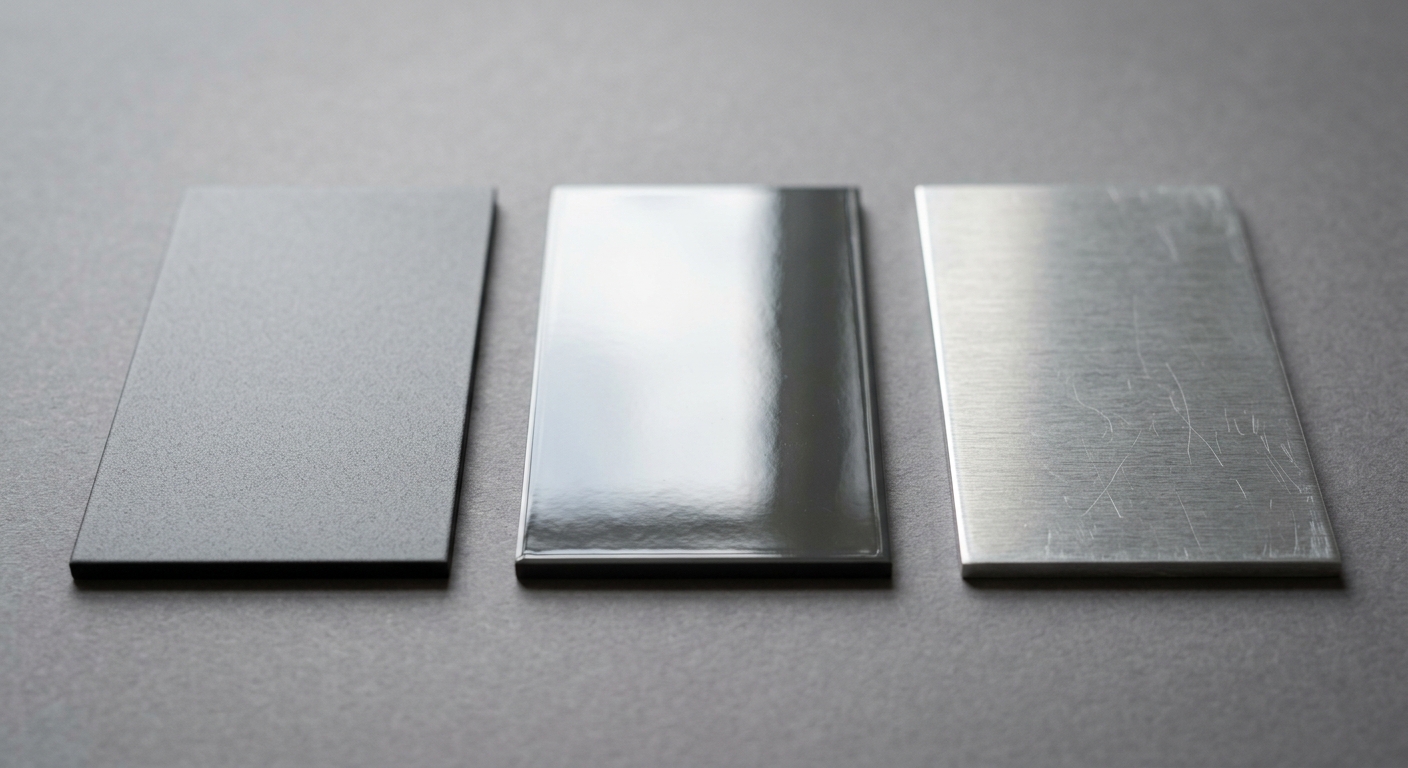
Powder coating is the most common finish on aluminum windows and low-rise facades worldwide — and for good reason. It’s cheap, it comes in literally any RAL color, and it has zero VOCs during application.
Standard polyester powder coatings (the kind most factories quote by default) carry only a 10–15 year warranty against fade in moderate climates. In the Gulf, Southeast Asia, or coastal Australia, expect noticeable chalking by year 8. Super-durable powders (TGIC-free polyester or fluoropolymer-enhanced) push this to 15–20 years but cost 30–50% more — at which point PVDF becomes the smarter conversation.
For example, a school developer building 20 inland classroom blocks in central Europe might rationally pick standard powder coat in a bold color — they get the visual impact, and the moderate UV exposure means the facade will still look acceptable when the building gets refurbished in 20 years anyway.
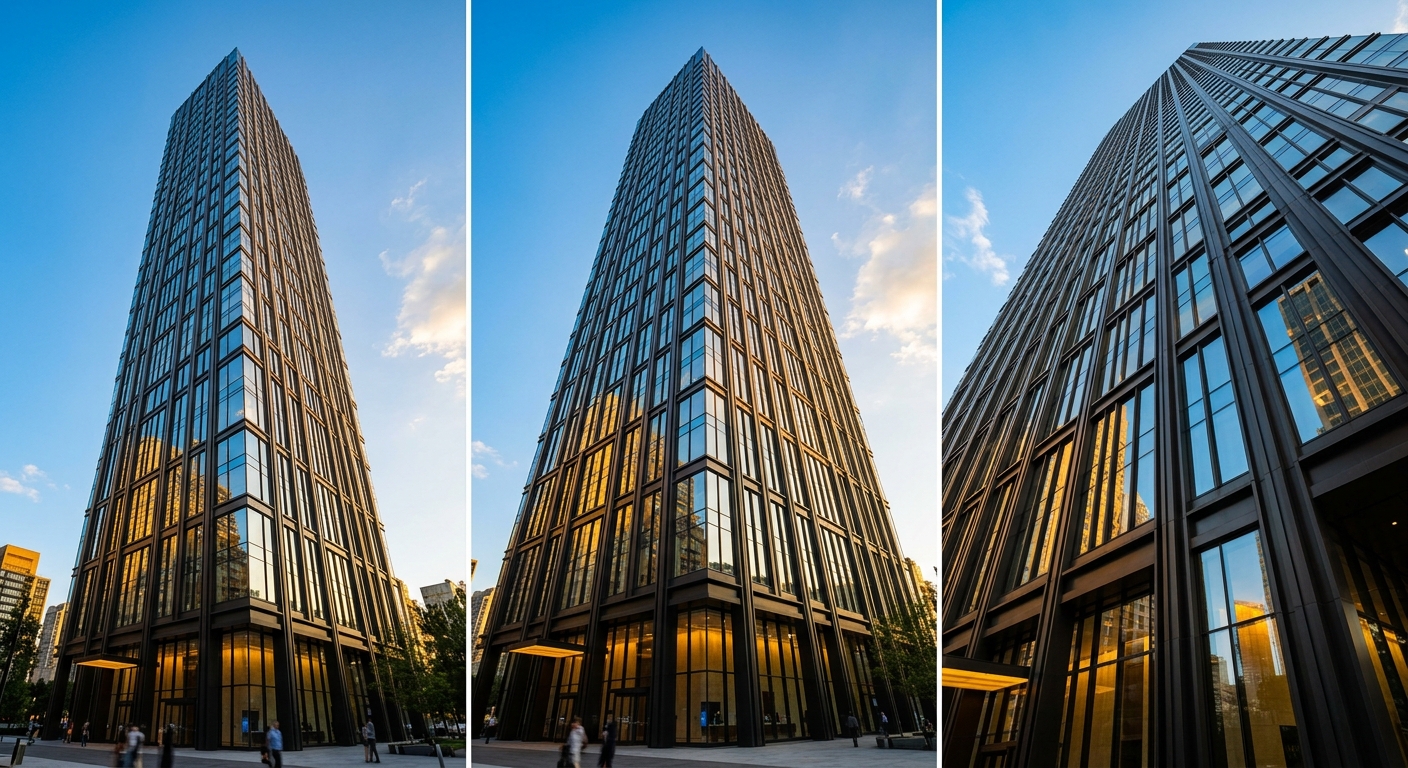
If your facade has to look the same in two decades as it did on handover day, PVDF (polyvinylidene fluoride, commonly branded as Kynar 500 or Hylar 5000) is the answer. The fluoropolymer resin is essentially immune to UV degradation — that’s why you see it on virtually every iconic high-rise built since the 1990s.
Real PVDF coatings contain at least 70% PVDF resin. The carbon-fluorine bond is one of the strongest in organic chemistry, which is why pigments suspended in this resin don’t bleach. Warranties from major coating suppliers (AkzoNobel, PPG, Valspar) routinely guarantee:
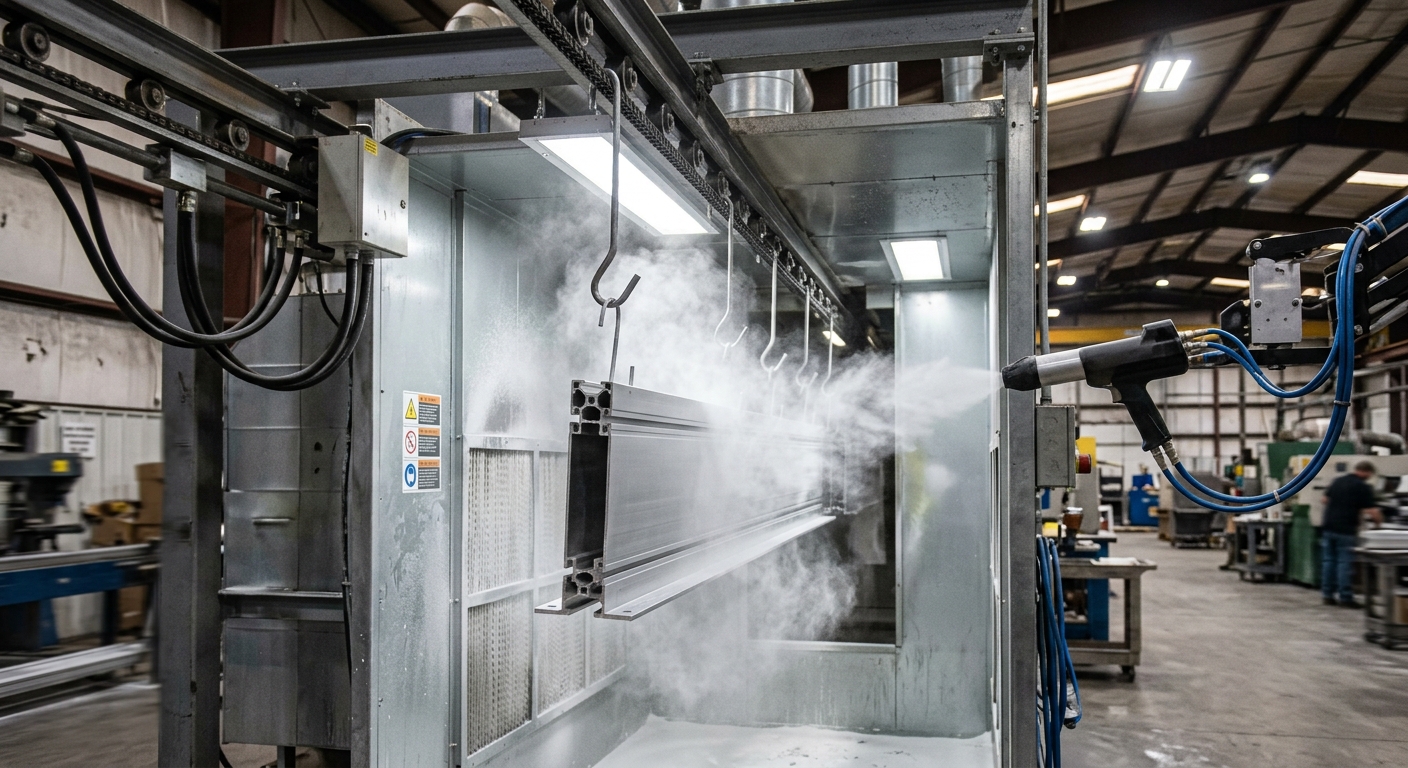
PVDF is applied as a wet coat, not a powder. It requires a dedicated coil-coating or spray line with a high-temperature cure oven (around 240°C). That’s why it’s harder to find quality PVDF coaters — and why buyers should vet the manufacturer’s coating line directly. At apexecobuilt’s 150,000 m² facility, PVDF is applied on dedicated lines with thickness QC at every meter, which is the kind of process control that separates a 20-year facade from a 12-year one.
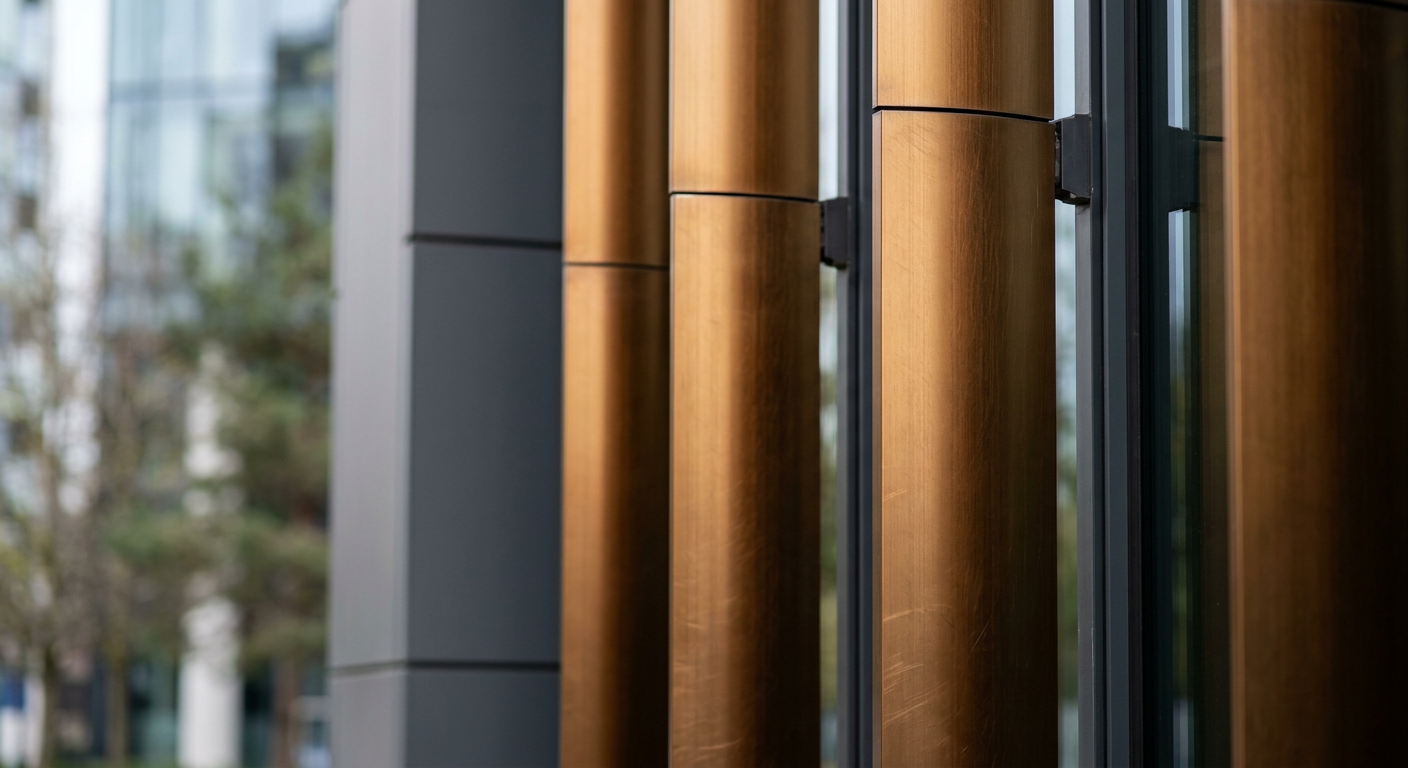
Anodizing isn’t really a coating — it’s a controlled electrochemical conversion of the aluminum surface into a hard, porous oxide layer (typically 15–25 microns thick for architectural use, Class I). That oxide layer can be dyed before sealing, but the most popular looks remain the natural metallic tones: clear, champagne, bronze, and black.
Anodized aluminum has a depth and luminosity that paint can’t replicate. The finish is the metal itself, not a film sitting on top. It won’t peel, blister, or chalk. The Empire State Building’s spire, refurbished anodized aluminum on countless 1960s landmarks — still going.
A luxury hotel group recently specced champagne-anodized fins for a Mediterranean coastal resort. The decision saved them from any repainting cycle for the building’s projected 30-year life — but it required us to lot-control alloy billets and anodize all 8,400 fins in a coordinated 11-day window to guarantee color consistency.
Here’s the honest comparison most coating salespeople won’t give you straight:
| Criteria | Powder Coating | PVDF (Kynar 500) | Anodizing |
|---|---|---|---|
| Expected facade lifespan | 10–15 years | 20–30 years | 20–40 years |
| Color fade resistance | Moderate | Excellent | N/A (metal tone) |
| Color/finish range | Widest — any RAL | Wide, custom | Limited — metallic tones |
| Cost per m² (relative) | 1.0x (baseline) | 1.6–2.0x | 1.3–1.8x |
| Chalking risk after 10 yrs | High | Very low | None |
| Coastal / UV performance | Fair | Excellent | Excellent |
| Field touch-up | Easy | Difficult | Nearly impossible |
| Best use case | Interior, low-rise, mild climate | High-rise, coastal, harsh UV | Premium architectural, monumental |
One number deserves emphasis: the cost multiplier on PVDF versus powder coat is roughly 1.6–2.0x, but the cost of recladding a facade is usually 8–12x the original coating cost when you account for scaffolding, tenant disruption, and disposal. The math almost always favors PVDF for any building expected to stand more than 15 years.
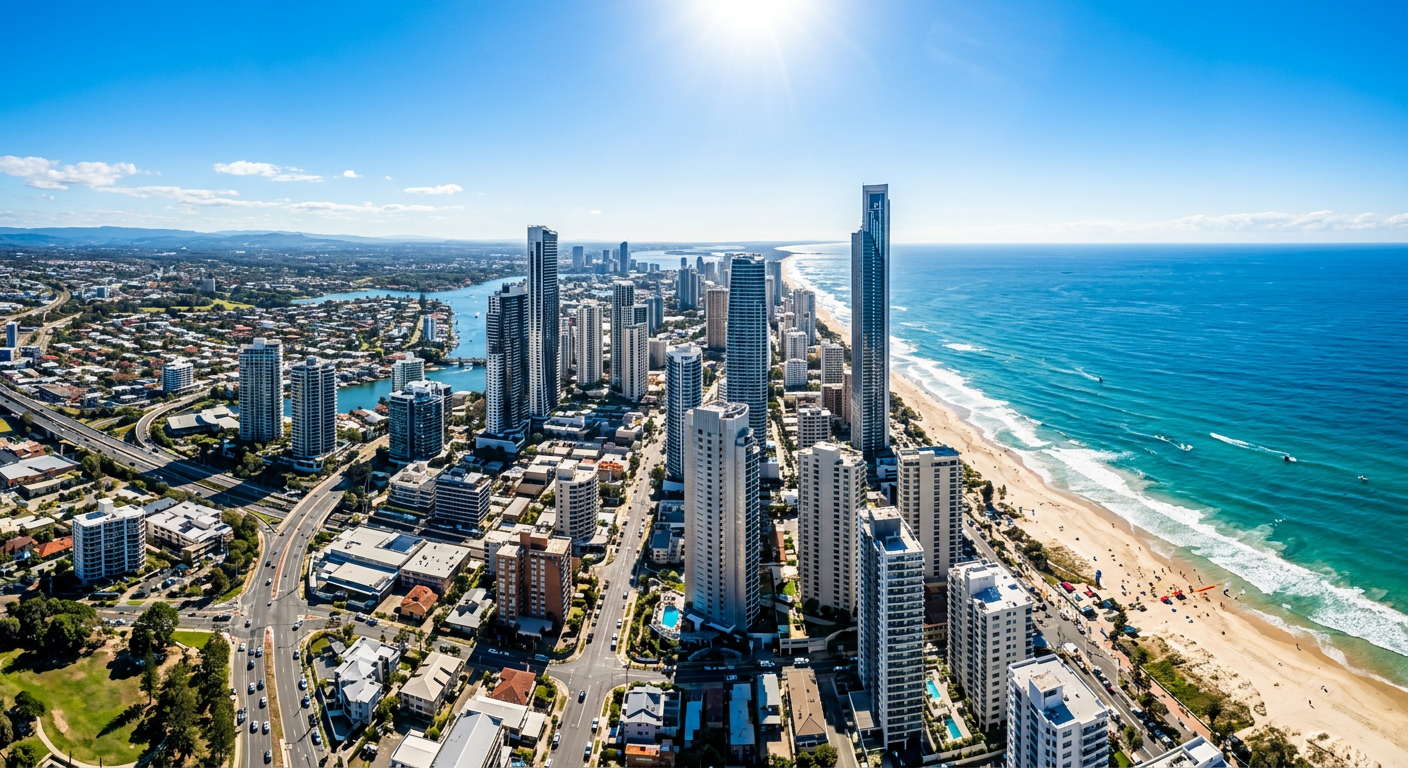
The same finish behaves dramatically differently in Stockholm versus Riyadh. UV index, salt load, sand abrasion, and pollution all eat coatings at different rates.
PVDF or anodizing. Period. UV intensity here destroys polyester powder coatings in under a decade. For developers building in this region, we strongly recommend reading our deeper breakdown on specifying curtain walls for Middle East climates — the finish choice is just one piece of a bigger thermal and durability puzzle.
PVDF with a corrosion-resistant primer, or Class I anodizing. Powder coat will blister at edges within 5–7 years from salt-induced filiform corrosion.
All three work. Super-durable powder coat with a 25-year warranty is competitive with PVDF here, and architects often pick it for the color range.
Powder coat is genuinely fine. The UV load is low enough that fade simply isn’t the main failure mode — flexibility at low temperatures matters more.
Even the right finish fails when the spec is sloppy. After two decades in the industry, the same handful of mistakes keep showing up on remediation projects.
One contractor we worked with had inherited a half-built tower where the original spec said only “PVDF finish.” The coater had delivered 50% PVDF blend — technically compliant. Five years post-handover, the developer was already negotiating a partial reclad. A two-line spec amendment would have prevented all of it.
Cut through the noise with three quick questions:
Under 15 years → powder coat is fine. 15–25 years → PVDF or super-durable powder. 25+ years → PVDF or anodizing.
Mild and inland → all options open. Coastal, tropical, or high-UV → PVDF or Class I anodizing only.
Bold, custom, or brand-mandated colors → PVDF (or powder if lifespan is short). Metallic, natural, or monolithic look → anodizing.
Run your project through those three filters and you’ll usually land on a clear answer. The remaining trade-off is almost always cost versus longevity — and as we noted earlier, that math rarely favors the cheaper finish over the building’s full life cycle.
Finish performance is only as good as the factory applying it. A premium PVDF resin sprayed on poorly pretreated aluminum will fail just as fast as cheap powder coat. The questions worth asking any supplier: Do they run their own coating line or outsource? What’s their AAMA certification level? Can they share 10-year accelerated weathering data on their finishes? Will they color-lot match across the production run?
At apexecobuilt, every facade project starts with a finish recommendation tied to your climate zone, design life, and color palette — backed by 179+ patents and ISO 9001 process control across our coating lines. Whether you’re specifying PVDF for a Gulf high-rise or anodized profiles for a European landmark, we can walk you through samples, warranty terms, and the spec language that protects your project. Talk to our facade engineering team before locking in your finish spec, or browse our aluminum systems and completed projects to see how the right finish choice plays out across two decades of real-world exposure.



Arabic

English

Spanish
Fill out the form below and our team will get back to you within 24 hours with a tailored solution.
