
APEX EcoBuilt
Leading Manufacturer of Aluminum Systems & Modular Housing
APEX EcoBuilt
Leading Manufacturer of Aluminum Systems & Modular Housing
 30 Jun, 2026Knowledges
The seven hidden costs that quietly inflate overseas curtain wall projects are: engineering and shop drawings, structural and code certifications, export-grade packaging, freight and port surcharges, site rework from loose tolerances, technical support across time zones, and warranty enforcement risk. Together, they can add 15–35% to a quote that looked unbeatable on paper. Below, we break each one down so you can price the real project — not the headline number.
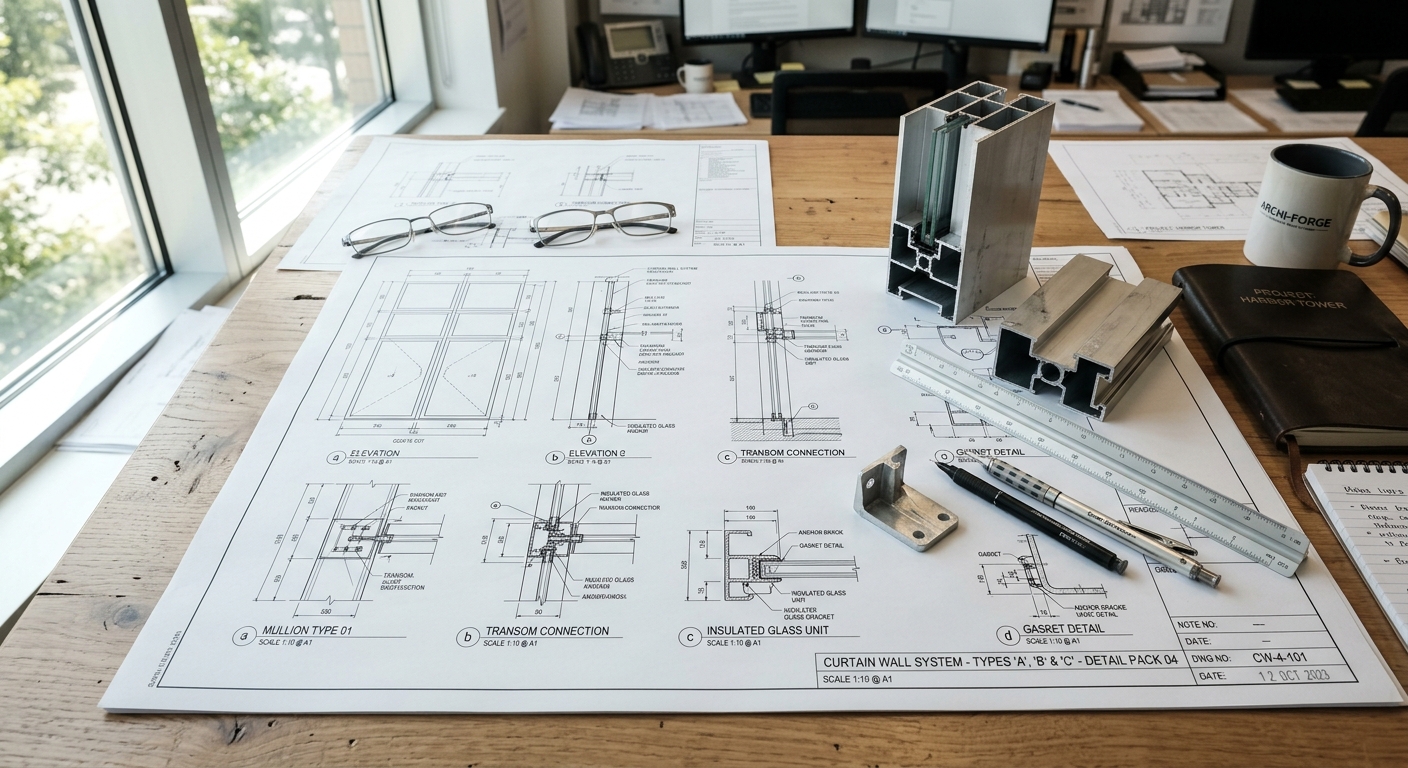
A curtain wall quote without engineering is like a car quote without wheels. Yet many overseas suppliers exclude shop drawings, stick diagrams, and thermal calculations from their base price — or quietly outsource them to a third party after the PO is signed.
Expect engineering to cost 2–5% of the total contract value on a mid-sized façade. On a USD 1.2M curtain wall package for a 14-storey hotel, that’s USD 24,000–60,000 that magically appears after you’ve already committed. Worse, if the supplier’s drawings don’t satisfy your local consultant, you pay twice: once for the bad set, once for the rework.
Ask for a sample drawing package from a previous similar project before signing. A manufacturer with a proper in-house engineering team — the kind that supports custom façade solutions end-to-end — won’t hesitate.
Here’s the uncomfortable truth: a curtain wall that passes Chinese GB standards may fail European EN 13830 or Middle East ESMA wind-load requirements. And the supplier isn’t the one on the hook — you are.
Third-party testing (wind load, water penetration, air infiltration, seismic) at labs like CTC or Intertek runs USD 15,000–80,000 depending on system complexity. If the overseas supplier hands you generic test reports for a different system, your local authority will reject them. Then you’re paying for new tests on a tight schedule.
For context, our facility holds 179+ patents and certifications precisely because clients in 80+ countries need documentation that stands up to local inspection the first time.
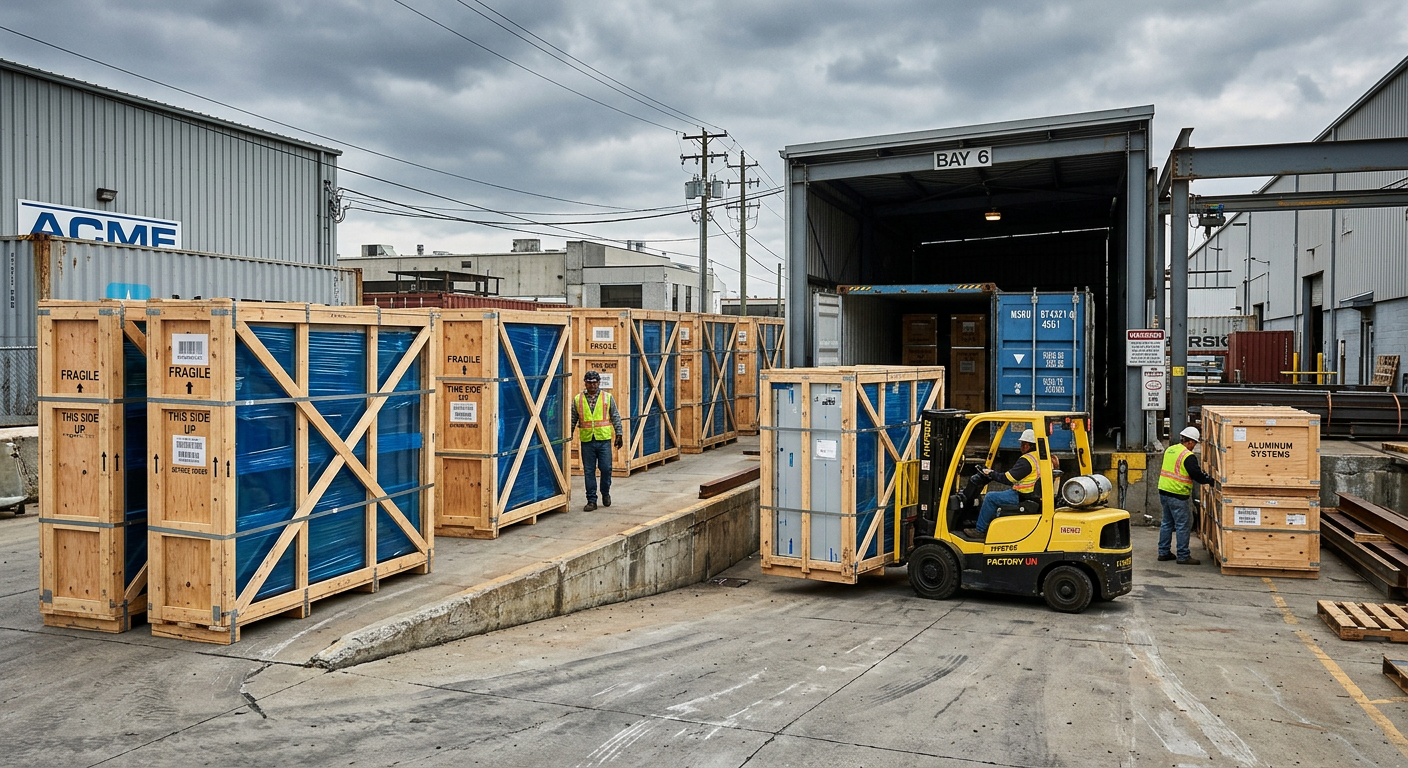
Aluminum looks tough. In a 40′ container crossing three oceans, it isn’t. Standard domestic packaging — thin foam and stretch wrap — routinely produces 3–7% damage rates on overseas shipments. On a USD 800,000 façade package, that’s USD 24,000–56,000 of bent mullions and scratched anodizing.
Proper export crating uses custom wooden skids, corner protectors, moisture barriers, and individual film wrap on visible surfaces. It adds roughly USD 1,500–3,000 per container but cuts damage to under 1%. Ask your supplier for container-loading photos from past shipments; if they hesitate, that’s your answer.
For example, a contractor we worked with in Saudi Arabia had been burned twice by a previous supplier sending curtain wall units with no surface protection. After switching, they reported zero rejected units across six containers — and the on-site install team stopped losing two days per shipment to sorting damaged stock.
FOB quotes are seductive because they look clean. They’re also incomplete. The real delivered cost includes ocean freight (volatile — up 200% in 2021, still swinging ±30% quarterly), bunker adjustment factors, destination THC, customs clearance, anti-dumping duties on Chinese aluminum in the EU and US, and inland trucking to site.
Always request a DAP or DDP quote alongside FOB. The gap between them is your true freight exposure — and seeing both forces your supplier to be honest about what they can and can’t control.
This is the cost nobody writes into a contract, and it eats project managers alive. An overseas factory quoting ±3 mm tolerance sounds fine — until your structural slab edges are out by 15 mm and your curtain wall brackets can’t absorb the deviation. Suddenly the install crew is grinding, shimming, or waiting three weeks for replacement parts.
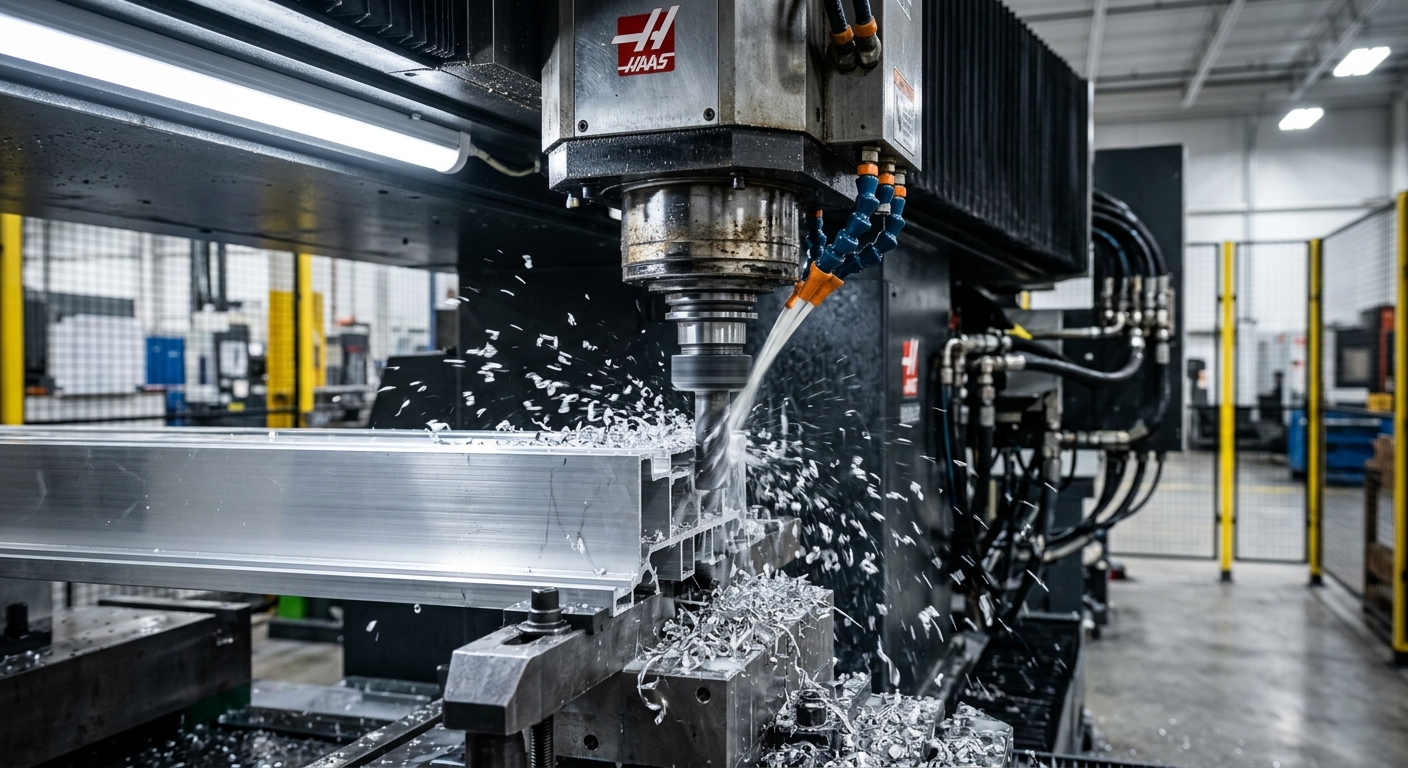
Industry-grade CNC machining should hit ±0.5 mm on profile cuts and ±1 mm on panel assemblies. Cheap suppliers run older machines or skip QC sampling, and the 2 mm difference multiplies across 4,000 m² of façade into weeks of delay.
Rework and schedule slippage typically add 5–12% to installed cost. On a large hotel project, a single week of crane standby can cost USD 15,000–30,000. Ask your supplier what their measured tolerance actually is — not what the brochure says — and request QC inspection reports from recent production runs. Our manufacturing capabilities page outlines the specific CNC and anodizing tolerances we hold to.
When the first curtain wall panel arrives on site and the installer realizes the gasket channel is 2 mm too narrow, what happens next determines whether you lose a day or a month. If your supplier is 12 hours behind and responds only by email, expect the latter.
Real support costs money the supplier has to absorb: a dedicated project manager, a WhatsApp or WeChat channel with same-day response, occasionally a flight to site for commissioning. Suppliers who skip this line item quote 5–8% lower — and leave you stranded the moment something goes sideways.
For a concrete example, a developer we supported in Oman hit an unexpected issue with bracket anchoring into a post-tensioned slab. Because our project engineer was on a video call within four hours and had revised bracket drawings back to site in two days, install stayed on schedule. The alternative — a generic factory 8 hours behind with no dedicated PM — would have cost at least ten working days. For hot-climate projects specifically, we’ve covered some of these coordination nuances in our guide on spec’ing curtain walls for Middle East climates.
Every supplier offers a 10-year warranty. Very few actually honor one. The hidden cost shows up in year three, when sealant fails or anodized finish pits, and you discover the trader you bought from has closed, changed names, or simply stopped responding.
The warranty is only as strong as the company behind it. Look for:
Replacing a failed curtain wall section five years into a building’s life isn’t a line item — it’s a catastrophe. Scaffolding alone can cost USD 40,000–120,000 on a tall façade, before you buy a single new panel. Buying from a stable manufacturer with a traceable project history isn’t more expensive; it’s the only version that’s actually cheap.
Run every overseas curtain wall quote through a simple stress test. Add 3% for engineering, 1% for proper export packaging, the delta between FOB and DAP freight, 5% contingency for tolerance-driven rework, and a realistic value on warranty risk. If the “cheap” supplier is still cheaper after that — great. Most of the time, they’re not.
The best buyers we work with don’t pick the lowest bid. They pick the most transparent one, because transparency at the quoting stage is the single best predictor of transparency during production and installation. A supplier willing to itemize engineering, testing, packaging, and support is telling you they’ve done this before and they respect your budget.
If you’re currently comparing quotes and want a second opinion on what’s missing from the numbers, our team is happy to review your spec and flag the gaps — no obligation. Start with our curtain wall product range or send us your drawings and we’ll come back with a line-itemized response within 48 hours.




Arabic

English

Spanish
Fill out the form below and our team will get back to you within 24 hours with a tailored solution.
