
APEX EcoBuilt
Leading Manufacturer of Aluminum Systems & Modular Housing
APEX EcoBuilt
Leading Manufacturer of Aluminum Systems & Modular Housing
 28 Sep, 2026Knowledges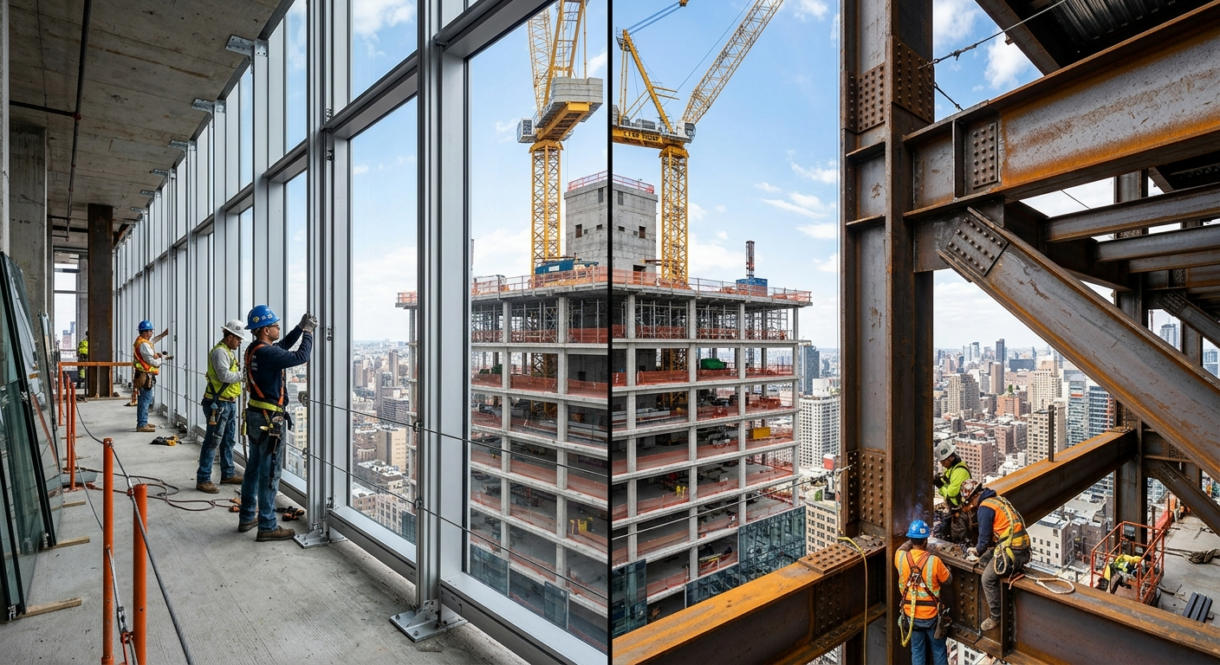
For the vast majority of curtain wall projects, aluminum framing is the better choice — it’s roughly a third the weight of steel, resists corrosion without heavy coatings, and integrates cleanly with thermal break systems. Steel earns its place only when spans get long, loads get extreme, or a building pushes past 40+ stories and needs the raw strength steel provides. The real decision isn’t “which metal is better” — it’s matching the material to your building’s height, climate, and structural demands.
Here’s a number that surprises a lot of first-time developers: steel is nearly three times denser than aluminum. That’s not a trivia fact — it cascades through every structural decision downstream, from the size of your anchors to the load your building’s core has to carry.
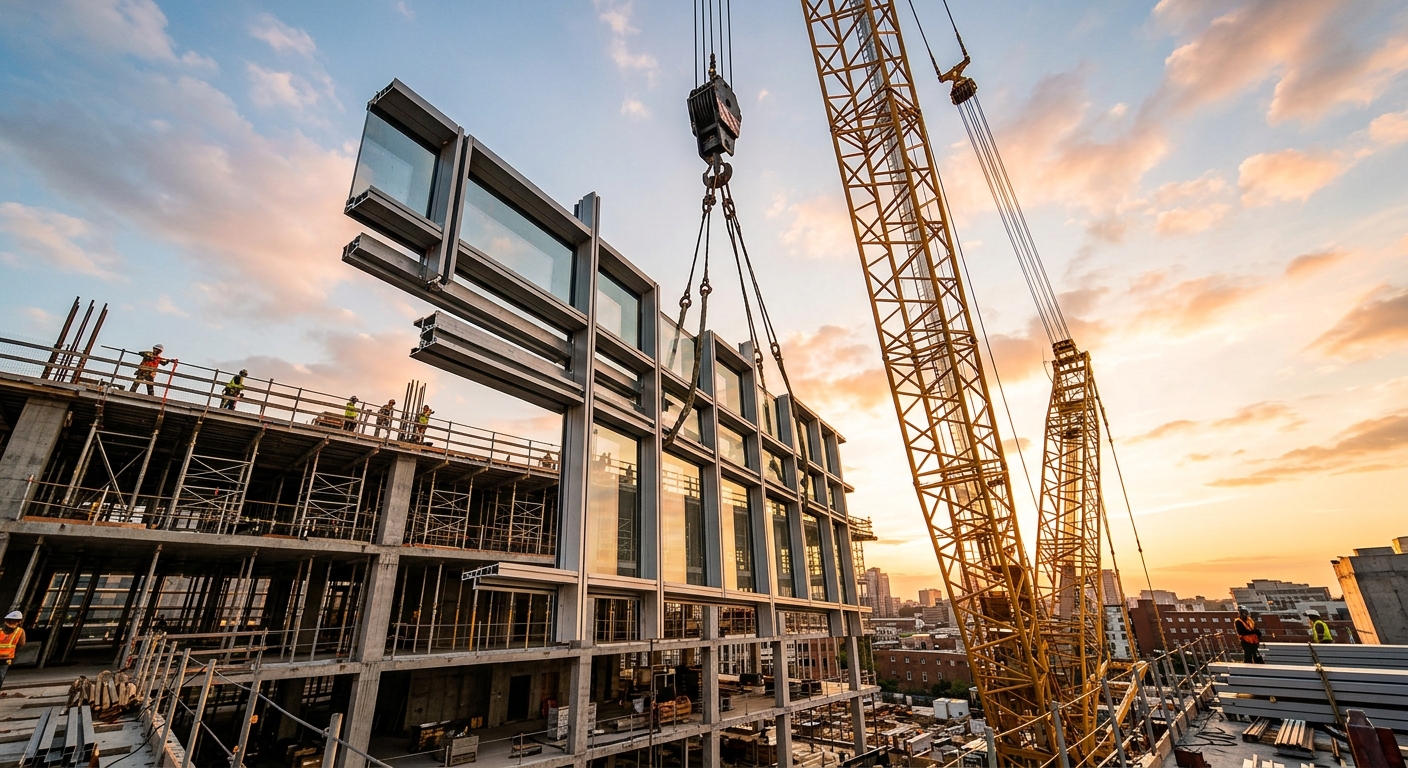
A typical aluminum curtain wall mullion weighs somewhere around 2-4 kg per linear meter for standard sections. The steel equivalent, sized to carry a similar load, often comes in at 8-12 kg per linear meter once you account for steel’s lower strength-to-weight ratio in bending. Multiply that across a 40-story tower with thousands of linear meters of mullion, and you’re talking about a difference measured in tons — weight that has to be supported by the building’s structural frame, foundation, and floor slabs.
For a mid-rise office building, the weight difference might not change your foundation design at all. But for a coastal high-rise or a building on soft soil, every ton saved on the envelope is a ton the structural engineer doesn’t have to fight for elsewhere. This is one reason aluminum dominates high-rise residential and commercial towers — read more on the specific performance specs developers should demand in our piece on aluminum window systems for high-rise residential projects.
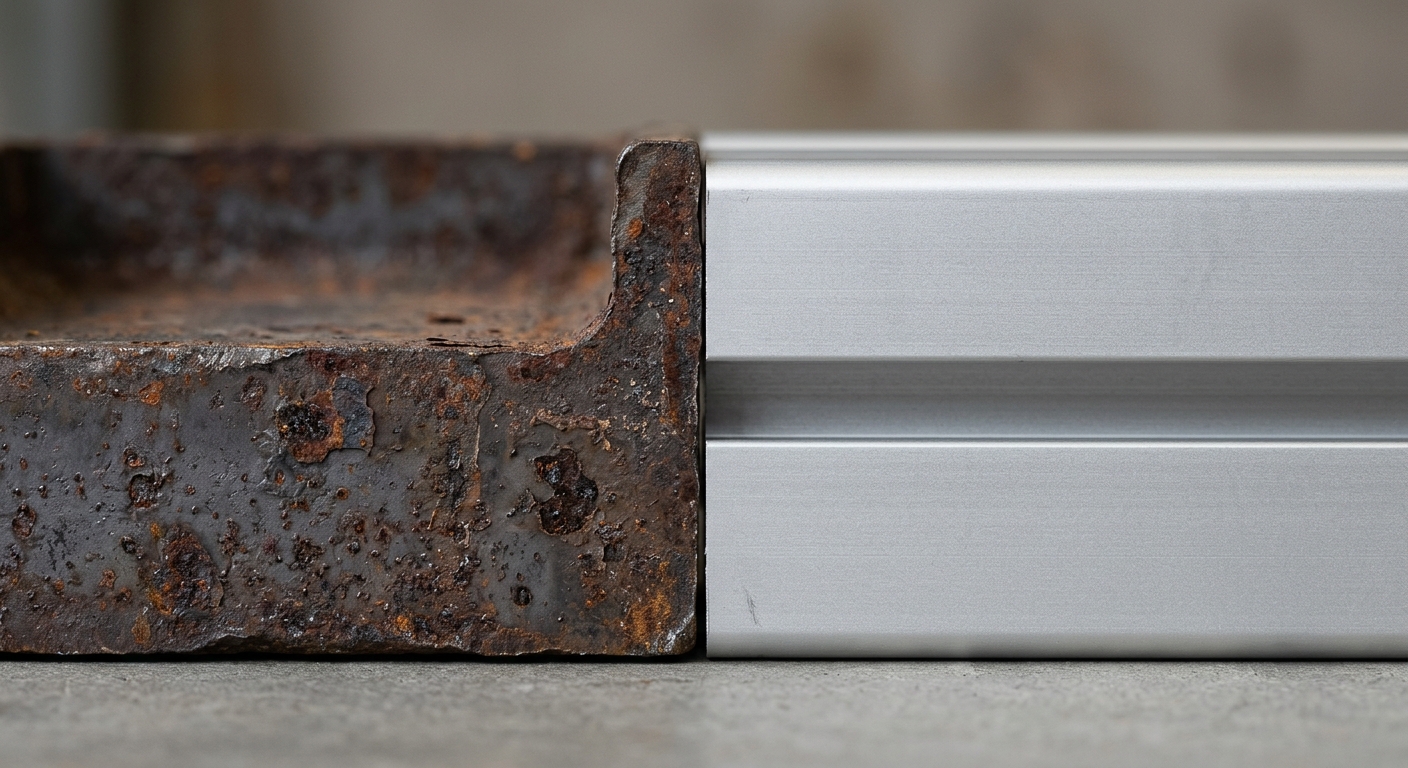
Steel starts rusting the moment it’s exposed to humid air without protection — sometimes within days near the coast. Aluminum, on the other hand, forms a self-healing oxide layer the instant it’s exposed to oxygen. That’s the fundamental corrosion story, and it’s why so many long-term maintenance budgets get blown by framing material choice, not glass or gaskets.
Steel framing needs galvanizing at minimum, and in coastal or industrial environments, a painted or powder-coated finish on top of that — with recoating every 8-12 years to prevent rust bleed-through at joints and fasteners. Skip a recoat cycle in a Gulf coast or Southeast Asian climate and you’ll see staining and pitting within 3-4 years.
Aluminum with anodizing or PVDF coating, by contrast, routinely holds up for 20-25 years with minimal intervention. We’ve written in detail about which finish actually survives two decades on a facade in our comparison of powder coating vs. PVDF vs. anodizing. If your project sits anywhere near saltwater or high humidity — think Middle East coastal cities or Southeast Asian ports — this single factor should weigh heavily in your material decision.
A resort developer building along the Red Sea coast originally specced painted steel mullions to save on upfront material cost. Within 18 months, salt spray had already begun corroding fasteners at glazing joints. The retrofit to aluminum framing cost more than if they’d specified it correctly from day one — a mistake that’s entirely avoidable with proper climate-based specification, similar to the guidance in our Middle East climate spec guide.
Let’s not pretend aluminum can do everything. Steel has roughly 2.5 times the tensile strength and significantly higher stiffness (elastic modulus) than aluminum alloys typically used in curtain walls. That matters enormously when you’re designing long unsupported spans — think atrium facades, sports venues, or airport terminals where mullions might need to span 8-12 meters without intermediate support.
Aluminum’s lower stiffness means it deflects more under the same wind load. Engineers compensate with deeper, reinforced sections or by adding steel sub-frames behind the aluminum facade — a hybrid approach that’s increasingly common on supertall towers. If your project involves serious wind load calculations, it’s worth reviewing what developers need to verify before sign-off in our breakdown of curtain wall wind load calculations.
For buildings under 30 stories with standard bay spacing (typically 1.2-1.5m), aluminum handles the structural demands comfortably. Beyond that, or in high seismic and high wind zones, expect engineers to recommend steel reinforcement at key structural nodes even within a predominantly aluminum system.
Steel is cheaper by raw weight, but that comparison is misleading — you need more of it, it needs more fabrication labor, and it requires ongoing protective treatment that aluminum doesn’t. When you total the lifecycle cost, aluminum often comes out ahead despite a higher upfront material cost per m².
| Cost Factor | Aluminum | Steel |
|---|---|---|
| Raw material | Higher per kg | Lower per kg |
| Fabrication complexity | Extrusion-based, highly automatable | More welding/cutting labor |
| Transport weight/cost | Lower shipping cost | Higher freight due to weight |
| Coating/protection | One-time anodizing/PVDF | Ongoing recoating cycles |
| 20-year lifecycle cost | Generally lower | Generally higher in humid climates |
If you’re sourcing overseas, weight also directly affects your shipping costs — something we cover in detail in hidden costs most buyers miss sourcing aluminum curtain walls overseas. A container that fits 40 tons of aluminum framing might only hold 15 tons of equivalent steel framing before hitting weight limits — meaning more containers, more freight cost, for the same wall area.
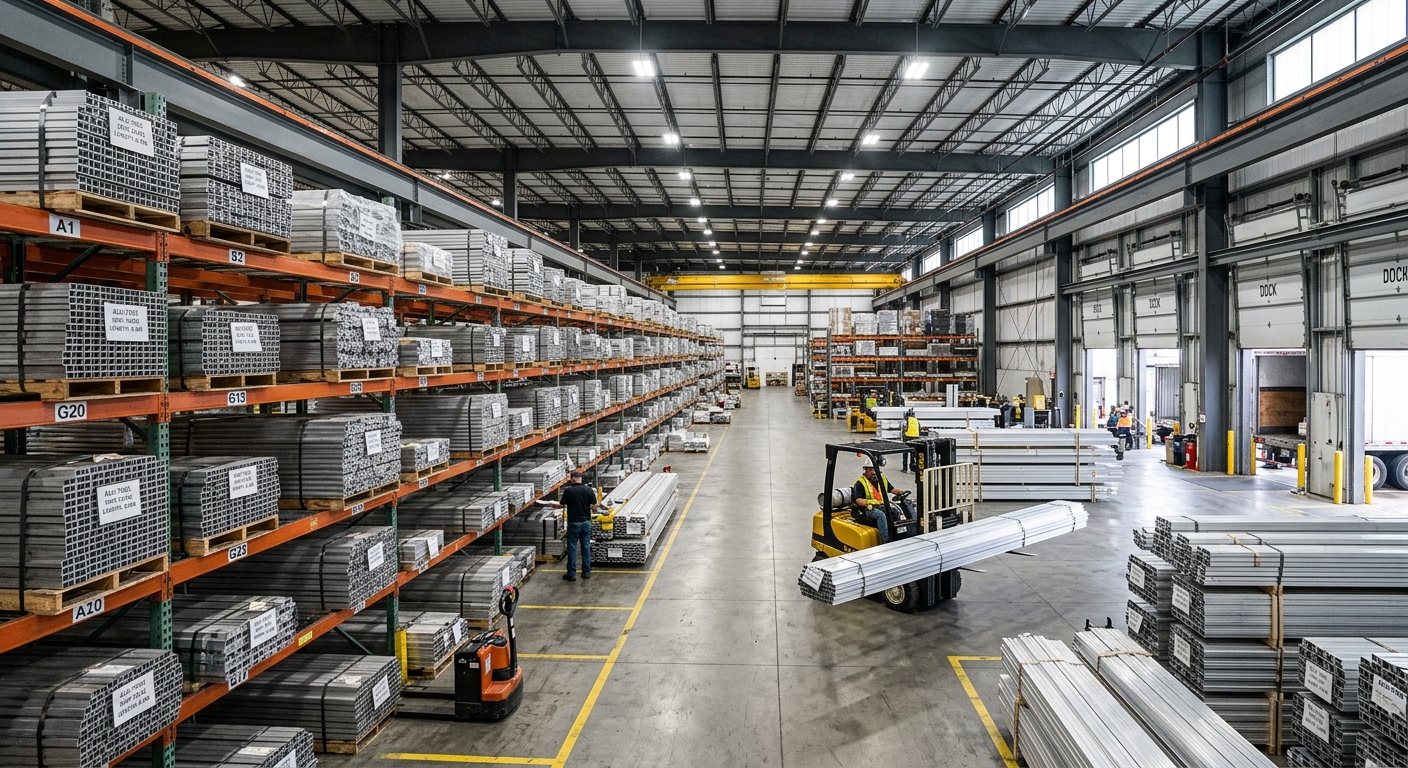
Here’s an inconvenient truth about aluminum: it conducts heat about 4 times better than steel. Left untreated, an aluminum frame would be a thermal disaster — a highway for heat loss in winter and heat gain in summer. But the industry solved this decades ago with thermal break technology: a polyamide or polyurethane strip that physically separates the interior and exterior aluminum sections.
Modern thermally-broken aluminum systems perform comparably to, or better than, unprotected steel framing — and the manufacturing ecosystem for aluminum thermal breaks is far more mature. Steel curtain wall systems can be thermally broken too, but the supply chain and design options are more limited and typically more expensive to engineer well. For a deeper look at where thermal performance actually gets lost in facade design, see our piece on hidden thermal bridges killing building energy performance, and for the metrics that actually matter when specifying, check R-values, U-values and SRI explained.
Don’t let this article convince you aluminum is always right. Steel framing — or hybrid steel-aluminum systems — makes sense in a few specific scenarios:
For most other applications — office towers, hotels, residential high-rises, retail facades — aluminum’s weight and corrosion advantages outweigh steel’s raw strength benefit. It’s also why aluminum dominates our own product range and why most of the projects we deliver globally use aluminum-based systems.
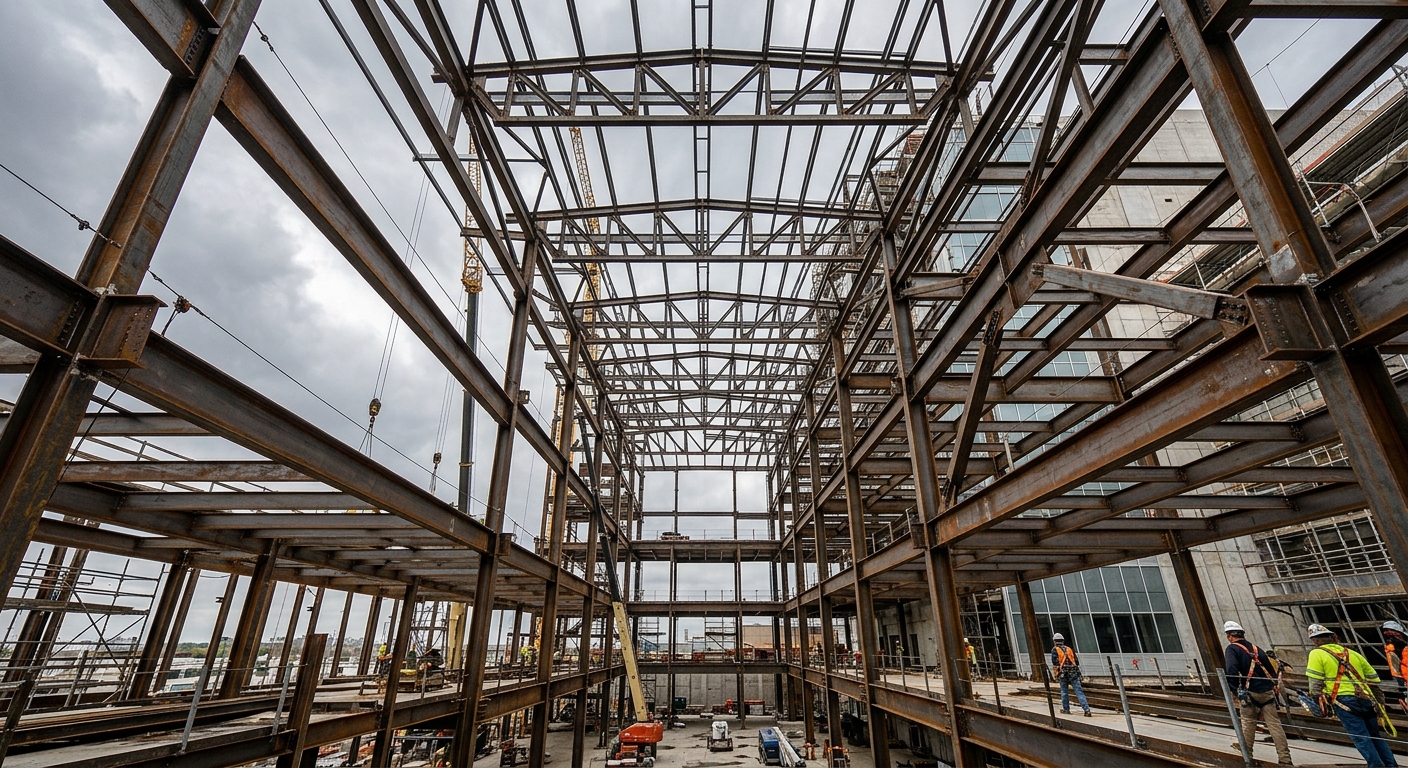
Say aluminum is the right call for your project — the decision doesn’t stop there. Not all aluminum alloys are created equal for curtain wall use. 6063 alloy is the industry standard for extruded mullions and transoms, offering a good balance of strength, extrudability, and corrosion resistance. 6061 is stronger but harder to extrude into complex profiles, making it more common in structural brackets and heavy-duty components.
Specifying the wrong alloy — or accepting a supplier’s substitution without checking — is a common way projects end up with underperforming facades. We break this down thoroughly in aluminum alloy grades explained: 6061, 6063, and what architects should actually specify.





Arabic

English

Spanish
Fill out the form below and our team will get back to you within 24 hours with a tailored solution.
