
APEX EcoBuilt
Leading Manufacturer of Aluminum Systems & Modular Housing
APEX EcoBuilt
Leading Manufacturer of Aluminum Systems & Modular Housing
 15 Sep, 2026Knowledges
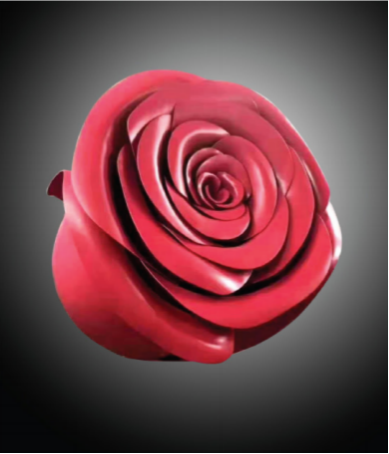
A decorative metal panel is a fabricated sheet of aluminum, steel, or stainless steel that's been laser-cut, perforated, embossed, or stamped into a pattern for visual effect rather than pure load-bearing strength. The metal itself supplies the aesthetic — the cutout, punched, or textured surface does the job that paint or fabric would do in another material. Decorative aluminum panels are typically fabricated in 1.5mm to 3mm gauges: thinner sheets (around 1.5mm–2mm) suit interior accents where weight and cost matter more than wind resistance, while 2.5mm–3mm gauges are common on exterior screens and facade accents that need to resist wind load and rougher handling. In practice, panels show up as free-standing screens, wall-mounted accents, infill for railings and fences, ceiling grilles, and cladding elements on building exteriors.
Types break down three ways: by the pattern cut into the metal, by the job the panel performs, and by whether it's built for indoor or outdoor exposure. Knowing which axis you're shopping on narrows the field fast.
Geometric and minimalist patterns — repeating triangles, hexagons, linear slats — read as clean and modern and suit almost any setting. Floral and organic patterns (leaves, branches, flowing curves) soften a space and fit hospitality or residential interiors well. Custom laser-cut designs let a client put a logo, map, or bespoke motif directly into the metal. Perforated or mesh patterns — rows of round or slotted holes across the sheet — trade solid coverage for airflow and light transmission. Perforated screens are usually specified by open area rather than hole size alone, and most decorative screens fall in the 20% to 40% open-area range: lower percentages hold more privacy and shade, higher percentages let in more light and airflow. A decorative screen panel in metal usually falls into one of these four buckets, and the pattern choice drives how much privacy, shade, or openness the finished panel actually delivers.
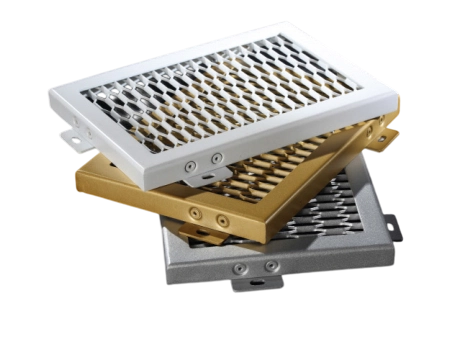
Room dividers and privacy screens use panel patterns to break up an open floor plan without building a solid wall. Ceiling grilles are drop-in or surface-mounted panels that hide mechanical services and ductwork behind a perforated or slotted face while still allowing airflow through. Fence and railing infill panels apply the same laser-cut and perforated patterns used indoors, but in a heavier gauge, since outdoor infill has to meet structural span and safety requirements that a purely decorative interior panel doesn't. Facade accent cladding applies the same cutting techniques at building scale, mounted directly onto or alongside a larger glazing or curtain wall system to add texture, shading, or a design signature to an otherwise flat elevation.
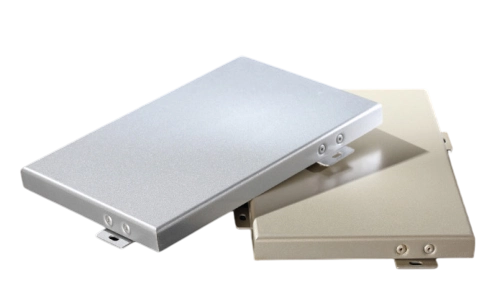
Interior panels prioritize appearance and ease of installation — cabinet fronts, accent walls, living-room feature panels, and room dividers rarely need to survive rain or UV exposure, so a lighter gauge and a standard powder-coat finish are usually sufficient. Exterior panels — privacy screens, sunshades, facade accents — need a finish built for weather exposure and typically a heavier gauge to resist wind load and handling. PVDF finishes are the more weather-durable option: they typically hold color and gloss for 20+ years outdoors, roughly double the service life of standard powder coat before recoating becomes necessary, which is why PVDF dominates exterior specs while powder coat remains common indoors for cost reasons. A panel finished for an interior accent wall is not automatically rated for an exterior privacy screen; matching gauge and finish to exposure is the first filter to apply, ahead of pattern or budget.
| Factor | Interior Panels | Exterior Panels |
|---|---|---|
| Typical aluminum gauge | 1.5mm–2mm | 2.5mm–3mm |
| Common finish | Powder coat | PVDF |
| Typical perforation open area | 20%–40% | 20%–40% |
| Primary design concern | Weight, cost, appearance | Wind load, UV, moisture, structural infill requirements |
Aluminum, steel, and stainless steel are the three metals used for decorative panels, and each shifts weight, cost, and corrosion resistance differently. Aluminum stays light and naturally corrosion-resistant, which is why it dominates both interior accents and exterior screens. Steel adds strength at a lower material cost but needs a protective coating to resist rust, especially outdoors. Stainless steel handles the harshest exposure — coastal or high-humidity sites — at a higher material cost than either aluminum or coated steel. For finish-by-finish comparisons across these alloys, the decorative metal panel materials breakdown covers PVDF, powder coat, and anodized options in more detail.
Decorative metal panels interior and decorative metal panels exterior share the same fabrication methods but not the same finish and thickness specs; a decorative screen panel metal choice for a lobby divider rarely survives a coastal facade.
Residential projects use decorative panels for accent walls, stair and railing infill, and cabinet fronts. Commercial and hospitality projects use them for lobby screens, elevator surrounds, and facade accents that need to hold up under public traffic. On building exteriors, decorative panels are frequently specified alongside a larger glazing system such as an edge-supported spider glass curtain wall system or a wood grain aluminum panel curtain wall system, adding shading or texture next to frameless glass in one case and a warmer finish beside metal cladding in the other. Contact us to discuss pairing options for a specific facade.
In fabrication, decorative sheet-good panels are commonly supplied in standard modular sizes such as 4' x 8' sheets, which keeps material waste down when cutting a repeating pattern across a large wall or ceiling run.
A handful of spec errors show up repeatedly once a design moves from concept to production. Undersizing the perforation relative to viewing distance is the most common: at close range, a tight, low-open-area pattern reads as fine texture, but from 30+ meters away that same panel can look almost solid, defeating the shading or airflow intent it was chosen for. Carrying an interior finish spec onto an exterior application is another — a powder-coat finish selected for a lobby screen chalks and fades much faster outdoors than PVDF would, often within a few years instead of holding up for decades. Pattern-repeat alignment across multiple sheets is frequently left as an afterthought; on a large wall or facade run, seams between panels break the visual rhythm if the layout isn't engineered before cutting begins. And outdoor fence or railing infill is sometimes specified at the same gauge as an interior accent panel with the same pattern, underestimating the structural span and safety requirements that outdoor infill has to meet.
On one mixed-material facade project, a perforated accent panel was originally specified in the same gauge and finish used for an interior lobby screen. Once the panel's exterior exposure was reviewed, it had to be re-specified to a heavier gauge and a PVDF finish before fabrication — a change our BIM/FEA modeling flagged before extrusion started, avoiding a costly reorder after the panels were already cut.
Start with location — interior finishes won't survive exterior exposure, and exterior-rated panels are often heavier than an interior project needs. Next, check pattern scale against viewing distance: a fine, tight pattern reads as texture from across a lobby but disappears entirely from the street, while a bold pattern that works on a facade can overwhelm a two-foot cabinet insert. Confirm the mounting method the substrate can support — frame-hung, direct-fixed, or drop-in ceiling grid installs each have different structural requirements. Match the finish to the maintenance budget: PVDF costs more upfront but needs recoating far less often than powder coat outdoors. Finally, weigh pattern complexity against cost — intricate custom laser-cut designs take more programming and fabrication time than a repeating geometric pattern.
If you're ready to move from concept to product, browse our decorative metal panel options for ready-made patterns and finishes, or contact us to discuss a custom design.
What are the different types of decorative wall panels?
Types break down by pattern (geometric, floral/organic, custom laser-cut, perforated/mesh), by function (room dividers, ceiling grilles, fence infill, facade cladding), and by installation location (interior vs. exterior). Most buying decisions start with function and location, then narrow to a pattern that fits the space and viewing distance.
What drives the cost of a decorative metal panel?
The main cost drivers are material choice (aluminum, steel, or stainless), panel gauge, pattern complexity, and finish. A repeating geometric pattern in standard aluminum with powder coat costs far less than a fully custom laser-cut design in stainless with a PVDF finish, since both the material and the cutting time scale with complexity.
How long does it take to fabricate a decorative metal panel?
Lead time depends mainly on whether the pattern is a stock design or fully custom. Repeating stock patterns can move to production faster since the cutting program already exists, while custom laser-cut designs need pattern programming and sometimes prototyping before full production begins.
How do you clean and maintain a decorative metal panel?
Routine cleaning is mild soap and water with a soft cloth, avoiding abrasive pads or harsh solvents that can dull the finish. PVDF-coated exterior panels generally need less frequent recoating than powder-coat panels exposed to the same weathering, but periodic rinsing to clear dust or salt buildup extends either finish's life.


Arabic

English

Spanish
Fill out the form below and our team will get back to you within 24 hours with a tailored solution.
