
APEX EcoBuilt
Leading Manufacturer of Aluminum Systems & Modular Housing
APEX EcoBuilt
Leading Manufacturer of Aluminum Systems & Modular Housing
 06 Jul, 2026Company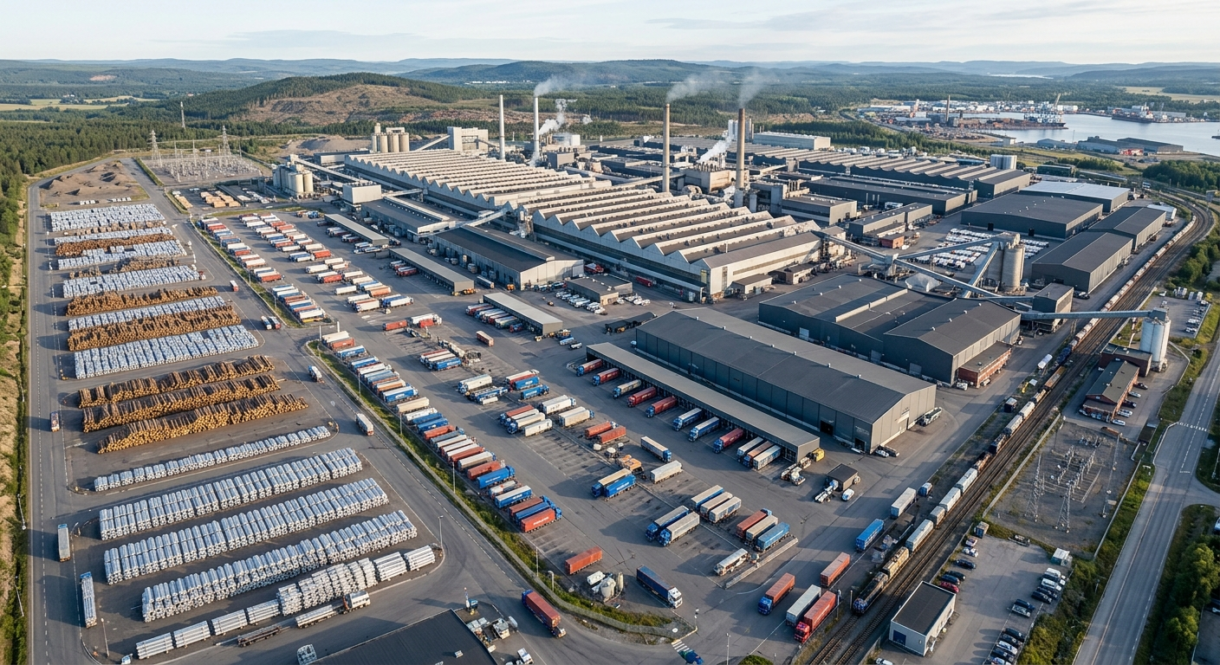
A 150,000 m² aluminum factory changes three things you can actually deliver: the size of what you build, the speed at which you ship it, and the tolerance range you can hold across thousands of tons of profile. At apexecobuilt, that footprint houses six extrusion presses, twin anodizing lines, and enough in-house surface finishing to keep curtain wall, window, and modular building production running in parallel — which is why a 40-container export order leaves in 30–45 days rather than 90. The sections below unpack what that scale physically enables, and where it matters most for developers and contractors.
Most buyers treat factory size as marketing fluff. It isn’t. Floor area directly constrains the length of profile you can extrude, the size of anodizing tanks you can run, and the number of parallel production lines you can keep moving without bottlenecking each other.
A 10,000 m² shop physically cannot hold a 60-meter run-out table. It cannot park 2,000 tons of billet inventory next to the press while another 5,000 tons sit in aging ovens. And it cannot separate anodizing from powder coating from PVDF — meaning finishes share lines, contaminate each other, and slow down.
At 150,000 m², those constraints disappear. You get dedicated bays for extrusion, surface treatment, fabrication, insulating glass, and curtain wall unitization. That separation is what lets a single project pull 800 tons of mill-finish profile and 400 tons of PVDF-coated profile out the door in the same week.
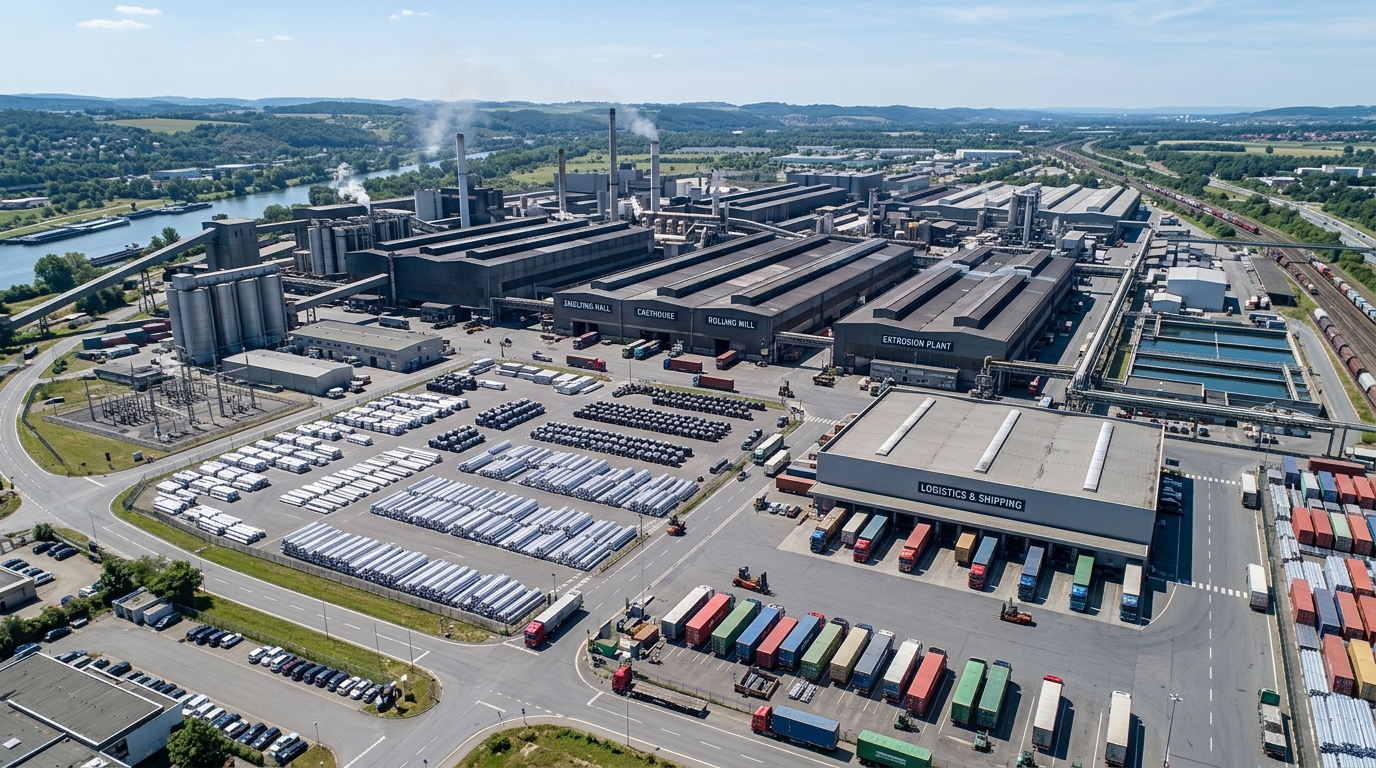
A common assumption is that one giant 4,000-ton press is better than several mid-size presses. For curtain wall and modular work, the opposite is true.
Running six presses in parallel — typically a mix of 600T, 1,800T, 2,500T, and 4,000T — means you can match press tonnage to profile complexity. A thin window frame doesn’t need a 4,000T machine; a structural mullion with a deep thermal break does. Forcing both through the same press wastes energy, slows throughput, and increases scrap.
With parallel presses, extrusion for a 40,000 m² curtain wall project can be split: unitized mullions on the 2,500T press, transoms on the 1,800T, decorative fins on the 600T. All three run simultaneously. Sequential extrusion on a single press would stretch the same work across 4–5 weeks. Parallel runs compress it to 8–10 days.
Each press is calibrated for a narrower profile range, so die wear patterns become predictable. We hold wall thickness tolerances to ±0.10 mm on critical dimensions — inside the precision class of DIN EN 12020-2 rather than the standard class most small plants default to.
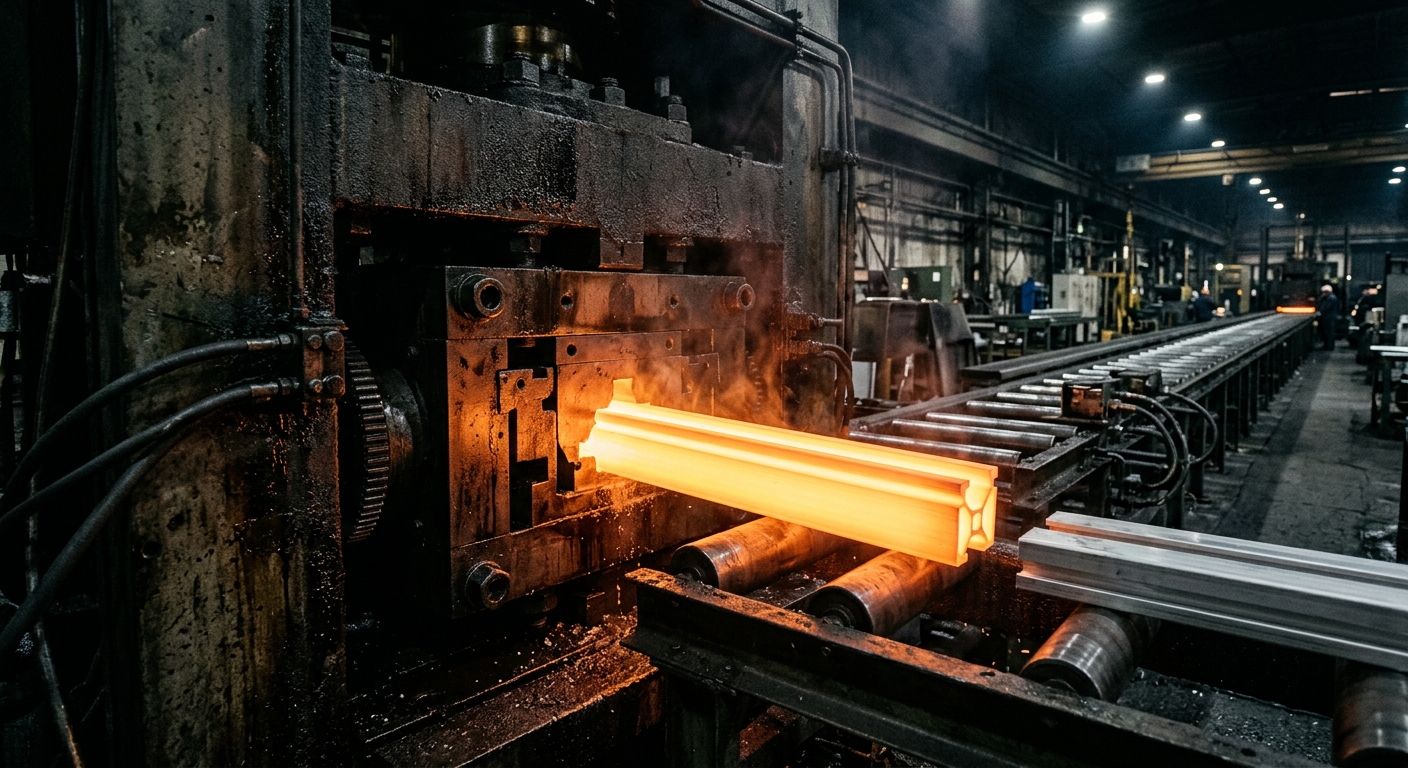
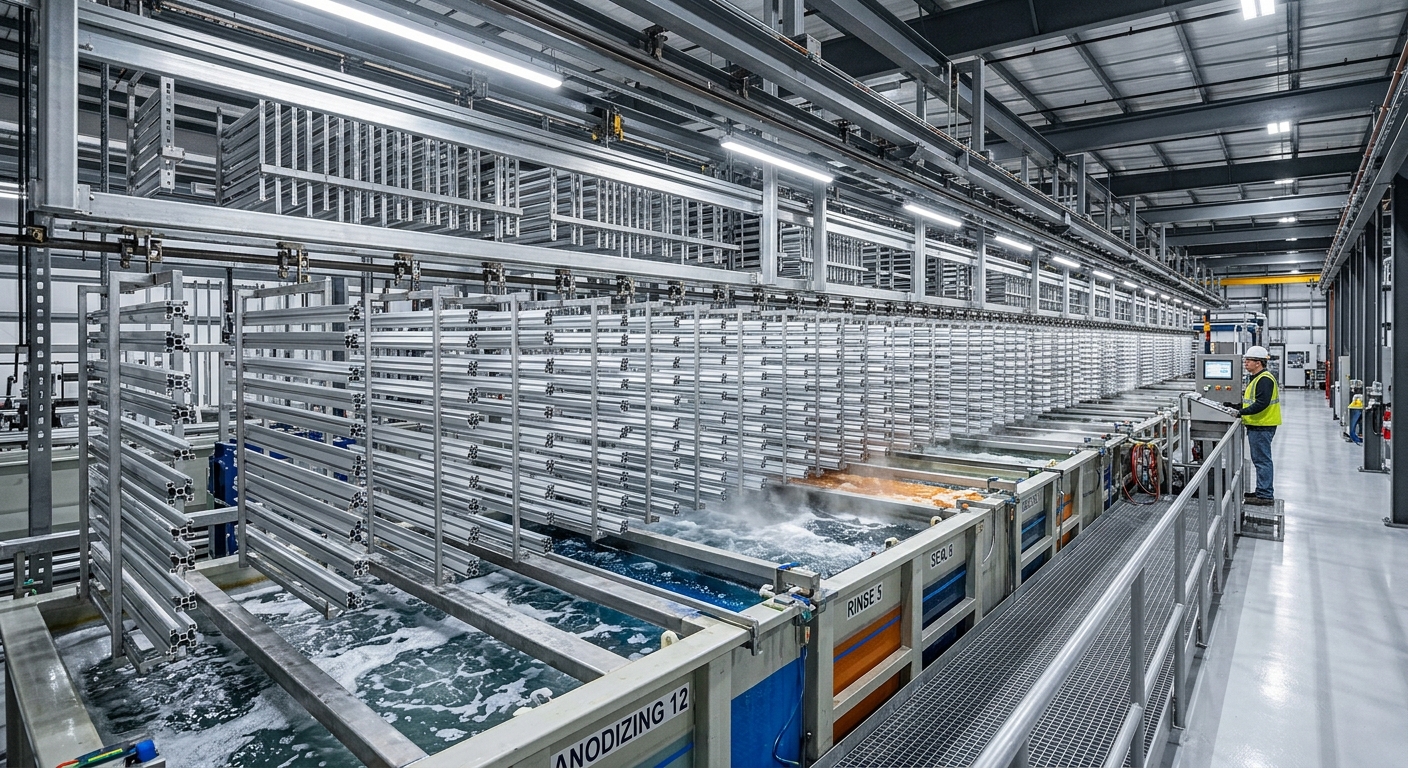
Here’s the overlooked bottleneck in aluminum manufacturing: finishing, not extrusion, is usually what delays a project. A small factory that extrudes in-house but sends profile out for PVDF coating adds 3–4 weeks of logistics plus the risk of damage in transit.
Our plant keeps six finishing processes in-house:
For example, a resort developer in Saudi Arabia recently ordered unitized curtain wall in PVDF champagne gold, interior window frames in wood-grain transfer, and balcony railings in anodized silver — three finishes, one purchase order, one shipment, one quality report. A plant without all six lines would have subcontracted two of them and added 6 weeks.
Scale solves a problem smaller plants quietly live with: billet supply volatility. When aluminum ingot prices swing 15% in a quarter — as they did repeatedly between 2023 and the current cycle — a factory with two weeks of billet on hand is forced to either absorb the spike or pass it to the customer mid-project.
A 150,000 m² footprint includes roughly 12,000 m² of covered billet storage. That holds 5,000+ tons of 6063, 6061, and 6082 alloy billet — enough for 30–40 days of full-capacity production. Combined with direct supply contracts with primary smelters, it means project pricing we quote in January is still honored in June, even if LME aluminum jumps 10%.
For contractors bidding fixed-price public projects, that stability is often more valuable than a marginally lower unit price from a smaller supplier with volatile pass-through pricing.
Most aluminum factories specialize in one product family — windows, or curtain wall, or industrial profile. Scale lets us run modular buildings, unitized curtain wall, doors/windows, and solar mounting profile simultaneously without cross-contamination or scheduling conflict.
Each product line has its own dedicated fabrication bay: CNC machining centers for curtain wall unitization, welding robots for modular steel-aluminum frames, IG line for double and triple glazing, and a separate assembly hall for prefab modular cabins. A developer can order a hotel project where the curtain wall skin, aluminum window systems, and modular back-of-house units all come from the same factory with matched finishes and aligned shipping schedules.
This matters because coordination failures between multiple suppliers — curtain wall from supplier A, windows from supplier B, modular from supplier C — are where project schedules die. One factory, one project manager, one consolidated shipment plan.
Patents sound like legal trivia. In manufacturing, they’re usually evidence of solved production problems.
Of the 179+ patents held across our operations, the majority aren’t product patents — they’re process patents. Things like: a die-cooling method that reduces surface streaking on long extrusions, a fixture design that holds unitized panels to ±1 mm squareness during assembly, a thermal-break rolling technique that improves polyamide strip bond strength under heat cycling.
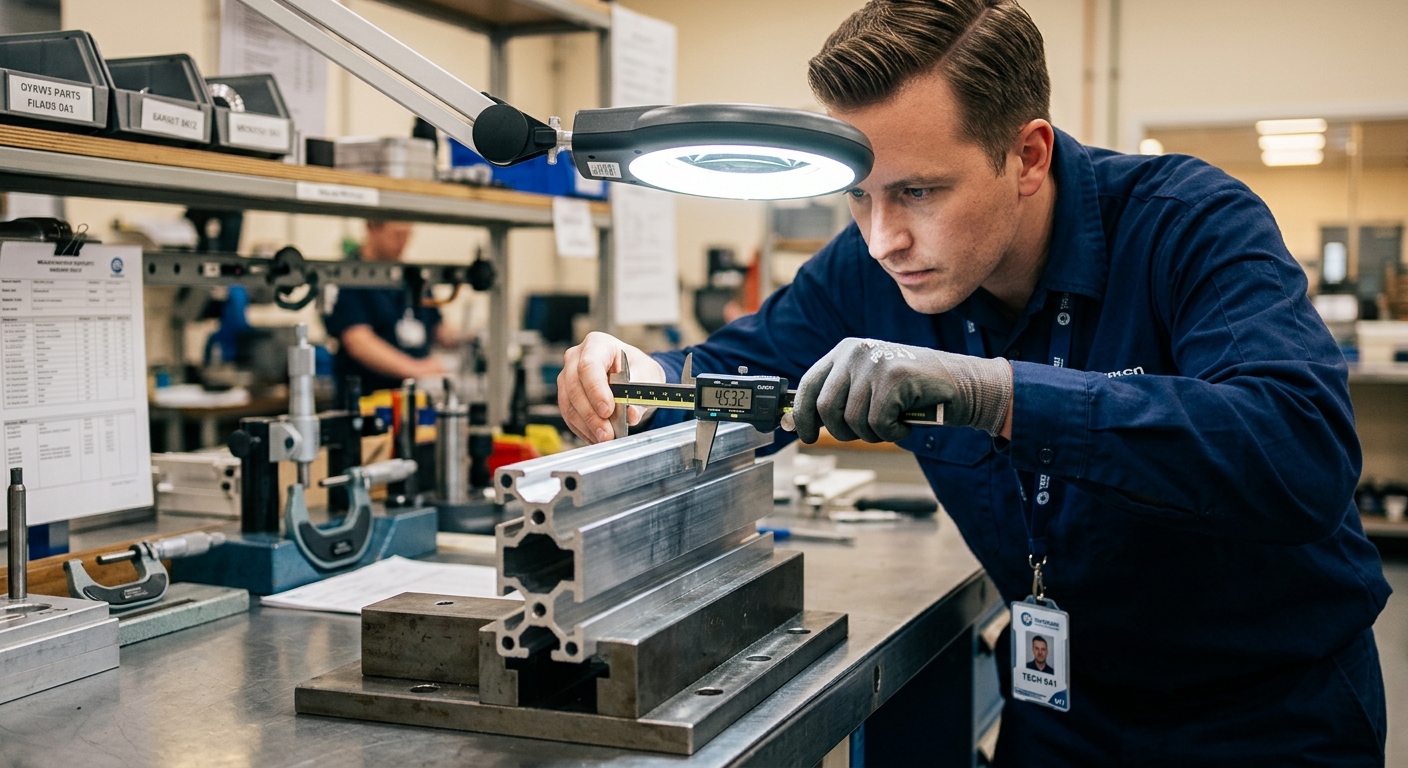
These matter because at 10,000+ tons/year of output, a 1% defect rate means 100 tons of scrap. Process patents that shave defect rates from 2.5% to 0.4% translate directly into price stability and delivery reliability. Our QC protocol includes:
The certifications — ISO 9001, ISO 14001, CE, RoHS — are table stakes. What separates plants is whether QC data is actually logged per batch and sent with the shipment. Ours is.
Here’s the practical payoff. For a typical 30,000–50,000 m² curtain wall project:
Compared to a mid-size plant quoting the same project at 120–150 days total, scale typically compresses the timeline by 30–40%. On cost, unit pricing for large volumes runs 8–15% lower than mid-size plants simply because fixed overhead spreads across more tons.
There’s also a hidden savings most buyers overlook: consolidated logistics. A single factory loading 40 containers from one port dock saves roughly $200–400 per container versus split-origin shipments. On a large project, that’s real money — a point we dig into further in our breakdown of curtain wall sourcing for Middle East projects.
A fair caveat: not every project benefits from a 150,000 m² factory. Small custom one-off fabrications — a 200 m² boutique storefront, a single villa window package — can sometimes be served faster by a local shop. Large factories are optimized for volume and predictability, not for 48-hour emergency fabrication of 12 custom brackets.
But once project volume crosses roughly 50 tons of aluminum, or involves multiple finishes, or needs to ship internationally, the math flips hard in favor of scale. Pricing, lead time, QC consistency, and shipment consolidation all compound.
For context, we’ve found the crossover point for most developers and contractors is around the $150,000–200,000 project value mark. Below that, local is fine. Above that, the savings and schedule reliability of a large integrated factory start to dominate.
Factory scale isn’t a vanity metric — it’s a constraint that determines what you can actually order, how fast, and at what tolerance. Before committing to a supplier, ask specific questions: How many extrusion presses? Which finishes are in-house versus outsourced? What’s the billet inventory in tons? What’s the monthly container-out capacity? The answers tell you whether the factory can realistically hold your schedule.
If you’re scoping a curtain wall, modular building, or multi-finish aluminum package above 50 tons, it’s worth seeing the capacity firsthand. Our team can walk you through a project feasibility review using your drawings, finish list, and target delivery window — explore our manufacturing and capabilities overview, browse completed projects for scale references, or contact us to start a quote.


Arabic

English

Spanish
Fill out the form below and our team will get back to you within 24 hours with a tailored solution.
