
APEX EcoBuilt
Leading Manufacturer of Aluminum Systems & Modular Housing
APEX EcoBuilt
Leading Manufacturer of Aluminum Systems & Modular Housing

 22 Jun, 2026Knowledges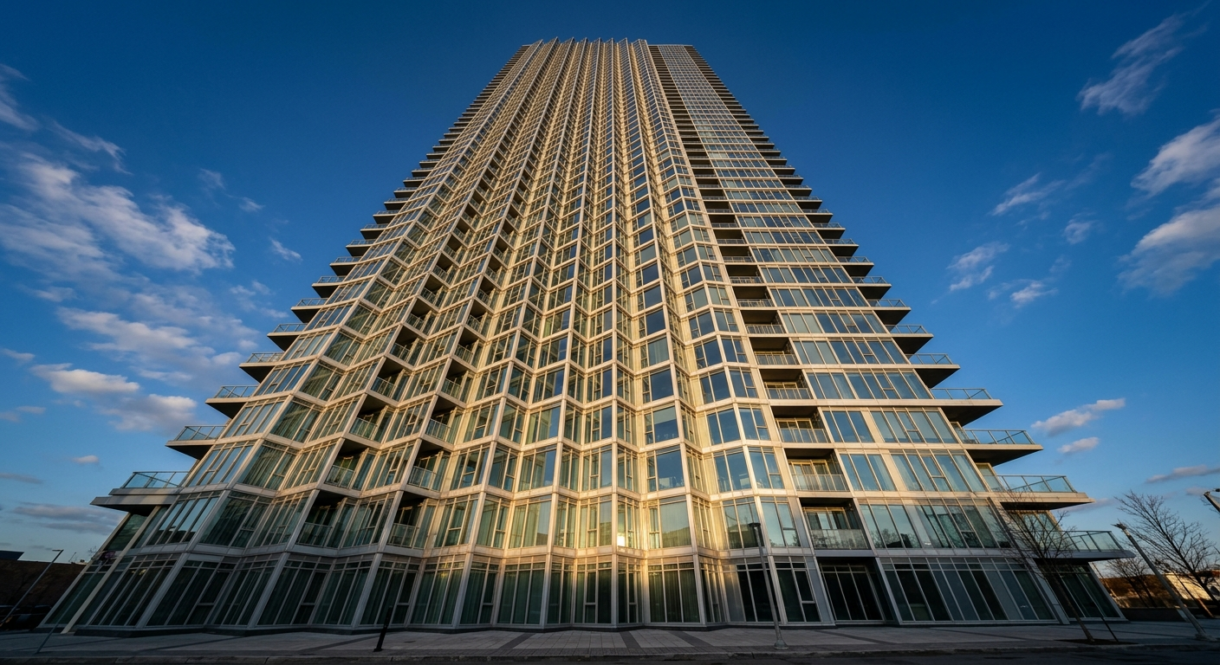
For high-rise residential towers, demand windows tested to at least 3,600 Pa wind load, 600 Pa water tightness, Class 4 air permeability, U-values under 1.4 W/m²·K, and Rw acoustic ratings of 38 dB or higher — anything less is a future warranty claim waiting to happen. The mistake most developers make is specifying windows the same way they would for a six-story walk-up, then wondering why the 35th floor leaks during the first monsoon. High-rise glazing lives in a fundamentally different physics environment, and the spec sheet has to reflect that.
Wind pressure at 100 meters can be 3–4 times higher than at ground level. That single fact rewrites every other number on the spec sheet — frame depth, glass thickness, gasket compression, anchor design, even the screws.
A window that performs beautifully on a podium-level unit will rattle, whistle, and weep at the top of a 40-story tower. The corners and upper third of any tall building also experience accelerated wind effects that can double localized pressure. So when a manufacturer quotes you a generic “residential aluminum window,” the first question should be: tested to what pressure, and on what floor of what reference building?
Developers who skip this step end up paying twice — once for the original install, and again for facade remediation 18 months in. We covered the wider envelope context in curtain wall wind load calculations, and the same logic applies to punched window openings.
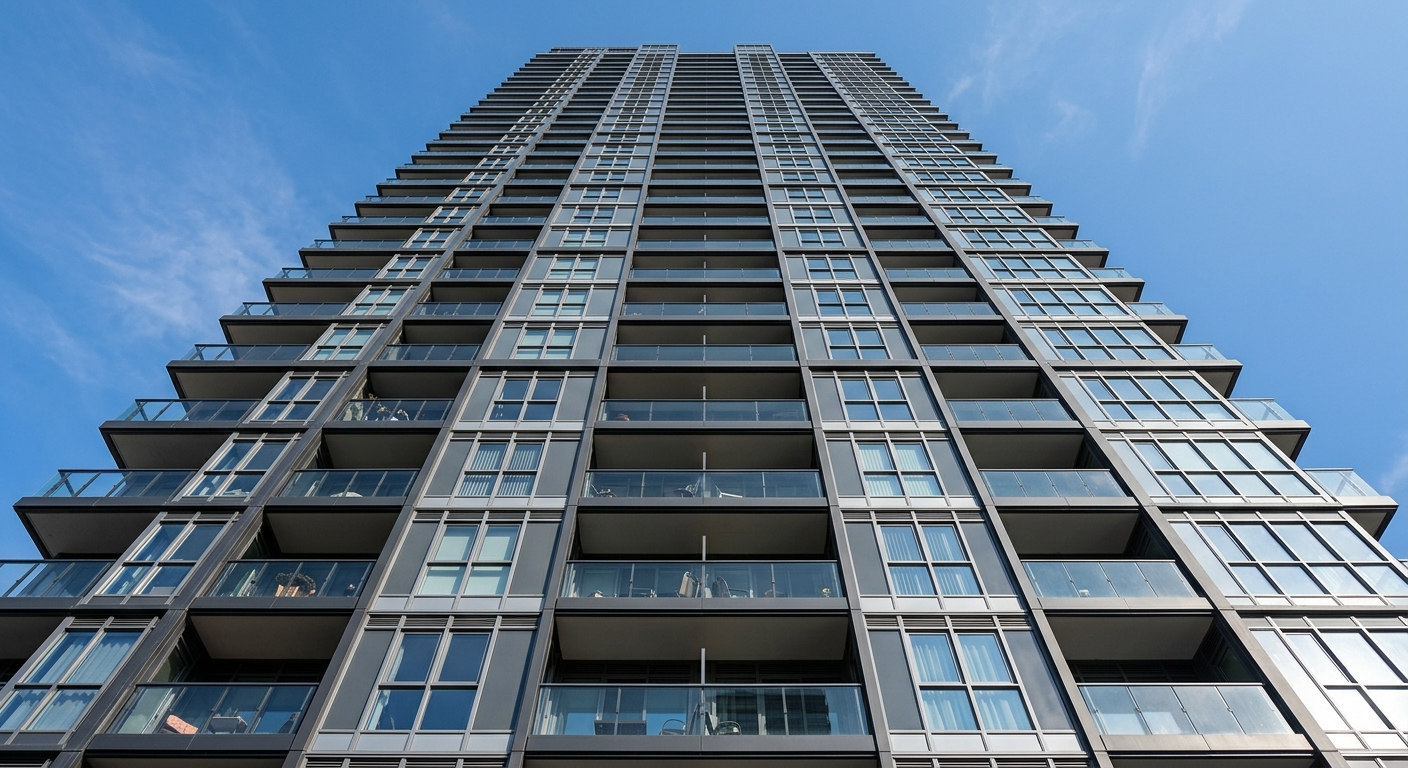
Structural wind load (P1, in Pascals) is the single most important spec on a high-rise window data sheet. For towers above 20 stories in typical coastal or open-terrain conditions, 3,600 Pa is the minimum. For Gulf coast, typhoon zones, or anything above 40 floors, 4,800–5,000+ Pa is realistic.
Here’s what that number actually controls:
A real example: a developer in Dubai building a 52-story tower originally specified 2,400 Pa windows. Wind tunnel testing revealed corner pressures of 4,200 Pa. The redesign added steel reinforcement and pushed frame depth from 65 mm to 95 mm — a 14% cost increase that prevented an eight-figure facade lawsuit.

Water tightness is tested per EN 1027 or AAMA 501 and reported as the pressure at which the window starts to leak. For high-rise residential, 600 Pa is the practical minimum because driving rain combined with wind pressure on a tall building routinely exceeds 450 Pa.
What separates a 300 Pa window from a 900 Pa window is not the glass — it’s the drainage architecture. Look for:
The corner gasket joint is where 80% of leaks originate. Vulcanized or molded corners cost more, but they’re the difference between a watertight window and a callback. We dig deeper into this failure mode in why curtain wall water leakage happens — the diagnostic logic is identical for punched windows.
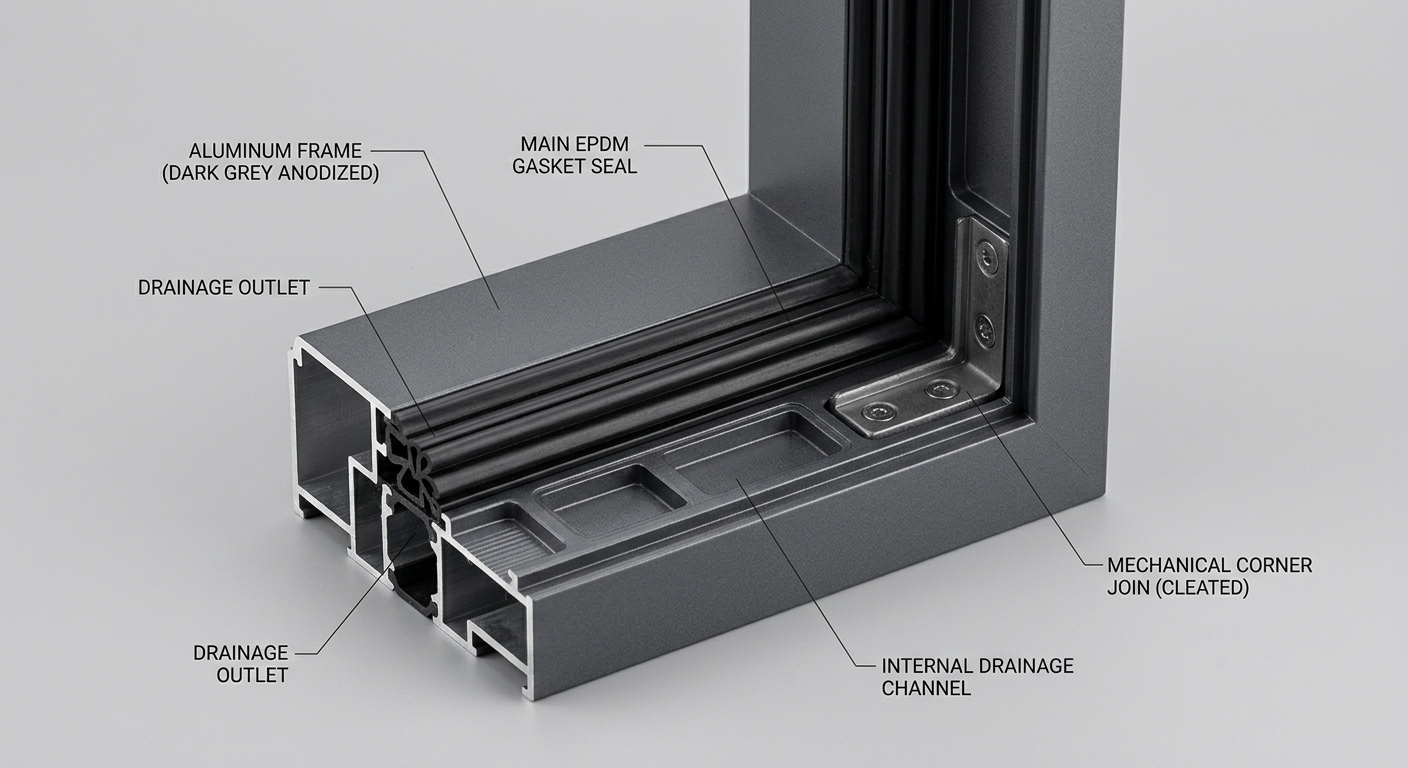
Air leakage is measured in m³/h per meter of joint length at a given pressure (EN 12207 classifies this from Class 1 to Class 4). For high-rise residential, Class 4 is non-negotiable. The difference between Class 3 and Class 4 is about 60% less infiltration — which on a 30,000 m² residential tower translates to roughly 8–12% lower HVAC load over the building’s life.
Where the air actually leaks:
Multi-point locking hardware (4–6 lock points around the sash perimeter) is the cheapest upgrade with the biggest air-tightness payoff. Single-point cam locks belong in budget low-rise — never above 15 stories.
Aim for whole-window U-values (Uw) at or below 1.4 W/m²·K for high-rise residential in temperate climates, and 1.8 for hot-arid zones where solar control matters more. The number on the brochure is usually the center-of-glass U-value — ignore it. What matters is Uw, which includes the frame, spacer, and edge effects.
The thermal break is the polyamide insulating strip inside the aluminum profile that separates the inside half from the outside half. For high-rise:
Why does this matter beyond energy bills? Condensation. A frame with a weak thermal break will form water droplets on its interior surface during winter — black mold appears within a year. We’ve seen this kill resale values in entire residential towers. The thermal physics behind it is explained in hidden thermal bridges killing energy performance.
For urban high-rise residential — anywhere within 500 m of a highway, airport flight path, or commercial district — target Rw ≥ 38 dB, with Rw + Ctr ≥ 33 dB. Below that, residents complain. Above 42 dB, you’re entering luxury territory and the cost curve gets steep.
The trick: acoustic performance is driven by glass mass and asymmetry, not the aluminum frame. A 6 mm + 12A + 8.8.4 laminated IGU outperforms a symmetric 6+12A+6 by 5–6 dB at the same thickness, simply because asymmetric glass disrupts coincidence frequency.
For a real-world frame: a developer building a residential tower next to a metro line specified 6.6.4 PVB laminated outer pane with 8 mm monolithic inner — Rw of 42 dB, Ctr of -3, total Rw+Ctr of 39 dB. Tenants reported they couldn’t hear trains. The unit cost premium over standard double-glazing was about 11%.

Tilt-and-turn is the default high-rise residential operation type in Europe and increasingly in Asia for good reason. It seals against a continuous gasket with hardware that pulls the sash tight at 4–6 points, hitting Class 4 air-tightness without trying.
Avoid these in high-rise unless absolutely necessary:
Fixed (non-operable) units paired with a single tilt-and-turn vent per habitable room is the most reliable pattern. You preserve daylight, cut hardware cost, and dramatically reduce failure surface area.
Don’t accept a manufacturer’s data sheet at face value. Ask for the original third-party test reports — not just the cover page summary.
Critically, check that the tested specimen matches the size and configuration you’re buying. A window tested at 1.2 m × 1.5 m doesn’t automatically certify a 2.4 m × 2.7 m unit — performance degrades non-linearly with size. We list the rest of the documentation traps in hidden costs sourcing aluminum overseas.
High-rise windows live in direct UV for decades. The aluminum surface treatment determines whether the facade still looks new at year 20 or becomes the reason for a refurbishment levy.
For high-rise residential, PVDF (Kynar 500-based) coatings are the benchmark — 70% PVDF resin with proper pretreatment delivers 20+ years of color retention with minimal chalking. Powder coating (qualicoat seaside class) is acceptable in non-coastal environments. Anodizing offers the best abrasion resistance but limits color options.
The full breakdown of when to use each finish lives in our powder coating vs. PVDF vs. anodizing guide — required reading before locking your spec.
The cheapest way to get good windows is to write a tight specification before any supplier sees the project. A vague RFQ invites every manufacturer to optimize against you. A precise one filters out the wrong vendors immediately.
At a minimum, your window spec section should declare numeric thresholds for: wind load (P1/P2/P3), water tightness, air permeability class, Uw, Rw+Ctr, frame depth minimum, thermal break width and material, hardware lock points, finish class and warranty, and required test certifications by region. Anything left ambiguous becomes a value-engineering target during negotiations.
At apexecobuilt, we manufacture aluminum window systems engineered around these exact thresholds — 179+ patents in extrusion, thermal break design, and hardware integration, tested to international standards, and delivered at scale for residential towers across 80+ countries. If you’re scoping a high-rise project, send us your envelope drawings and target performance values — our engineering team will spec a system that matches the building, not a catalog. Start at our solutions overview or get in touch through contact us.





Arabic

English

Spanish
Fill out the form below and our team will get back to you within 24 hours with a tailored solution.
