
APEX EcoBuilt
Leading Manufacturer of Aluminum Systems & Modular Housing
APEX EcoBuilt
Leading Manufacturer of Aluminum Systems & Modular Housing

 18 May, 2026Industry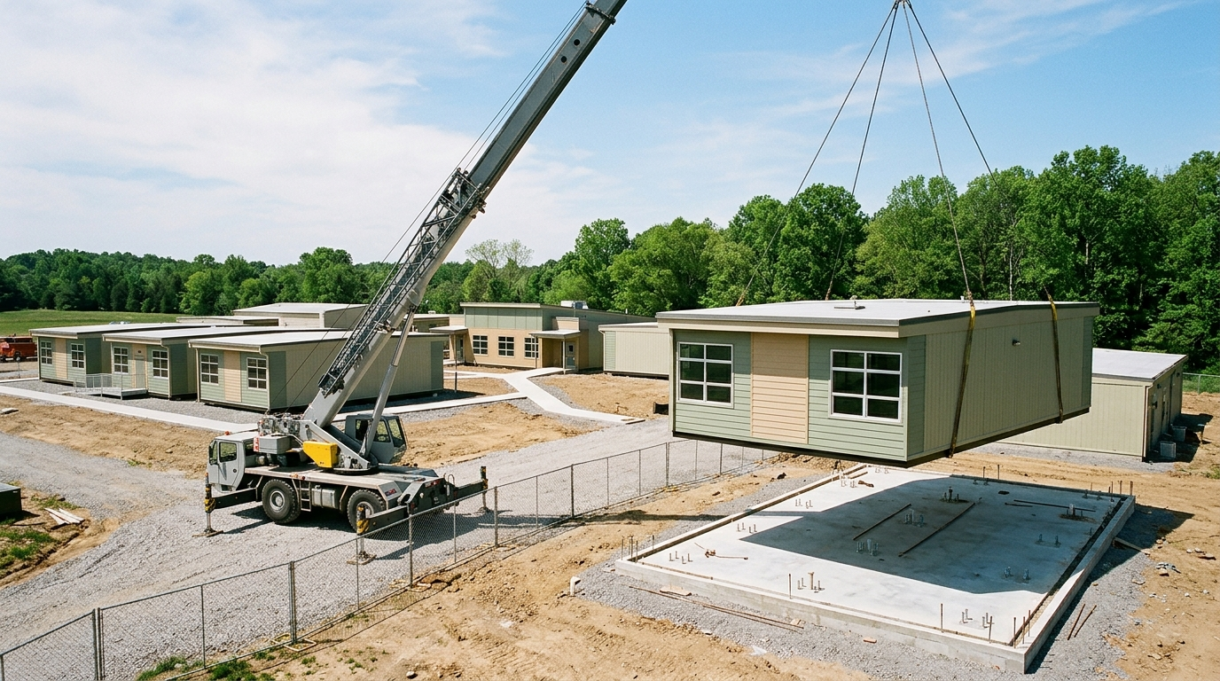
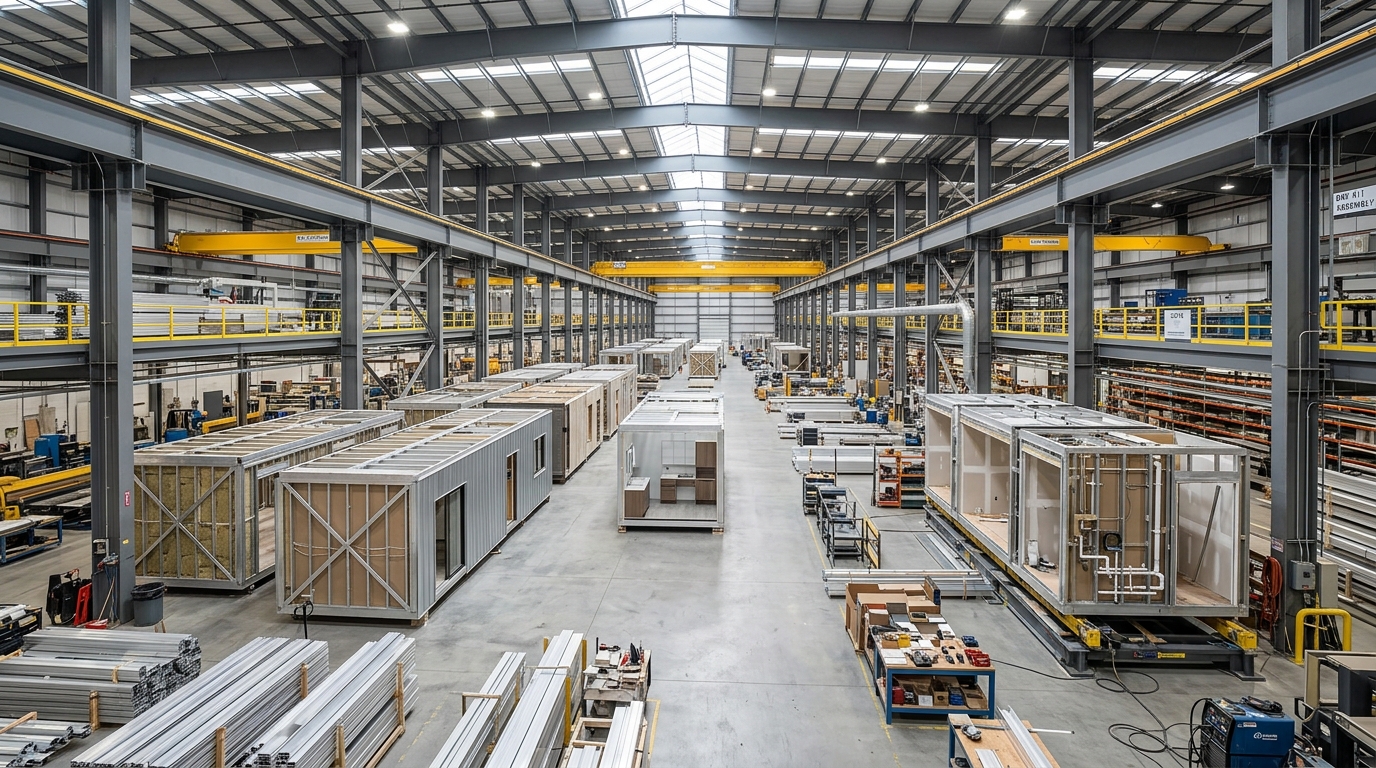
Governments are deploying modular classrooms and clinics in 4–6 months because the buildings are manufactured in a factory while site preparation happens in parallel — collapsing a 24-month traditional timeline into a single procurement cycle. The approach works because 80–90% of the construction (structure, MEP, finishes, even medical-grade flooring) is completed off-site under controlled ISO conditions, leaving only foundations, utility connections, and module assembly for the project site. The result: schools open before the academic year, clinics serve outbreak zones in weeks, and disaster recovery facilities arrive while traditional contractors are still mobilizing.
The math is brutal for traditional construction. A standard 12-classroom school in Southeast Asia takes 18–22 months from groundbreaking — and that’s before you count permit delays, monsoon seasons, and contractor disputes. A modular equivalent? 5 months from contract signing, including shipping.
Three pressures are forcing the shift:
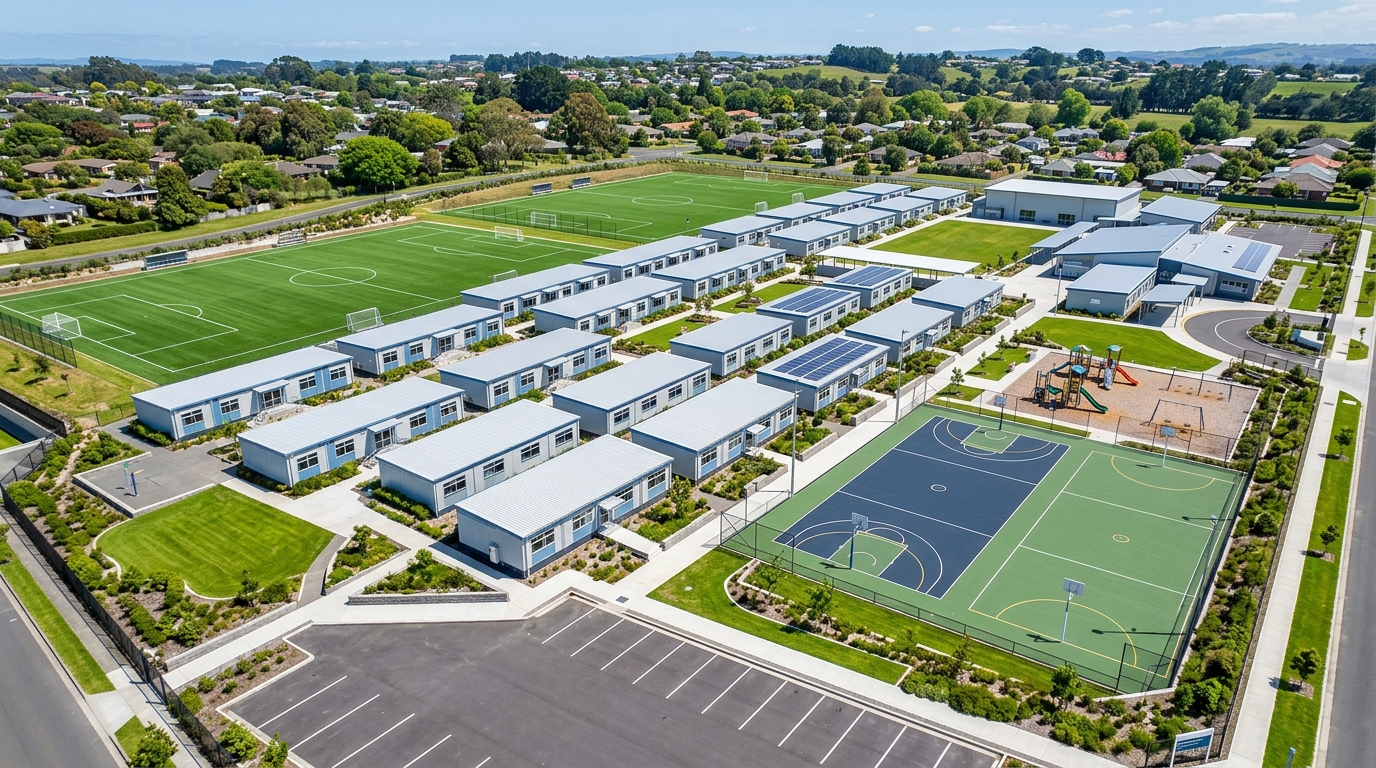
For instance, a provincial education authority in Central Asia ordered 48 classroom modules in March, took delivery in July, and held first lessons in September — same calendar year. That’s not possible with site-built construction.
Let’s break down a typical 2,400 m² modular clinic project — about 40 patient rooms, two operating theaters, and an outpatient wing.
BIM models, MEP routing, and module split drawings. The client signs off on a fixed layout.
Modules are built in the factory while contractors pour foundations and run trenching on-site. This parallelism is the single biggest time saver — traditional projects can’t start interiors until the structure is enclosed.
For overseas projects, modules ship in 40′ high-cube containers or as flat-pack steel-frame units. Customs clearance is the most underestimated risk — build in 2 extra weeks for unfamiliar markets.
A 40-module clinic is craned into position in 8–12 working days. Then comes interconnection, final MEP testing, and equipment installation.
Total: ~22 weeks (5 months). The traditional equivalent runs 18–24 months. Factory-controlled manufacturing is what makes this compression possible.
A classroom module isn’t just a steel box with windows. The technical spec matters more than buyers realize.
Children + concrete-floored boxes = chaos. A well-designed module hits an STC rating of 50+ between rooms, using mineral wool wall cores and resilient channel framing. Cheap modulars skip this — you’ll know within a week.
Window-to-floor ratio should sit at 1:5 minimum. For tropical climates, cross-ventilation through operable louvers reduces HVAC load by 30–40%. In colder regions, triple-glazed units with thermal breaks become non-negotiable.
Public school floors need to handle 3.5 kN/m² live load. Specify 1.5mm galvanized steel sub-floors with high-pressure laminate finish — not vinyl over plywood, which fails in 18 months under children’s traffic.
Smart procurement teams ask for demountable interior partitions so a classroom can become two offices later. A school in coastal Vietnam used this to convert classrooms into a community vaccination site during peak COVID — same building, six-hour reconfiguration.
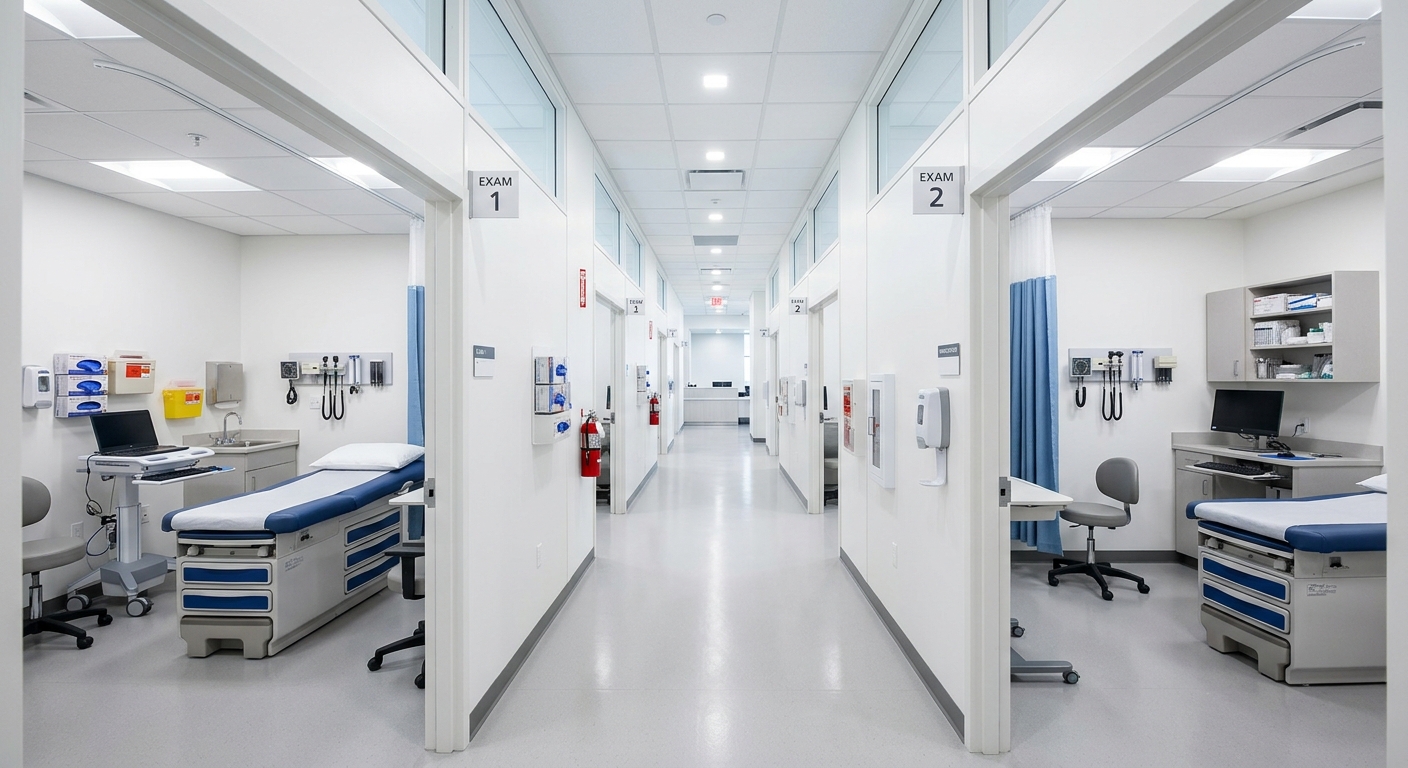
Healthcare modules are not classrooms with sinks. Regulatory and infection-control requirements drive a completely different spec.
Walls need seamless welded vinyl or antimicrobial paint with coved skirtings — no dust traps, no porous joints. Floors are typically welded sheet vinyl with 100mm coved upturns. This isn’t optional for accredited facilities.
Operating theaters need positive pressure relative to corridors; isolation rooms need negative pressure. A modular supplier without medical experience will quote a single AHU and call it done. That’s a fail at commissioning.
Dual-feed electrical, UPS backup for critical zones, and medical gas piping (O2, vacuum, medical air) need to be installed and tested in the factory. Site retrofitting these systems erases your time savings.
A West African ministry of health deployed 12 modular primary clinics across rural districts in 7 months — buildings that would have taken 4 years through traditional procurement. Each clinic included delivery rooms, a small lab, and solar+battery backup. The trick was standardizing on one module design and replicating it 12 times, which collapsed engineering costs by 60%.
Modular isn’t always cheaper per square meter — sometimes it’s 5–10% more for the building itself. But the total cost of ownership tells a different story.
For a deeper look at the sustainability side, our piece on modular vs. traditional eco construction breaks down embodied carbon comparisons.
Most modular failures aren’t technical — they’re procurement. Five patterns we see repeatedly:
The cheapest bid usually means thinner steel, no thermal break, and PVC windows that warp at 40°C. Specify performance, not price-per-square-meter.
Modules need flat, level foundations within ±5mm tolerance across the entire footprint. Many government sites aren’t surveyed properly until modules are already in transit. Disaster.
A 12m module can’t navigate a 1990s mountain road. Verify route surveys before committing to module dimensions. In some cases, flat-pack steel-frame construction is the smarter choice over volumetric modules.
Allocate 5–8% of contract value for on-site commissioning, especially for clinics. This is where compliance certificates are won or lost.
Specify a 5-year spare inventory for door hardware, HVAC filters, and electrical components — particularly in remote deployments where re-ordering takes 90+ days.
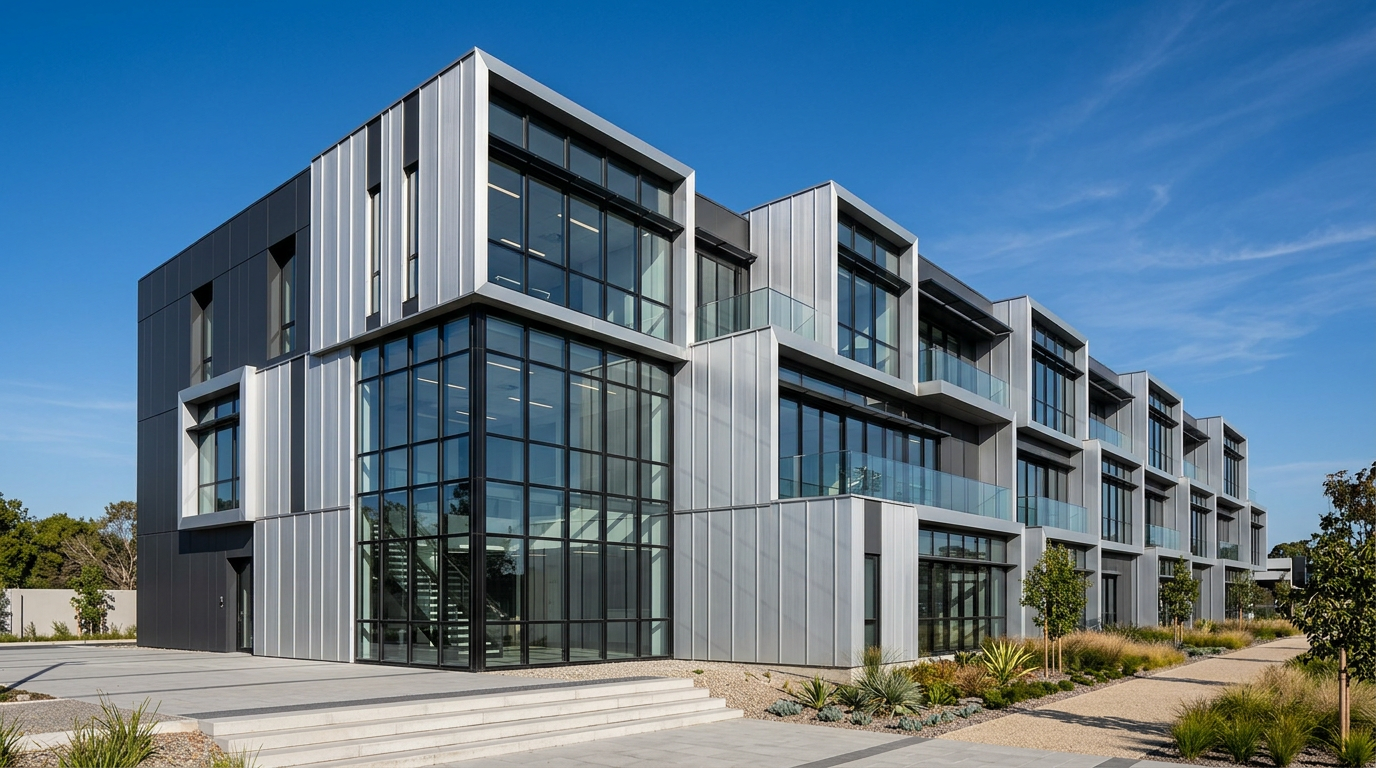
Public-sector buyers increasingly answer to ESG mandates and lifetime carbon disclosures. Modular has measurable advantages here.
Factory production reduces material waste by 30–50% compared to site cutting. Aluminum frame systems with high recycled content (70%+ post-consumer) further reduce embodied CO2 — important for buildings expected to last 40+ years.
Tight factory tolerances mean air leakage rates of 1.0–1.5 ACH @ 50Pa, versus 5–8 for typical site builds. That’s a 20–30% HVAC energy reduction over the building’s life.
This is the underrated piece. A modular school in Saudi Arabia originally built as temporary capacity during a new district rollout was disassembled after 8 years and redeployed as a satellite training center 200 km away — 90% of the building was reused. Traditional construction has zero residual asset value.
If you’re a procurement officer or consulting engineer drafting an RFP, here’s the structure that actually delivers good outcomes:
Require evidence of: ISO 9001 + ISO 14001 certification, completed projects of similar scope, minimum factory footprint (50,000 m² is a reasonable floor for serious players), and references from public-sector clients.
Technical first (weight: 60–70%), commercial second. This prevents the lowest-bid trap.
Instead of “use Brand X HVAC,” specify outcomes: cooling capacity per zone, noise limits, energy performance targets. Lets manufacturers optimize.
30% on order, 40% on factory completion (verified by third-party inspection), 20% on delivery, 10% on commissioning sign-off. Don’t pay everything before commissioning.
Minimum 24 months building warranty, 10 years structural. Specify in-country service response within 72 hours for critical building systems.
For a deeper look at applications and use cases, browse our applications portfolio and completed projects.
Three trends are reshaping the category in 2026 and beyond.
Ministries are moving away from project-by-project design toward pre-engineered catalogs — a country might have 5 approved classroom typologies and 3 clinic typologies, drastically reducing engineering time and unit cost. Indonesia, the UAE, and Rwanda have already moved in this direction.
Modular cores (bathrooms, MEP risers, operating theaters) inside larger site-built or unitized curtain wall envelopes. This brings factory precision to the complex bits while keeping architectural flexibility for the facade.
Cyclone-rated tie-downs, seismic isolation bearings, flood-elevated foundations — increasingly written into baseline RFPs rather than treated as upgrades. Public buildings are expected to function as emergency shelters when needed.
The short version: modular delivery for classrooms and clinics is no longer experimental. It’s how serious governments are catching up on infrastructure backlogs, and the timeline advantage compounds across every project in a multi-year program. The key is choosing a manufacturer with the factory scale to handle program-level volumes, the engineering depth to meet medical and educational specs, and the export experience to clear customs without surprises.
If you’re scoping a public infrastructure program — whether 4 clinics or 400 classrooms — start with a feasibility conversation that includes factory tour, reference site visits, and a realistic delivery schedule for your specific country. Talk to our team about your project, or explore our modular building solutions to see how the spec choices map to real public-sector deployments.




Arabic

English

Spanish
Fill out the form below and our team will get back to you within 24 hours with a tailored solution.
