
APEX EcoBuilt
Leading Manufacturer of Aluminum Systems & Modular Housing
APEX EcoBuilt
Leading Manufacturer of Aluminum Systems & Modular Housing

 01 Jun, 2026Industry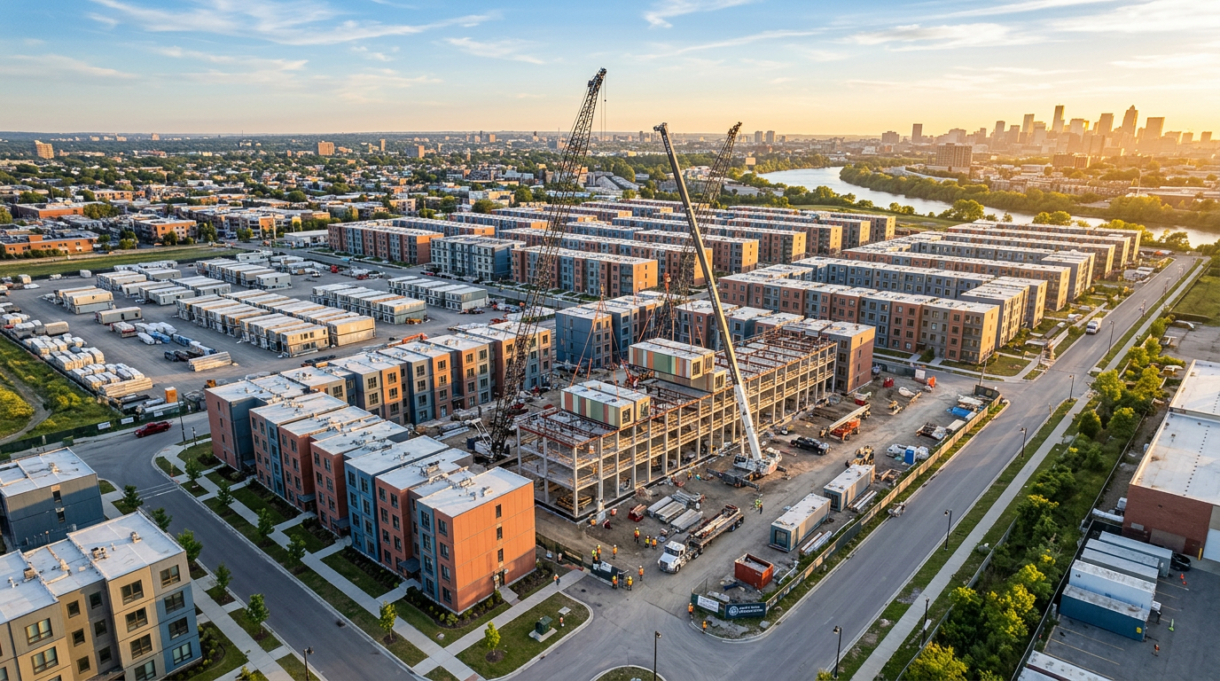
Modular construction is reshaping affordable housing in 2026 by cutting delivery timelines in half, reducing per-unit costs by 15–25%, and letting governments hit unit targets that traditional construction simply cannot meet. The shift is no longer theoretical — public housing authorities from Singapore to the UK to the Gulf are placing multi-thousand-unit factory orders, and the math finally works at scale. What changed is the manufacturing capacity, the financing models, and a hard political deadline most countries are now facing.
The housing math broke around 2023. Construction labor shortages, material inflation, and post-pandemic backlog meant traditional builds could not keep up with demand. Three years later, modular has moved from “pilot project” to default delivery method for public housing pipelines.
A few numbers explain the shift. The UK’s Affordable Homes Programme now allocates roughly 25% of new units to modern methods of construction. Singapore’s HDB has hit over 80% PPVC (Prefabricated Prefinished Volumetric Construction) on new builds. Saudi Arabia’s Sakani programme is committing to factory-built housing for Vision 2030 delivery windows that pure site construction would miss by years.
The trigger is simple: site labor productivity has been flat for two decades, while factory output per worker has tripled. When you are trying to deliver 30,000 units in 36 months, that gap decides the project.
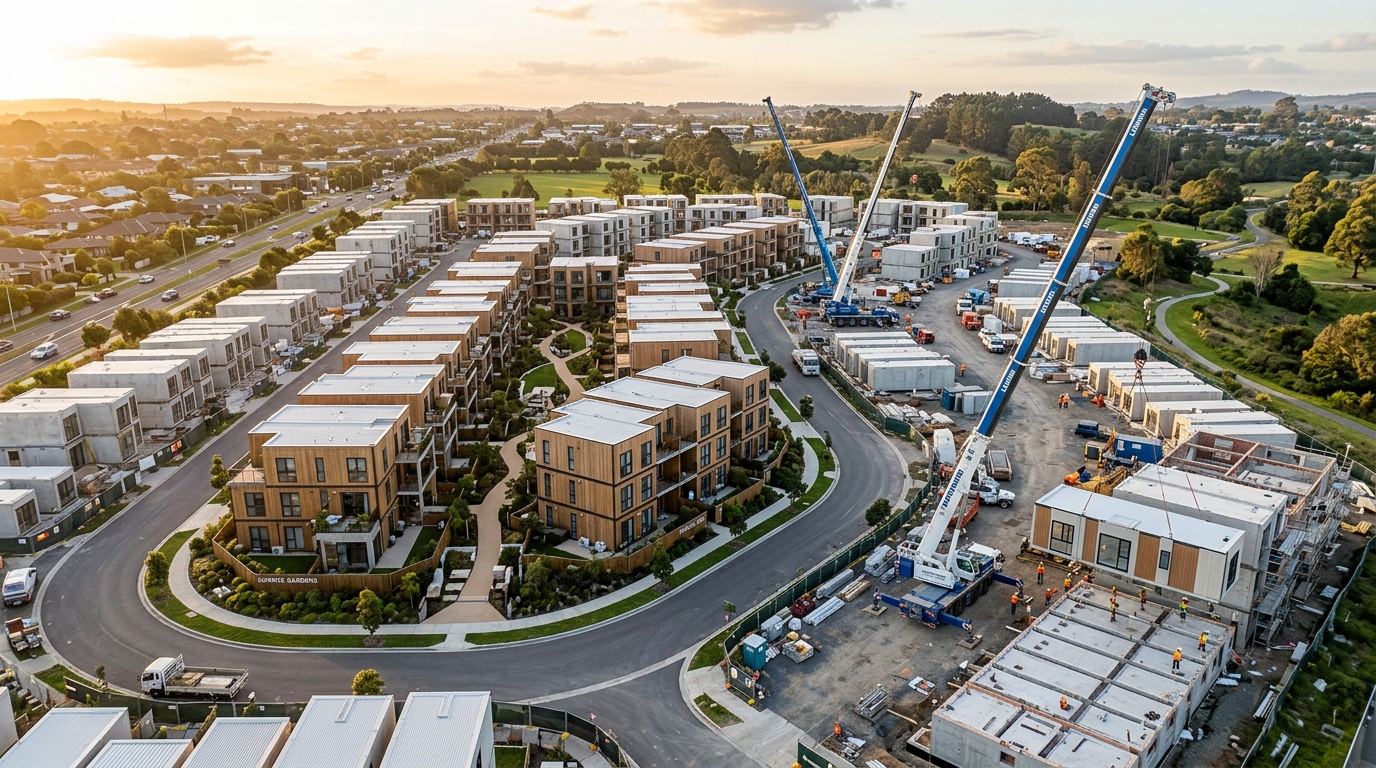
The savings are not just headline numbers — they show up in five distinct buckets, and program directors should know which ones apply to their site.
A 200-unit affordable apartment block built traditionally takes 22–28 months. The same project delivered with volumetric modules: 10–14 months from contract to handover, because foundations and module fabrication run in parallel. That is real rent revenue starting a full year earlier.
Per-unit costs typically land 15–25% below site-built equivalents at the same finish level. Most of that comes from factory labor efficiency, bulk procurement, and eliminated rework. The remainder is reduced financing cost from the shorter build window.
For a deeper breakdown, our piece on modular vs. traditional eco construction walks through the carbon math too.
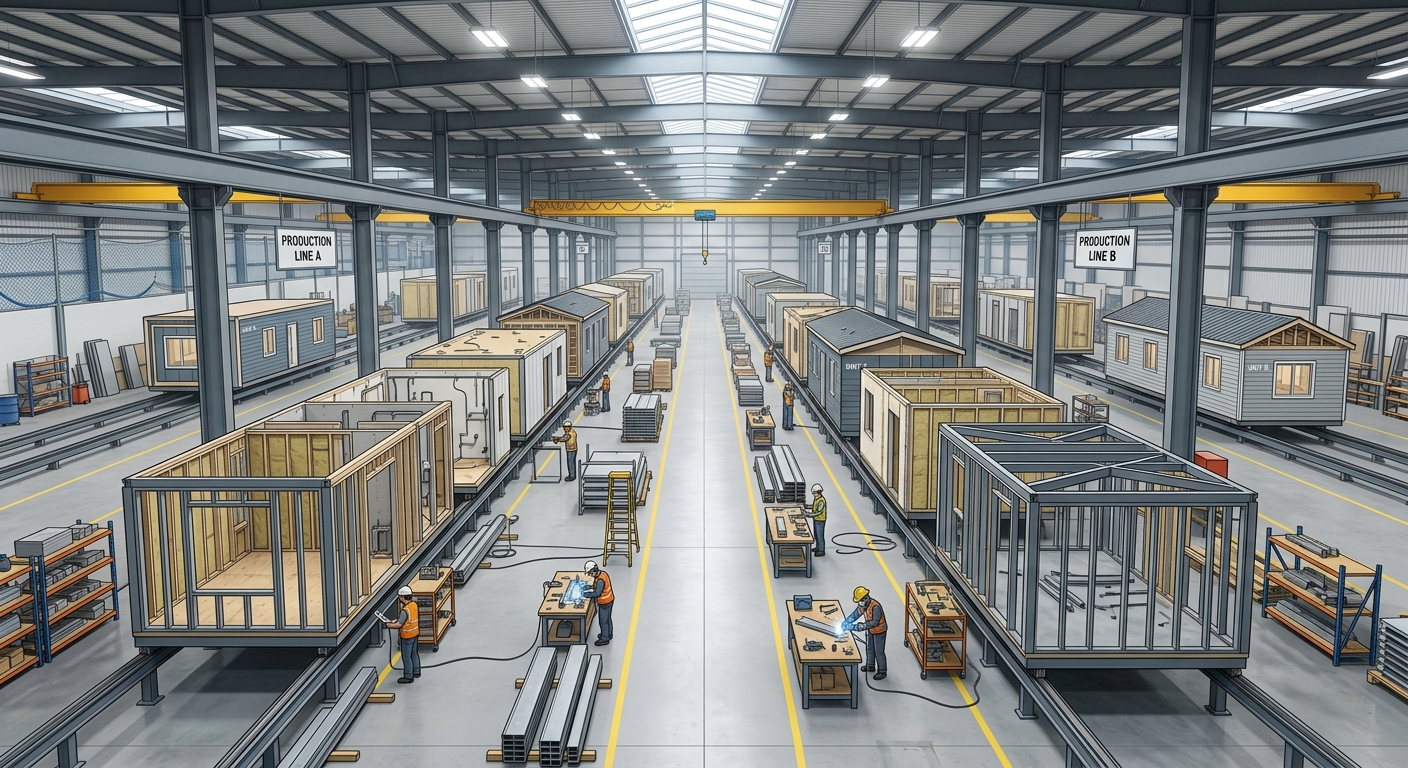
Talk is cheap. These are programs putting real units in the ground in 2026.
The framework now lists pre-qualified modular manufacturers with capacity commitments through 2028. Local authorities can call off directly, skipping 9–12 months of procurement. Projects like the L&Q schemes in East London are delivering 100+ unit social housing blocks at roughly £1,650/m² — competitive with traditional, but 14 months faster.
HDB’s newer BTO blocks are nearly all PPVC. Modules arrive 90% finished — bathrooms tiled, kitchens installed, windows glazed — and stack into 40-story towers. Construction cycle per floor: 4 days, down from 10.
The National Housing Company has signed multi-year offtake agreements with modular manufacturers (including foreign suppliers with local assembly JVs) to deliver tens of thousands of villas. The driver is Vision 2030 deadlines plus a labor pool that cannot scale linearly with project pipeline.
For instance, a regional developer in Riyadh recently ordered 1,200 modular two-bedroom units for a workforce-adjacent housing scheme. Factory output: 40 units per week. Site assembly: 6 units per day with two cranes. Total program length: 11 months. Site-built equivalent would have taken nearly three years.
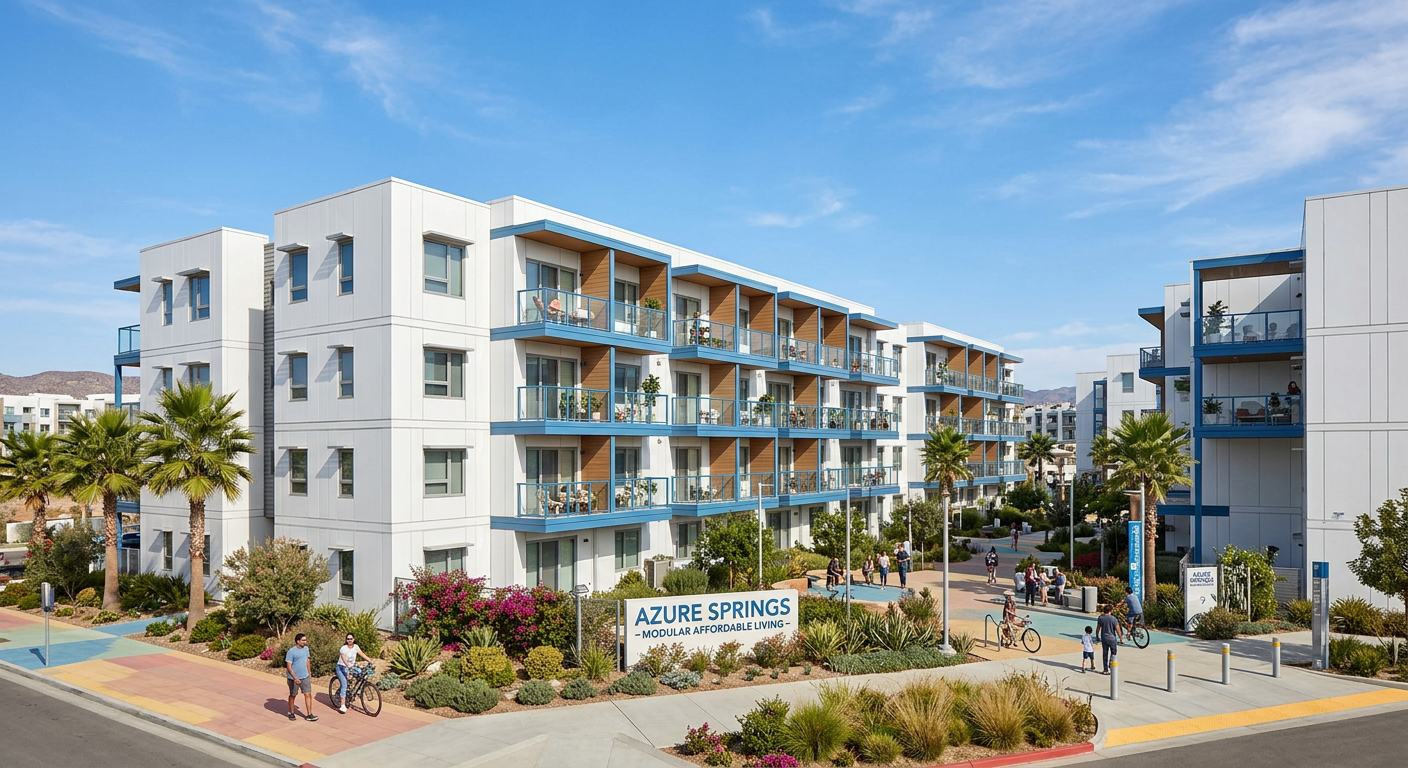
Here is the apples-to-apples breakdown program managers keep requesting. Numbers reflect 2026 pricing for a mid-spec, 60 m² two-bedroom social housing unit at scale (100+ units).
The takeaway: modular is not always cheaper on day one — for projects under 30 units, traditional sometimes still wins. But once you cross 50 units and factor in financing and revenue timing, modular pulls clearly ahead. And on remote or land-constrained sites, it is not even close.
Worth reading alongside this: why prefab quotes balloon and how to lock down a fixed price — because the savings disappear fast if your contract structure is wrong.
Honest assessment: modular is not a silver bullet, and program directors who oversell it get burned. Three real constraints in 2026:
Modules are usually 3.0–4.2 m wide. If your site sits at the end of a winding mountain road or in a dense historic city center, escort costs and road closures can eat 5–8% of the saved cost. Always survey the route before committing. Our guide on shipping modular buildings across borders covers the customs and site access reality in detail.
Once factory production starts, change orders are painful. Affordable housing programs that mid-stream a layout change can lose weeks. The discipline required at design freeze is higher than most public clients are used to.
Many affordable housing budgets carry local labor or local sourcing percentages. Imported modules can clash with these — which is why successful programs in Saudi and the UAE use hybrid models: foreign factory shells, local fit-out and finishing labor onsite.
The structural choice underneath affordable modular housing has consolidated around two systems: light-gauge steel frame for low and mid-rise, and steel-aluminum hybrids for taller stacks. Timber CLT is still niche outside Scandinavia and parts of North America for affordable programs — fire code and insurance complexity slow it down.
Aluminum’s role keeps growing on the envelope side: window systems, balcony rails, sunshades, and unitized cladding. Reason: it does not rust, weighs a fraction of steel, and the powder-coated or PVDF finishes last 20+ years with minimal maintenance — critical for housing authorities running 50-year asset lifecycles. If you are weighing finishes, see our breakdown of powder coating vs. PVDF vs. anodizing.
For program designers, the practical guidance is: spec the structural system to your stack height, but standardize the aluminum envelope across the entire program. That is where you unlock real factory economies of scale.
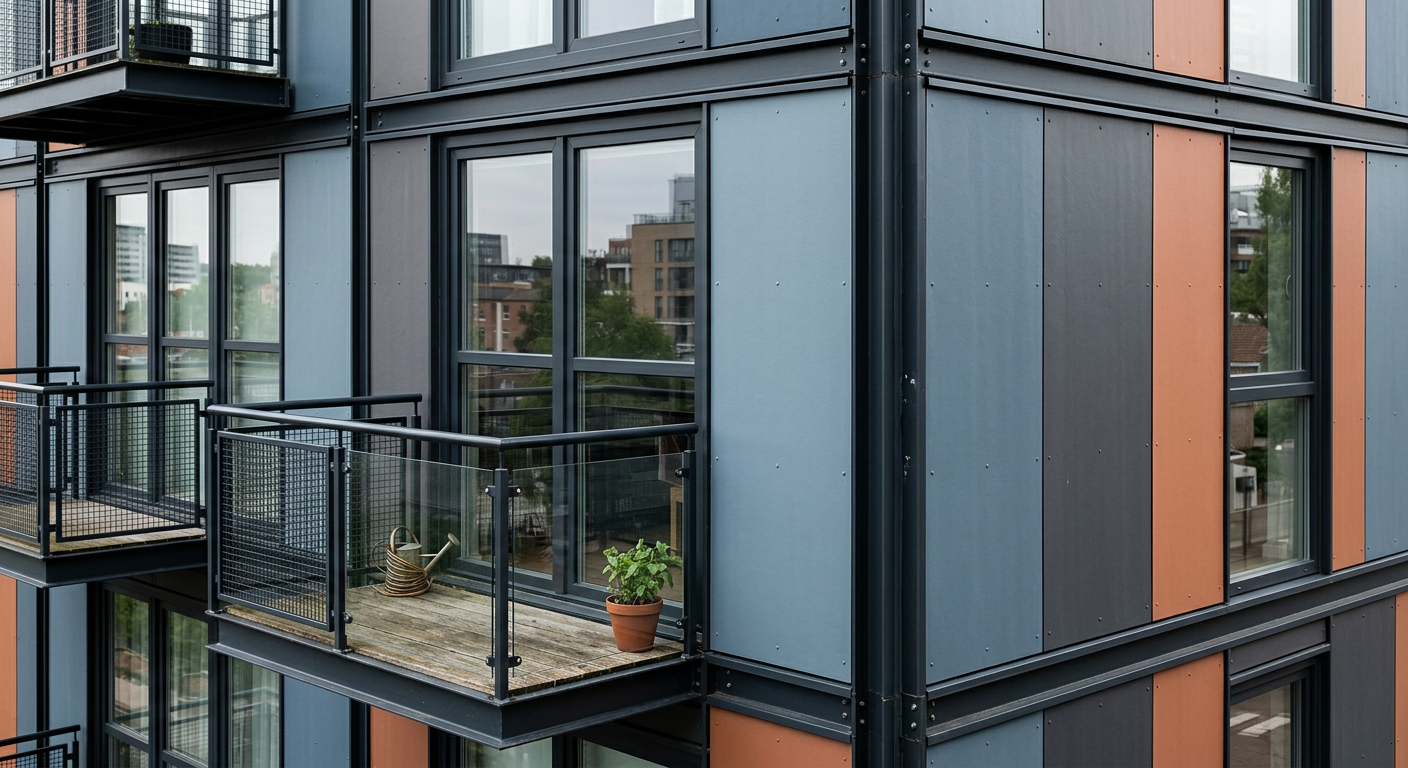
Modular only delivers savings if the contract structure matches the delivery model. Traditional design-bid-build kills the upside.
Lowest-bid tenders that treat modules as a commodity. The cheap quote becomes expensive once you discover the supplier’s factory cannot actually deliver 800 modules in 14 months. Vetting matters — capacity, certifications (ISO 9001, CE, ROHS), and a track record of comparable program scale. A factory with 20+ years of operation and patented systems is usually a safer bet than a low-cost newcomer.
If you are planning an affordable housing pipeline for 2026–2028 delivery, three moves matter.
Lock in factory capacity early. The good manufacturers are booking 9–12 months out. Walking in with a 200-unit order in Q3 expecting Q4 delivery is no longer realistic.
Standardize aggressively. Two or three unit types repeated 500 times each will outperform 12 unit types in a heartbeat. Affordable housing is the perfect product for this — your tenants need quality and consistency, not bespoke layouts.
Pick partners who can do the whole stack. A supplier who only does modules but not the envelope, or only finishes but not structural, forces you to coordinate three contracts on a tight schedule. One-stop manufacturers that handle design, materials, fabrication, and delivery remove a layer of program risk that public clients especially cannot afford.
The case studies on our projects page show how this plays out at scale — multi-country programs delivered on fixed timelines and budgets.
The 2026 wave is just the start. Three trends are already visible in tender documents and policy drafts:
Affordable housing has historically been the slowest sector to adopt construction innovation, because budgets are tight and risk tolerance is low. Modular flipped that — it is now the sector pulling the rest of construction forward.
If you are evaluating modular for an upcoming affordable housing program and want to pressure-test the numbers, design feasibility, or supply approach, our team at apexecobuilt has delivered similar programs across 80+ countries. Get in touch and we will walk through what works for your specific site, climate, and budget.




Arabic

English

Spanish
Fill out the form below and our team will get back to you within 24 hours with a tailored solution.
