
APEX EcoBuilt
Leading Manufacturer of Aluminum Systems & Modular Housing
APEX EcoBuilt
Leading Manufacturer of Aluminum Systems & Modular Housing
 03 Jun, 2026Industry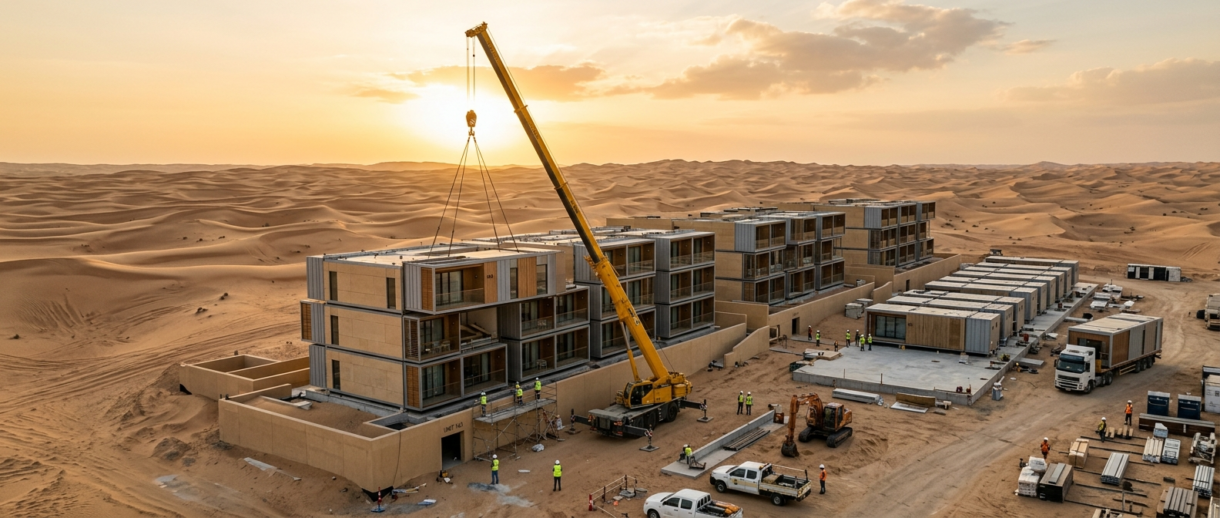
Resort owners are building desert hotels faster by shifting 70–80% of the construction into a factory, then shipping finished room modules to site for assembly in weeks instead of years. The result: an 80-key desert resort that would take two years with stick-built methods can open in 7–10 months using modular, with fewer workers on site, far less waste, and predictable costs even when the nearest paved road is 100 km away.
Deserts eat construction schedules. Temperatures swing from 5°C at night to 48°C by afternoon, concrete cures unpredictably, adhesives fail, and workers physically cannot swing hammers between 11am and 4pm in summer. Add sandstorms that shut sites for days and supply chains that deliver cement from 400 km away, and a simple 60-room lodge becomes a multi-year ordeal.
The math is brutal. A traditional site loses roughly 25–35% of calendar time to weather and logistics in remote desert conditions. Labor turnover runs 40%+ because crews do not want to live in tents for two years. Every delay compounds — missed tourism seasons, financing extensions, and hospitality brand-launch windows that slip another year.
Modular construction sidesteps most of this by moving the hard work indoors. The factory does not care if it is 47°C outside. Quality inspectors in a controlled environment catch issues that field supervisors miss. And because modules arrive roughly 85% complete — with plumbing, electrical, tiling, furniture, and finishes already installed — the on-site window shrinks from years to weeks.
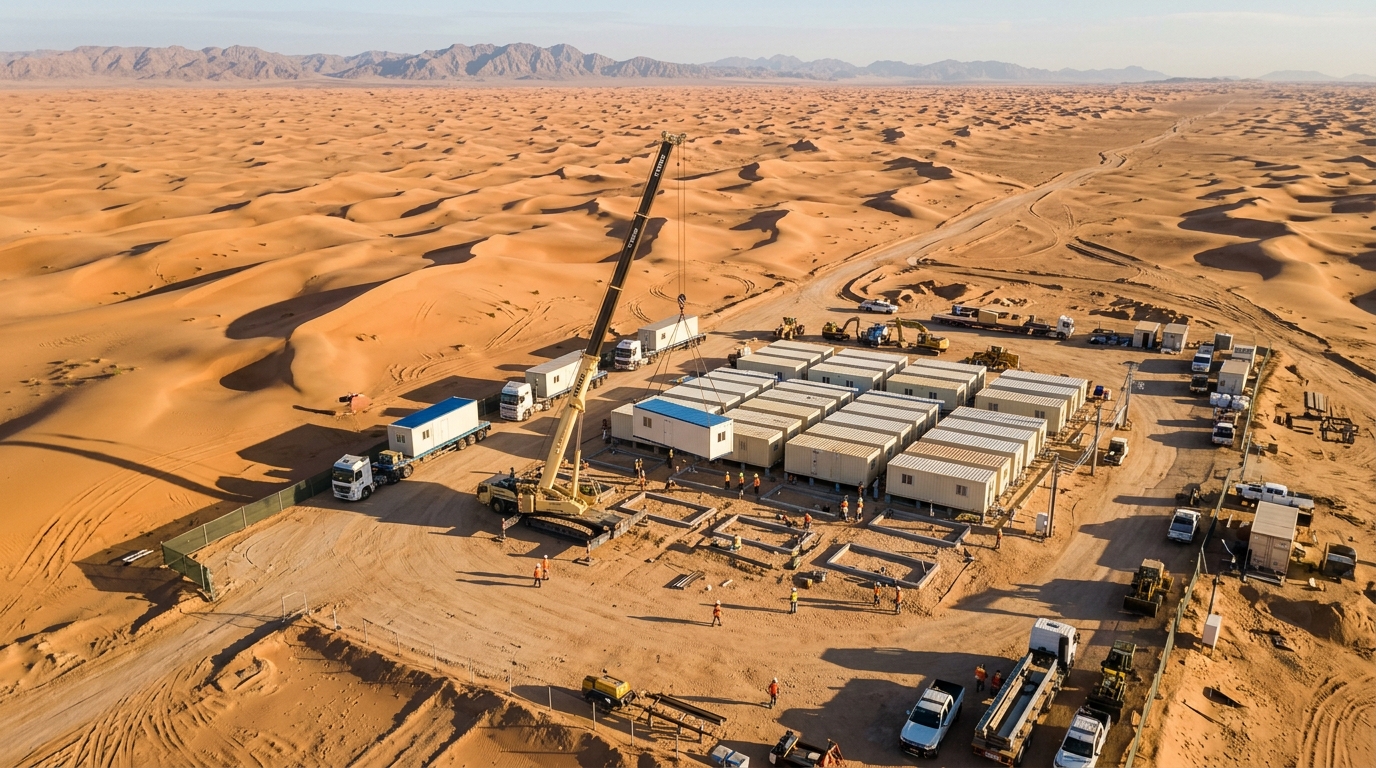
The process breaks into four overlapping phases, and the overlap is where the time savings come from.
Architects work with the modular manufacturer to convert the hotel design into transportable modules — typically 3m × 12m room boxes or 3m × 6m bathroom pods. Structural loads, MEP routing, and facade systems all get engineered around module joints.
This is the magic. While foundations, utilities, and roads are built on site, modules are simultaneously fabricated in the factory. You effectively compress two sequential schedules into one.
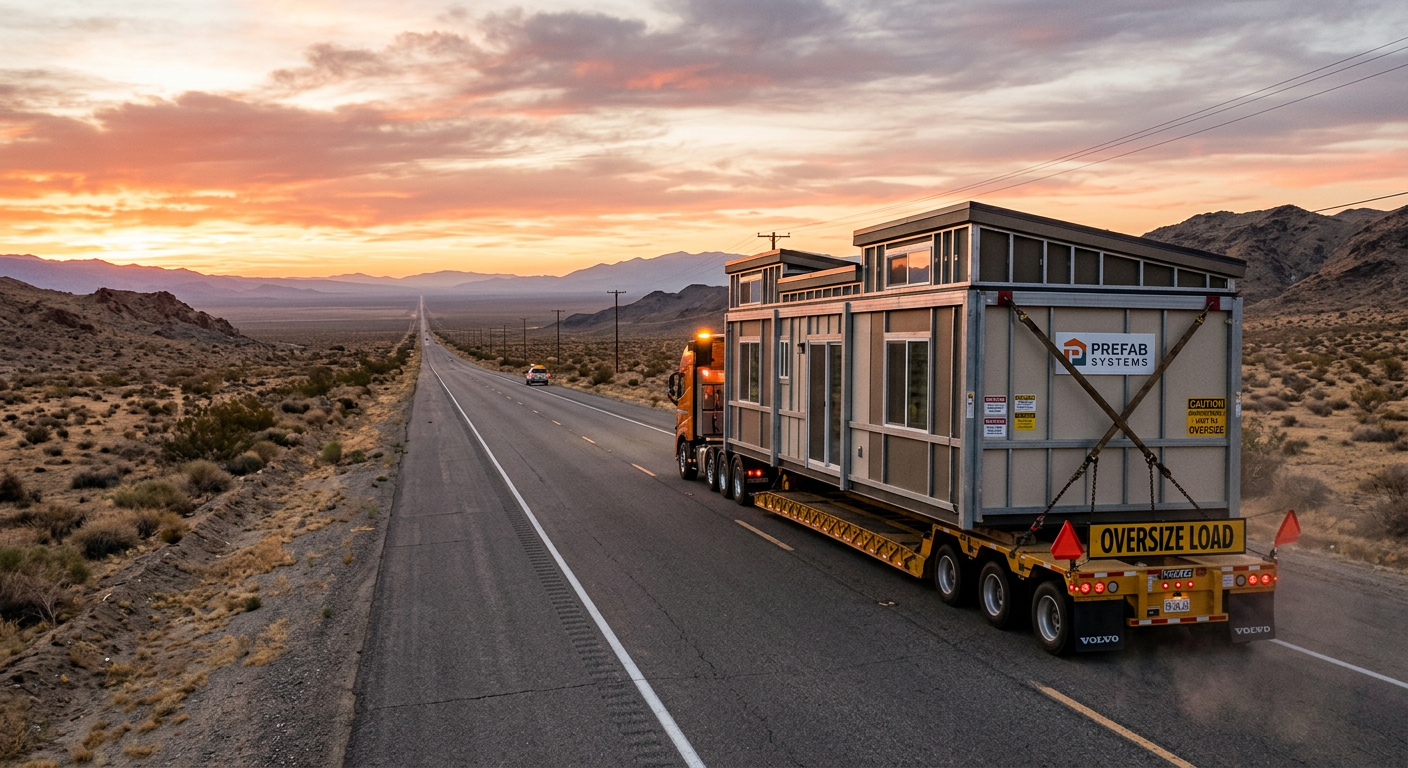
Modules ship by flatbed or specialized low-loader. A 60-key hotel usually means 80–120 modules. On-site cranes stack them onto the foundation, crews connect MEP services between units, and the building is watertight within days.
Lobby, pool, landscaping, facade details, and brand-specific finishes get completed. Compare that with a traditional build where commissioning alone can take six months. Our manufacturing capabilities page walks through how the factory workflow aligns with site milestones.
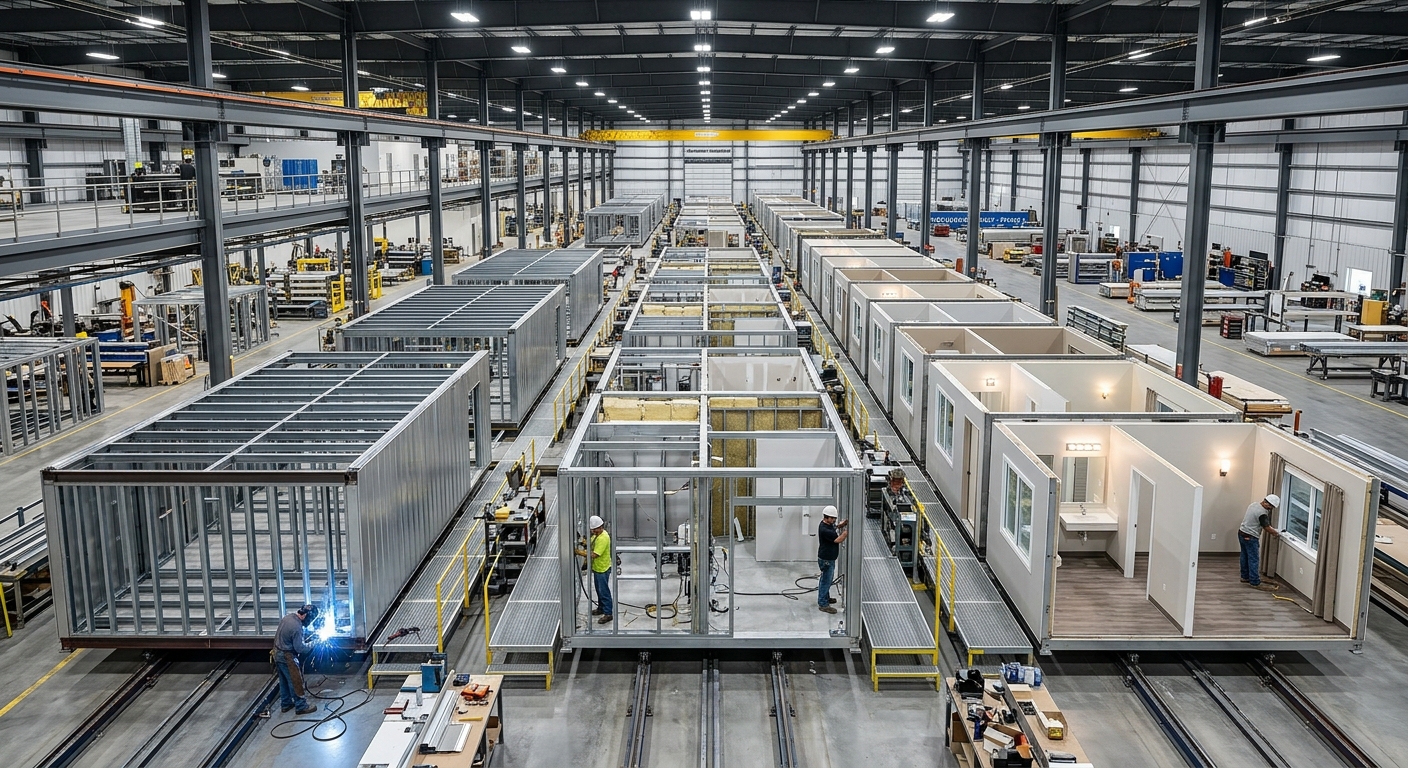
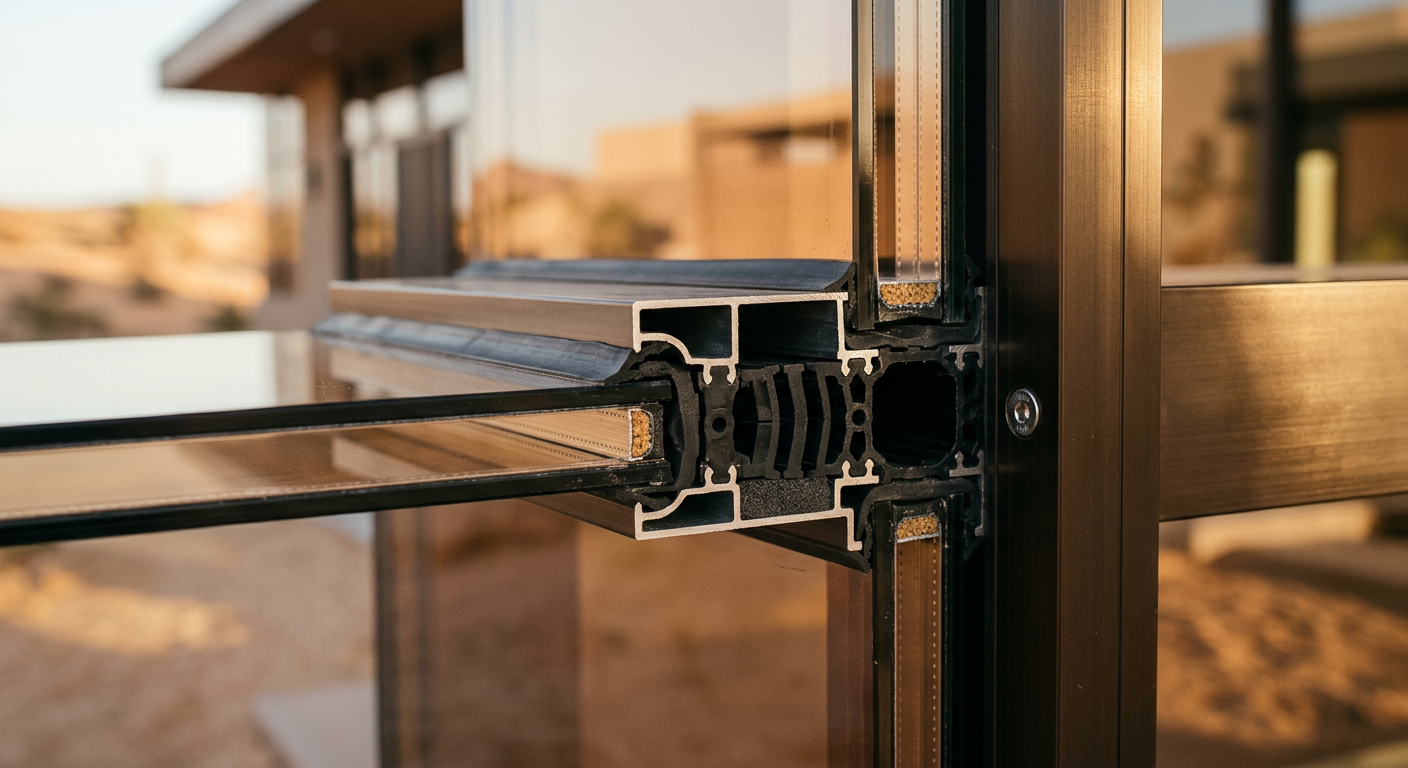
Timber warps. Gypsum crumbles. Concrete cracks in extreme thermal cycling. For desert modular hotels, the material choice is almost always a light-gauge steel or aluminum structural frame with high-performance insulated panels.
Why? A few specifics worth knowing:
We cover the specific curtain wall detailing in our guide on specifying curtain walls for Middle East climates — the thermal break and gasket selection drives more operational cost than most owners realize.
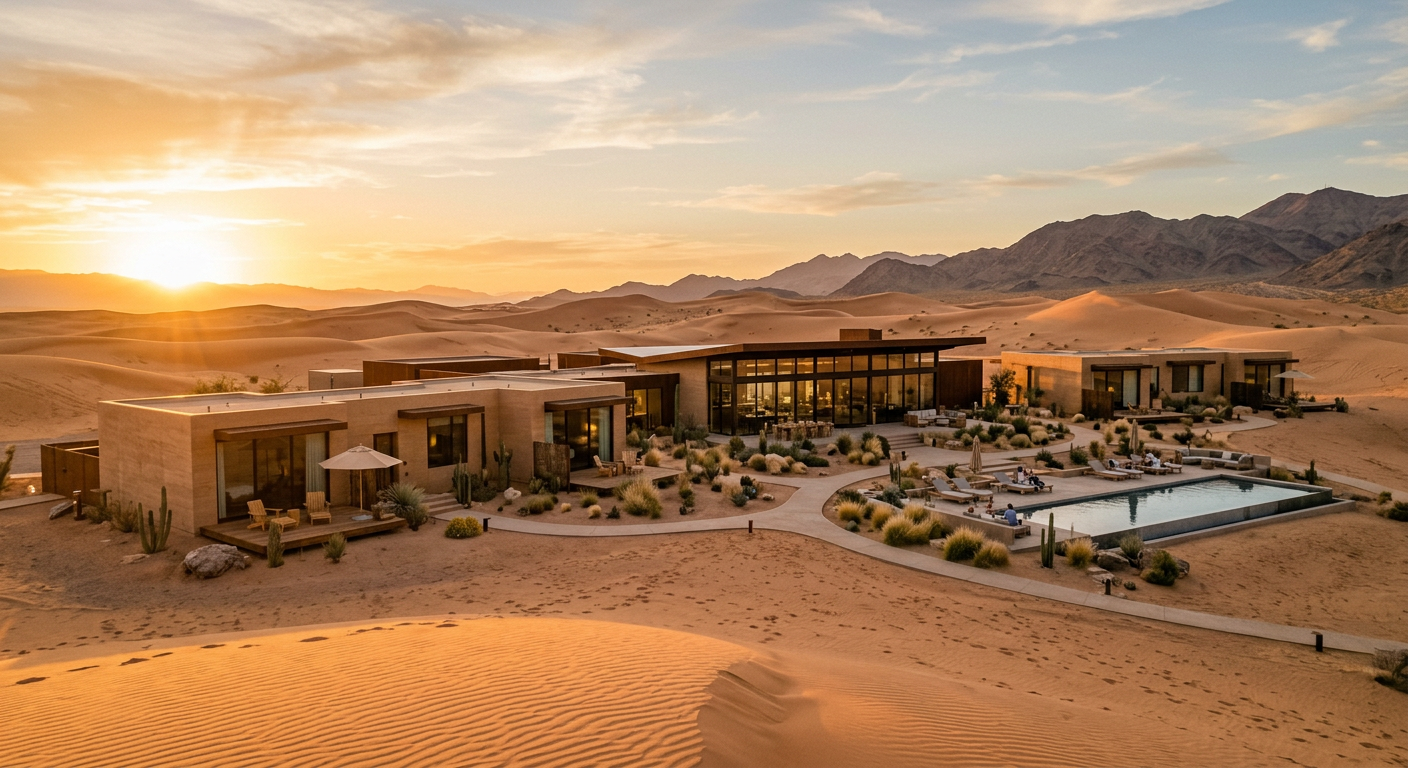
Consider a boutique desert resort developer who wanted a 96-key eco-lodge on a protected dune site 140 km from the nearest city. Traditional bids came in at 22 months and around USD 18M, with significant risk premium baked in for weather and logistics.
The modular route looked different:
Total schedule: about 9.5 months. Peak on-site headcount never exceeded 55 workers, against 200+ for the traditional approach. The owner captured a full tourism high season that would have been lost to delays. This is a pattern we see repeated across hospitality applications in remote regions.
Was everything smooth? No. The first transport convoy had to reroute 60 km because a seasonal wadi flooded unexpectedly. But that one-week delay is trivial compared to the typical three-month slip on a traditional desert build.
Here is the thing that kills first-time modular hotel projects in remote locations: the road. Before you commit to 3.6m-wide modules, somebody needs to actually drive the route.
The practical answer: size modules to the road, not the architecture. A good manufacturer offers modules in multiple widths (2.4m, 3.0m, 3.6m, 4.0m) so design can adapt to the logistics reality. If the haul route limits you to 3m wide, you build a beautiful hotel with 3m modules. Fighting the road never ends well.
Modular is not automatically cheaper. On a straight per-square-meter basis at a well-connected urban site, traditional construction often wins by 5–10%. The modular advantage shows up in remote conditions, where it can be 15–25% cheaper all-in once you count the real costs.
For the full carbon and lifecycle picture, our analysis of modular vs. traditional eco construction breaks down where the sustainability and cost curves intersect.
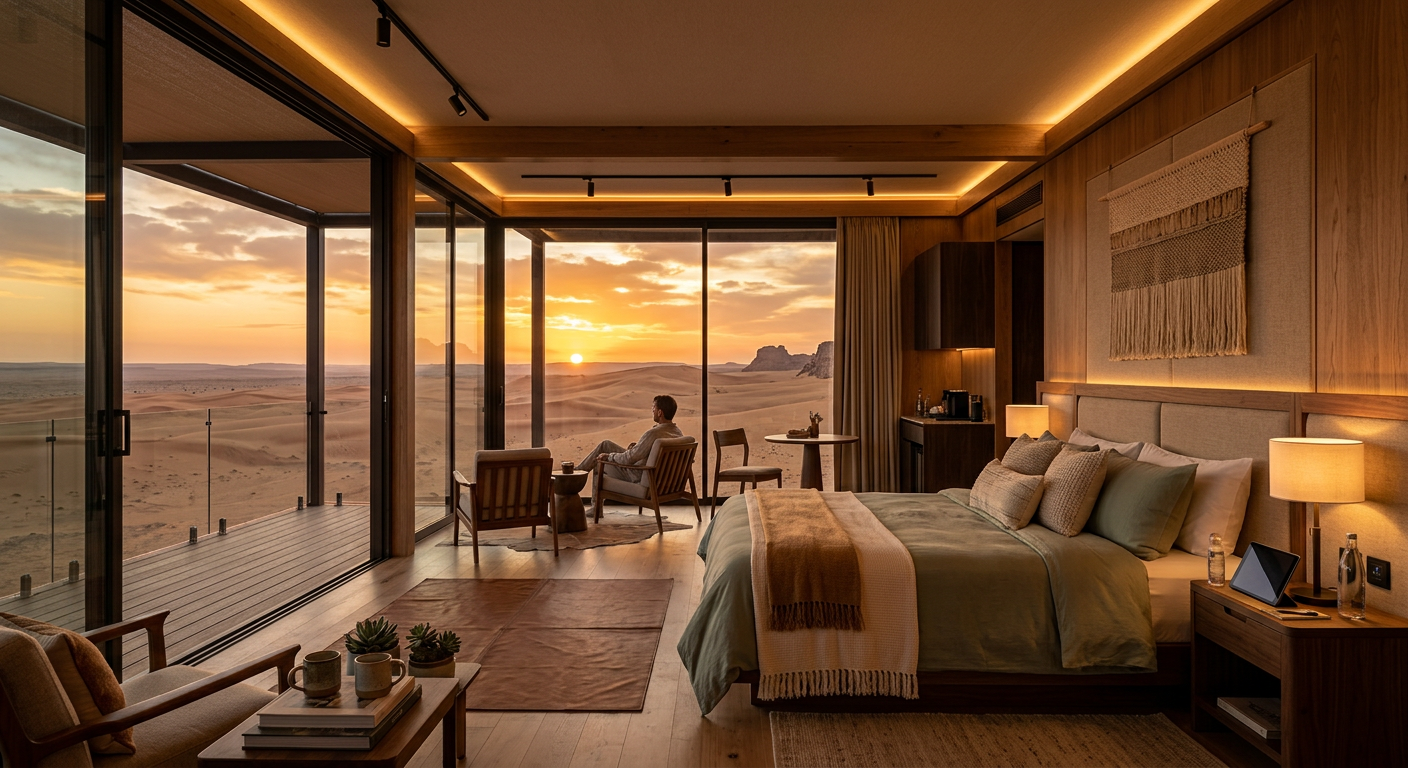
One misconception worth killing: modular does not mean boxy and industrial. The structural grid is repetitive, but the guest-facing experience can be anything.
Effective desert modular hotels typically combine:
For instance, a desert glamping operator might use identical 3m × 9m room modules internally — giving each guest the same premium bathroom, the same king bed, the same panoramic window — while the external cladding, roof form, and terrace design vary unit to unit to create the illusion of a hand-crafted cluster. Guests never notice the repetition. The owner gets factory economics.
Not all modular suppliers can handle remote desert projects. The capability gap between an urban modular specialist and one with genuine remote-site experience is enormous. Before you commit, get direct answers to these:
If you want to see how these questions are answered in practice, our project portfolio shows completed hospitality and remote-site deployments with their actual schedules and specifications.
The fastest path from idea to open doors goes something like this: lock your site, commission a transport route survey, engage a modular manufacturer at concept-design stage (not after drawings are done), and run site prep parallel to factory production. Do those four things and you will beat any traditional build on schedule, cost, and quality — often by a wide margin.
The owners who struggle with modular are the ones who treat it like traditional construction with a different name. It is not. It is a manufacturing process that happens to produce buildings, and the earlier you engage the factory, the more value you get.
If you are planning a resort, eco-lodge, or remote hospitality project and want to understand what is realistic for your site, budget, and timeline, the team at apexecobuilt has delivered modular hospitality projects in 80+ countries — including some of the harshest desert environments on the planet. Get in touch with a site brief and we will walk you through what a realistic schedule and spec looks like for your project. You can also explore our full range of modular and aluminum building solutions to see what is possible.




Arabic

English

Spanish
Fill out the form below and our team will get back to you within 24 hours with a tailored solution.
