
APEX EcoBuilt
Leading Manufacturer of Aluminum Systems & Modular Housing
APEX EcoBuilt
Leading Manufacturer of Aluminum Systems & Modular Housing
 09 May, 2026Industry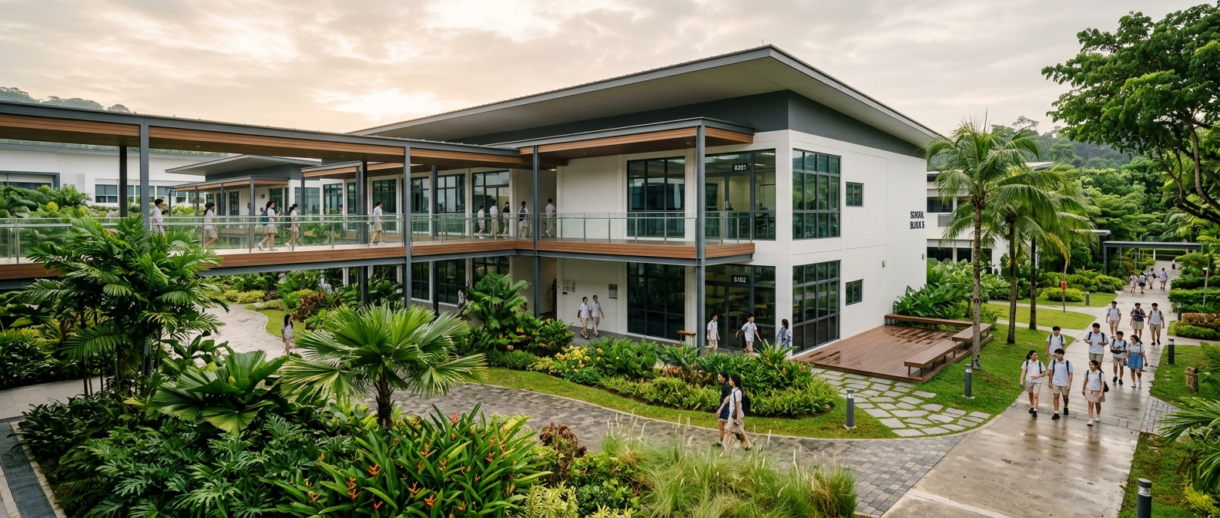
Modular classrooms are solving school overcrowding across Asia-Pacific by compressing a two-year construction timeline into roughly ten weeks, at 20–40% lower cost, and with the flexibility to relocate or expand as enrollment patterns shift. Governments in the Philippines, Indonesia, Australia, and Vietnam are now specifying prefabricated, factory-built classrooms as the default response to urban migration and rural access gaps — not as a temporary stopgap, but as permanent infrastructure.
Asia-Pacific adds roughly 10 million school-age children per year. UNESCO estimates the region is short more than 1.4 million classrooms to meet basic occupancy standards of 35–40 students per room. In Metro Manila, some public primaries run three shifts a day. In Jakarta, class sizes above 50 are routine.
Traditional construction simply cannot keep pace. Land permits, tendering, rainy-season delays, and skilled-labor shortages stretch a single six-classroom block to 18 months or more. Meanwhile, a new housing estate in Ho Chi Minh City or Karachi can add 2,000 families — and 1,500 school-age kids — inside a year.
That speed mismatch is the real problem modular is solving.
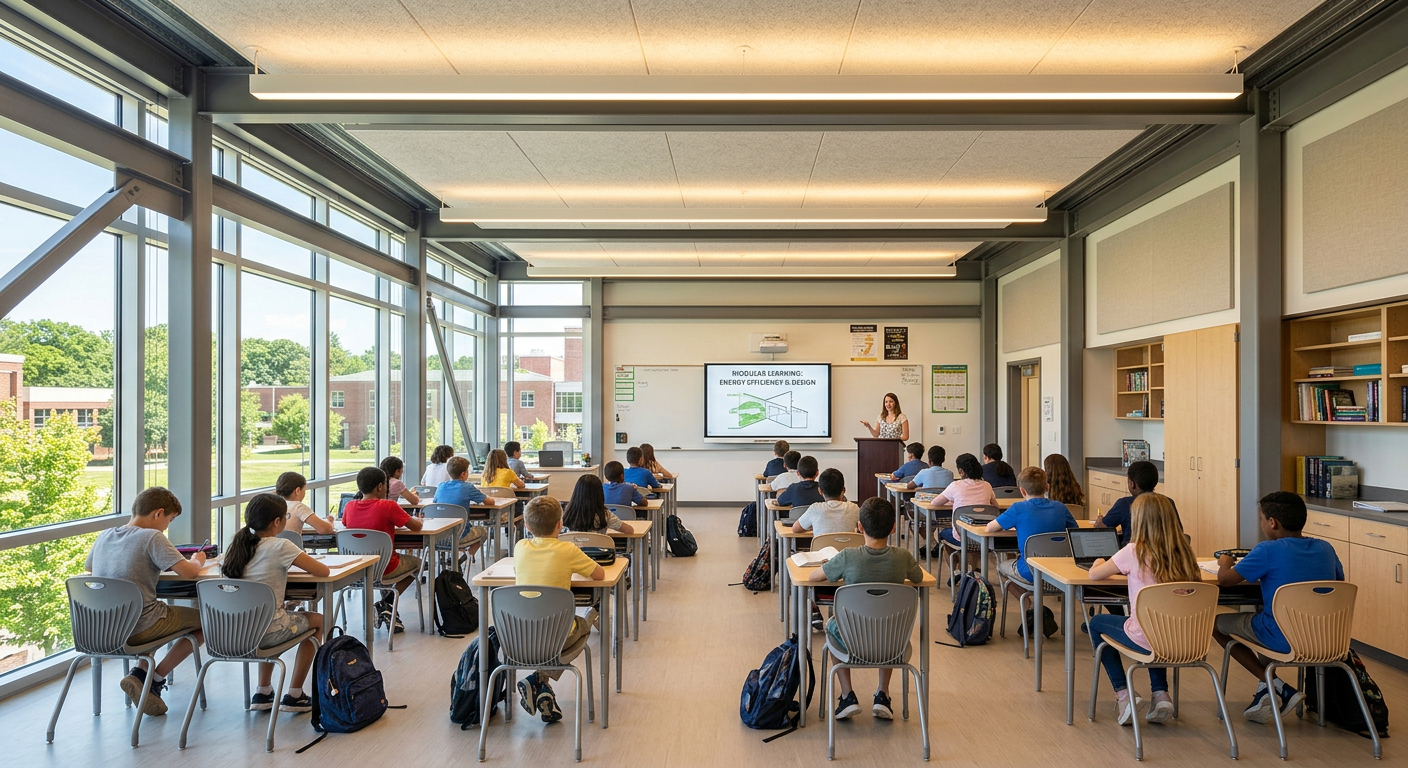
Forget the old image of a beige trailer on concrete blocks. A modern modular classroom is a volumetric steel-framed unit — typically 7.2m x 9m or 6m x 12m — built in a factory to the same structural, acoustic, and thermal codes as any permanent school building.
The shift from “temporary demountable” to “permanent modular” is what changed the procurement conversation. Ministries are no longer buying site huts — they are buying 30-year school assets delivered on trucks.
Here is a realistic schedule for a 12-classroom modular block in Southeast Asia:
Compare that to 14–20 months for cast-in-place concrete. For a district trying to absorb 500 new students before the next school year starts, that difference is not an efficiency gain — it is the difference between educating them and turning them away.
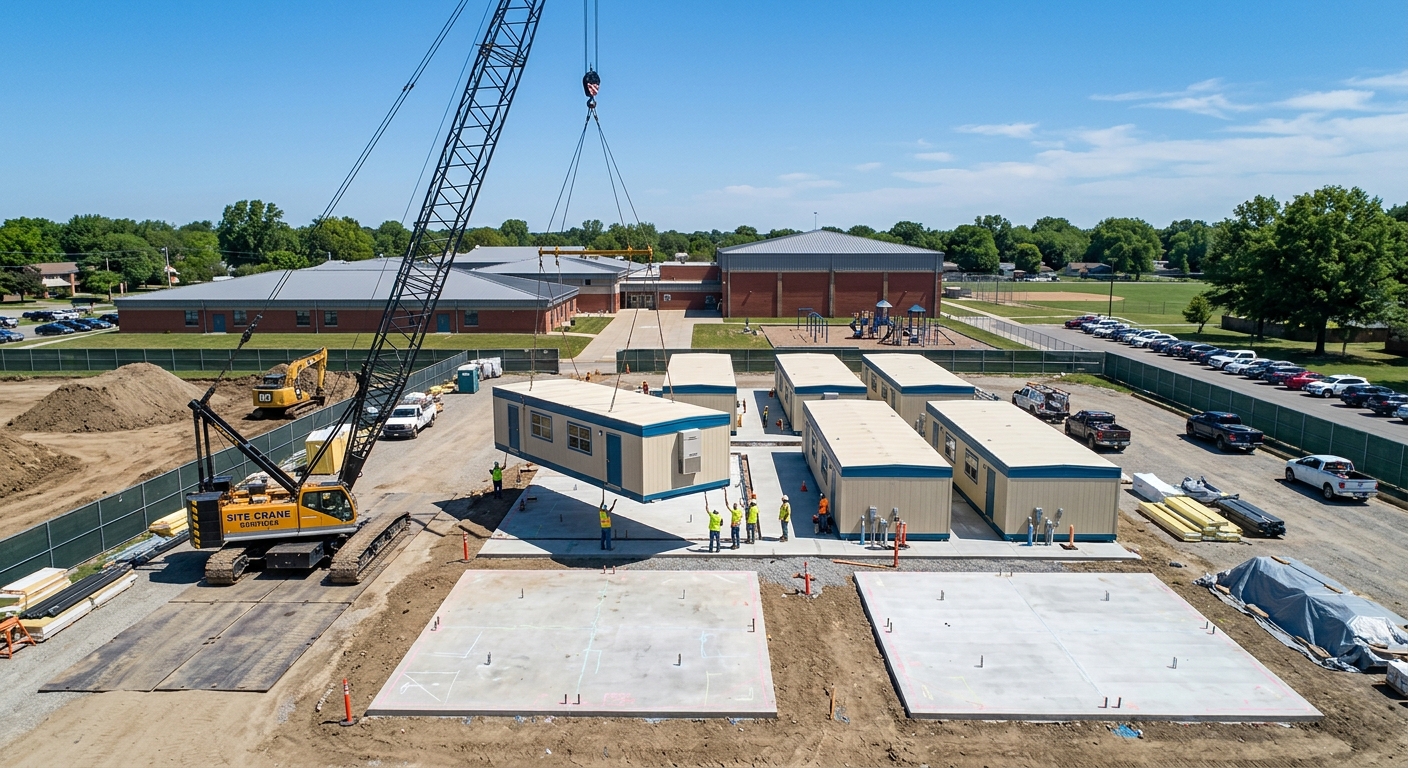
A provincial education office in the southern Philippines faced a familiar problem: an elementary school serving 640 students in facilities built for 280, with a storm-damaged wing condemned in early 2025. Tender for traditional rebuild: 22 months. Budget ceiling: tight.
They procured 18 modular classroom modules in two phases. Phase one — eight classrooms plus a staff room — arrived 11 weeks after contract signing. Phase two added ten more units six months later as funding released. Key outcomes:
That flexibility — ship what you can fund now, add more next fiscal year, identical specs both times — is almost impossible with conventional construction.
A modular classroom for Darwin needs almost nothing in common with one for Ulaanbaatar. This is where off-the-shelf catalogs fail and engineered customization earns its fee.
Priorities are cross-ventilation, deep eaves for monsoon rain, elevated floors for flood zones, and reflective roofing to cut cooling load. Window-to-wall ratio around 25–30% on shaded facades, minimized on west elevations.
Thermal mass and airtightness dominate. Sandwich panels jump to 100–150mm with rockwool cores, triple-glazed windows in colder districts, and MVHR ventilation to maintain CO2 below 1000 ppm without heat loss.
UV-resistant coatings, freeze-thaw-rated sealants, and dust-filtered intakes. Roof snow loads up to 2.5 kN/m² in parts of northern China require reinforced purlins as standard.
A good manufacturer will run thermal simulations against the project’s postcode weather file before the first panel is cut. Anything less is guesswork.
People assume modular is cheaper because it is “prefab.” Wrong. It is cheaper because of where and how the labor happens.
Headline per-square-meter pricing often looks similar. The savings show up in the total project cost once you include preliminaries, time-related overheads, and the opportunity cost of delayed occupancy. For a ministry paying rent on overflow classrooms, faster occupancy alone can fund the project.
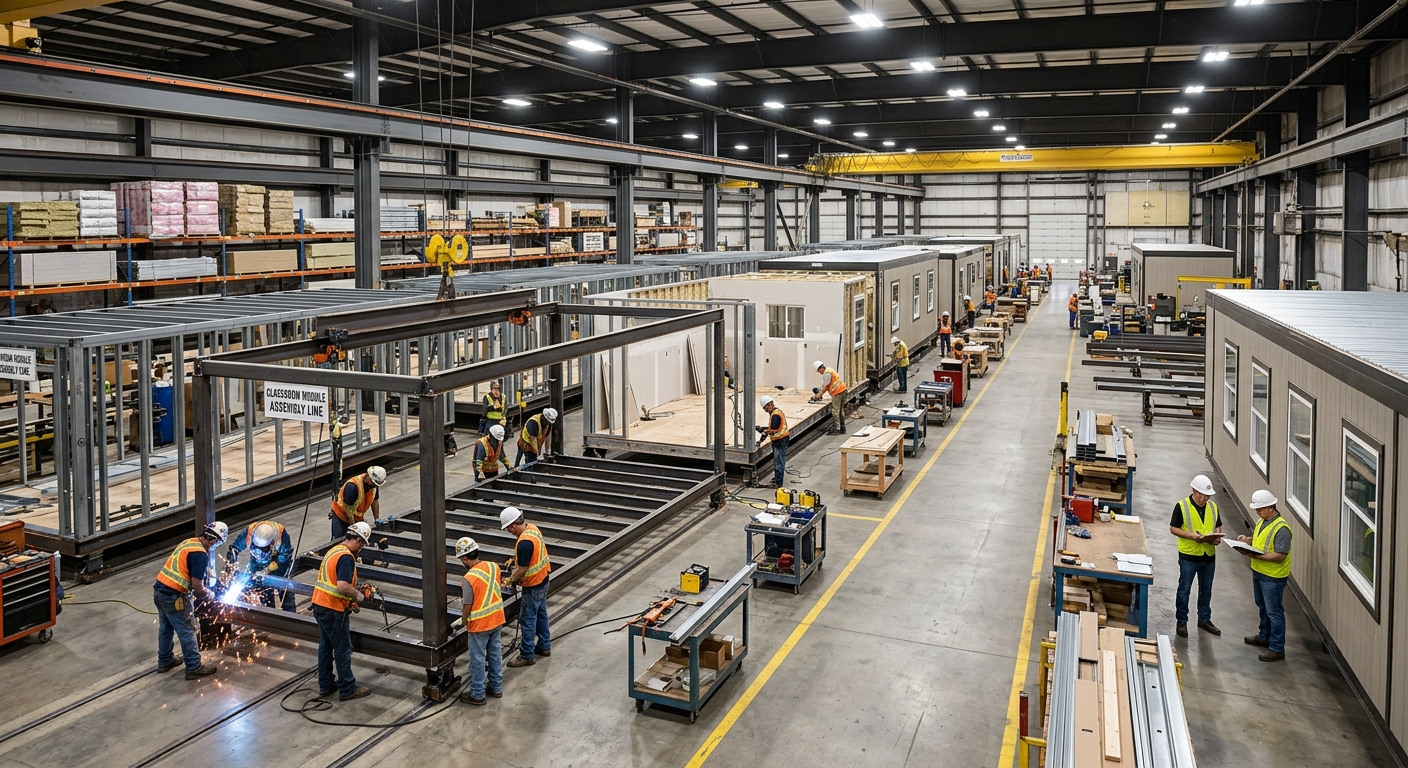
Schools are rarely just classrooms. Our applications portfolio shows how the same factory systems extend to the full campus:
A rural boarding school in Sabah, Malaysia, for instance, procured 24 classroom modules, 6 dormitory modules, and a canteen block in a single delivery package — commissioned three months after groundbreaking. Single manufacturer, single specification, single warranty.
Green procurement criteria are tightening across the region. Singapore’s BCA, Australia’s NCC 2025 update, and Japan’s ZEB targets all push embodied-carbon reporting onto public education projects.
Modular performs well here, but only when specified correctly:
We document this at our manufacturing facility, where ISO 14001 processes track material origin, production energy intensity, and waste diversion per module shipped.
Outdated. Current modular finishes include fiber-cement cladding, aluminum composite panels, brick-effect facades, and timber-look rainscreens. Visually indistinguishable from conventional construction once installed.
Structural steel frames with proper coatings last 50+ years. Regulatory lifespans of 25–30 years in many jurisdictions reflect policy, not material capability.
True for ultra-remote island sites. For 90% of Asia-Pacific addresses within 400km of a port or major highway, logistics add 3–8% to project cost — far less than the savings elsewhere.
Modular is not a catalog. Facades, floor plans, ceiling heights, and MEP layouts are engineered per project. The repetition is in manufacturing methods, not aesthetics.
If you are a district planner, developer, or NGO scoping a project, ask for these eight things in the tender:
A manufacturer that cannot produce all eight within a week is not ready to build a school.
If your district, developer portfolio, or NGO is staring down an enrollment wave and a construction timeline that does not match, modular is no longer the compromise option — it is usually the better option. The technology has matured, the cost case is clear, and the reference projects across Asia-Pacific are too numerous to dismiss.
Explore our modular building solutions or browse completed school and campus projects for reference designs and specifications. When you are ready to scope a specific site, get in touch with an engineered quote — most responses land within three business days, including preliminary layout, delivered cost, and realistic timeline.




Arabic

English

Spanish
Fill out the form below and our team will get back to you within 24 hours with a tailored solution.
