
APEX EcoBuilt
Leading Manufacturer of Aluminum Systems & Modular Housing
APEX EcoBuilt
Leading Manufacturer of Aluminum Systems & Modular Housing
 18 Jun, 2026Industry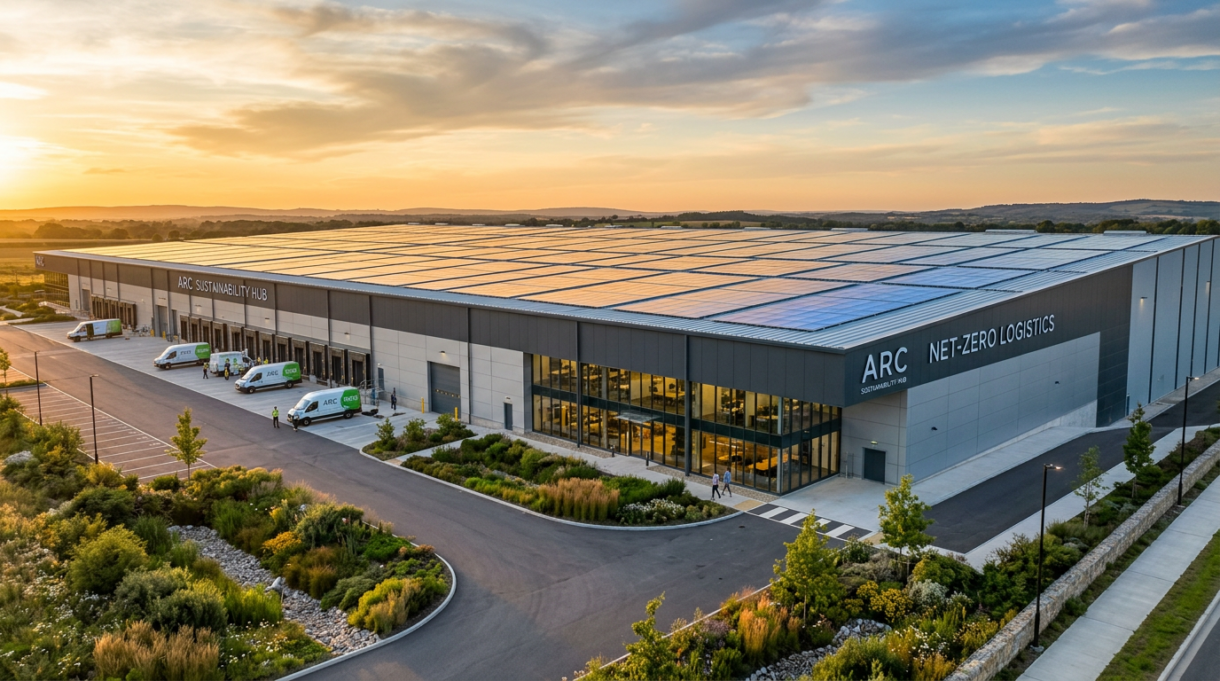
A net-zero warehouse in the 15,000–25,000 m² range typically takes 11 to 14 months from groundbreaking to operational handover, and costs 8–14% more than a conventional build — a premium that pays back in 6–9 years through energy savings and export tariffs. The real variable isn’t the structure; it’s how early you lock in envelope performance, renewables sizing, and MEP commissioning scope. Get those three decisions wrong and your timeline slips by a quarter, easily.
Forget the marketing. In logistics construction, net-zero means the building generates at least as much renewable energy annually as it consumes across heating, cooling, lighting, and plug loads — measured in kWh, not carbon estimates. That’s operational net-zero. Embodied carbon (the steel, concrete, and aluminum you built with) is a separate ledger most clients still treat as optional.
This distinction matters because the cost and timeline impact lives in different places. Operational net-zero is driven by envelope airtightness, HVAC efficiency, and PV array sizing. Embodied net-zero pushes you toward low-carbon concrete, recycled aluminum, and cross-laminated timber — all of which add procurement lead time.
For a fair comparison of structural approaches, our earlier piece on modular vs. traditional eco construction carbon savings breaks down the embodied carbon math in more detail.
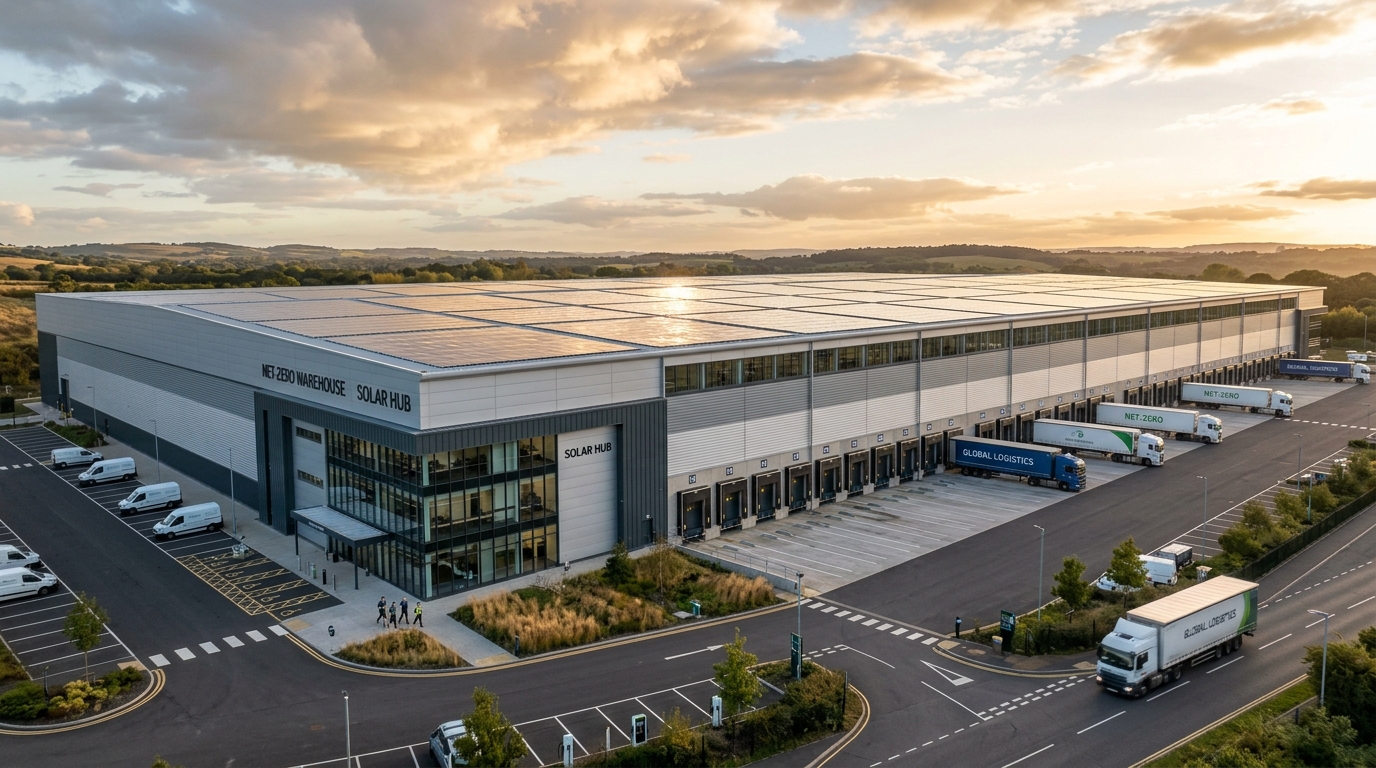
Here’s what a 20,000 m² net-zero distribution center timeline actually looks like, based on projects delivered in Southeast Asia and the Gulf:
Conventional warehouses of the same size often finish in 10–12 months because they skip the commissioning depth and renewables integration. You’re not building slower — you’re building more thoroughly.
On a recent 18,000 m² build, the total cost premium over a conventional baseline was 11.3%. Here’s how that broke down:
Notice what doesn’t move the needle: certification fees and low-carbon materials. What does move it: PV and envelope. Which is exactly where value engineering tends to attack first — and exactly where you shouldn’t let it. Cut PV capacity and you lose net-zero status. Cut envelope performance and your PV has to work harder forever.
For context on aluminum-specific cost drivers across the envelope scope, our manufacturing capabilities page shows how integrated extrusion and fabrication compresses this line item.
A regional e-commerce operator in the UAE commissioned a net-zero fulfillment hub in 2024. Targets: LEED Gold, operational net-zero by year two, 40°C summer design temp. Here’s what actually happened.
What worked: They locked the PV contractor and envelope supplier into the design phase at month two. Both attended weekly coordination calls. Roof structural loading was sized for 1.8 MWp from day one — no retrofit penalty. The aluminum wall system used a 32mm thermal break and achieved a U-value of 0.17 W/m²K, which cut cooling loads by 28% versus their previous facility.
What didn’t: The BMS integrator was procured late (month eight). Their sensor network didn’t match the M&V plan, so commissioning took 11 weeks instead of the budgeted 6. First-year energy data showed a 9% gap to net-zero — closed in year two after retuning schedules and replacing 12 leaky dock-door seals.
The lesson: The hardware was fine. The data layer was the problem. Spec your BMS and M&V scope in the same package as your HVAC, not after.
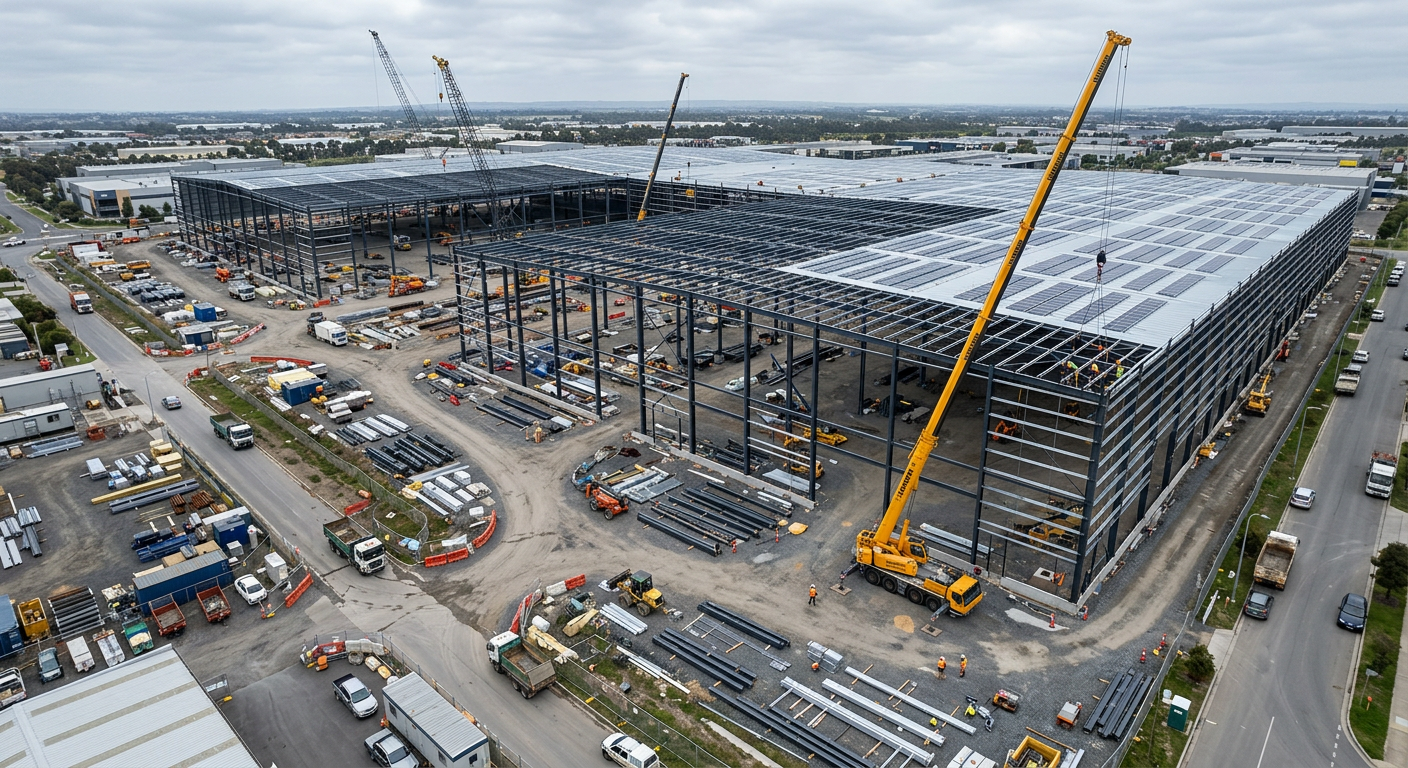
The envelope is your single biggest lever. Get it right and your HVAC shrinks, your PV array shrinks, and your operating cost drops for 30 years. Three details deserve obsessive attention:
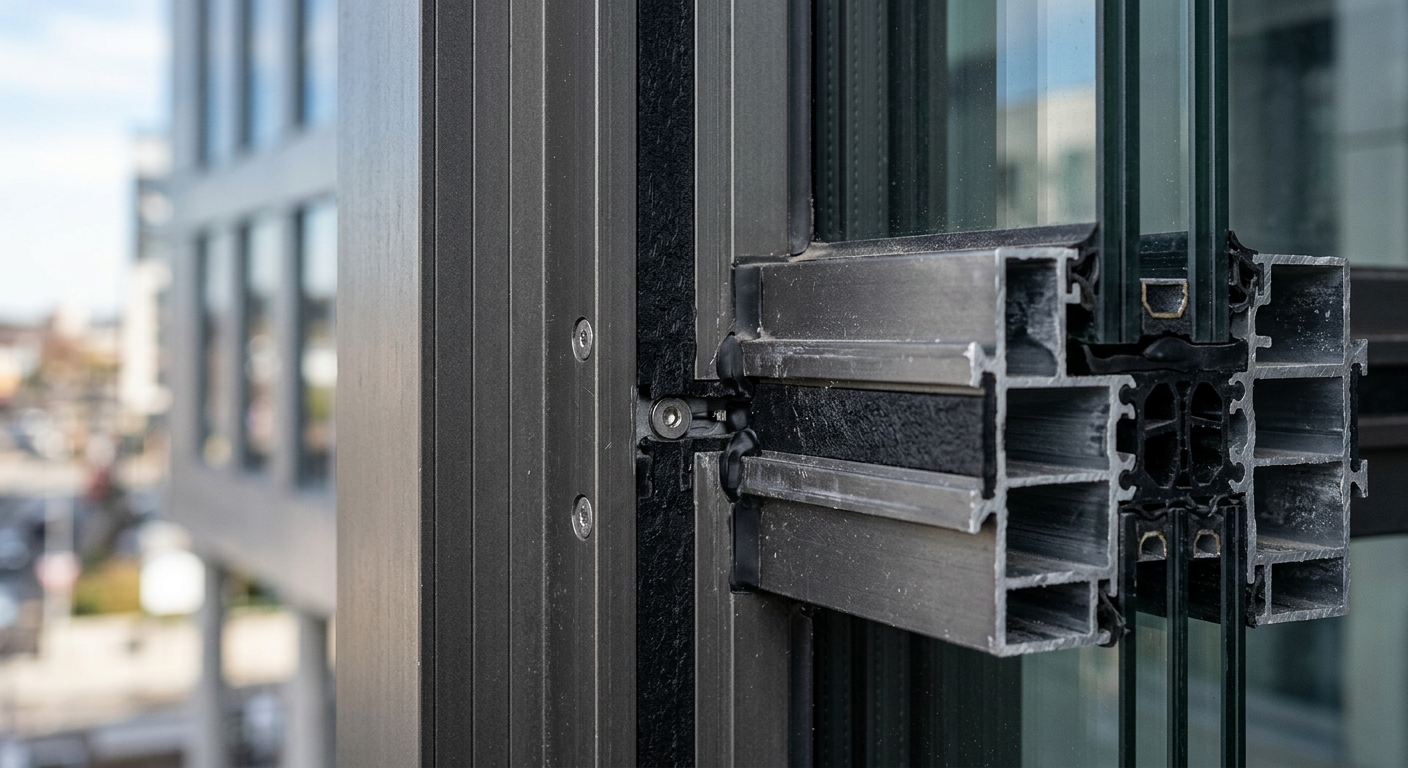
Standard aluminum profiles conduct heat like it’s their job. A properly designed polyamide thermal break (24mm minimum in hot climates, 32mm+ for extreme heat) can cut frame U-value from 5.8 to 1.4 W/m²K. That’s not a rounding error — that’s the difference between a net-zero and a net-plus-20% building.
Aim for 1.5 m³/h/m² at 50 Pa or better. Conventional warehouses often test at 5–8. Every halving of infiltration typically cuts HVAC energy by 10–15%. Blower-door test the building at envelope completion — not after handover, when fixes are five times more expensive.
Your roof is insulation AND a power plant. Specify PV mounting rails at structural design stage. Retrofit penalties run 15–25% higher than integrated installs, and you’ll drill holes through your waterproofing membrane — never a good day.
For hot-climate specifics, our guide on spec’ing curtain walls for Middle East climates covers the thermal break and glazing trade-offs in depth.
Here’s a rule of thumb we’ve seen hold across four climates: size your PV at 120% of modeled annual demand. Not 100%. Why?
For a 20,000 m² warehouse running 24/5 operations in a temperate climate, that typically lands at 1.4–1.6 MWp. In hot climates with heavy cooling loads, push to 1.8–2.2 MWp. Battery storage is still a cost-benefit judgment call — at current prices, 500 kWh of storage adds around 3% to total project cost and usually doesn’t pencil out unless your local tariff structure has peak/off-peak spreads greater than 2.5x.
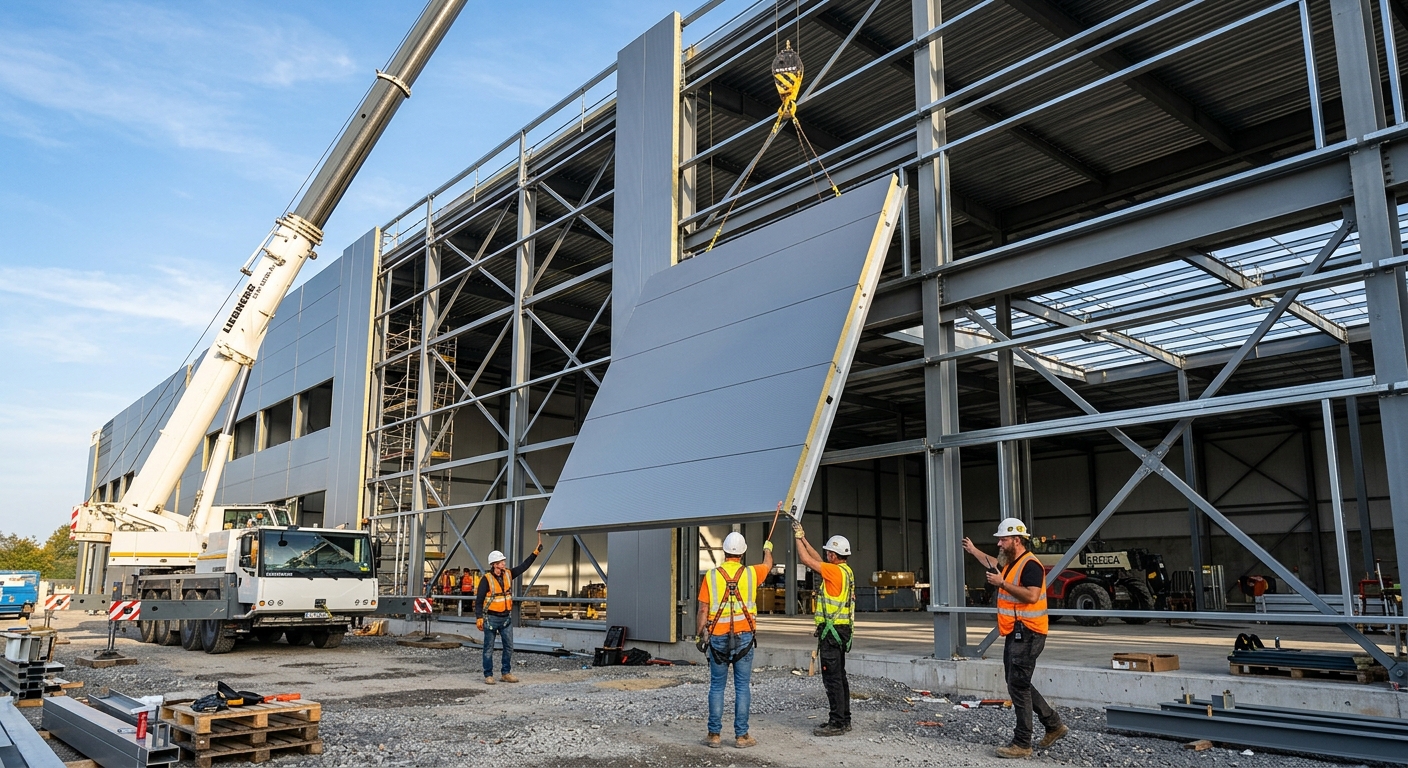
Want to cut 2–3 months off the schedule? Prefabricate the envelope and MEP modules offsite. Unitized aluminum curtain wall panels, pre-wired electrical rooms, and pre-assembled HVAC skids can compress onsite construction by 20–30% while improving quality control.
The catch: modular requires earlier design freeze. You lose the ability to change mind at month six. For developers comfortable with that trade-off, the schedule and waste benefits are substantial — we’ve seen factory-built envelope systems reduce site waste by 40% and eliminate weather-delay risk on critical-path cladding work.
A 12,000 m² cold-storage facility we supplied in 2023 used prefabricated insulated aluminum wall cassettes installed at a rate of 600 m² per day — compared to 180–220 m² per day for stick-built equivalents. Total envelope time: 4 weeks instead of 11. That alone saved the developer two rent-free months on the site lease.
Explore more use cases on our applications and projects pages.
Things no spec sheet will tell you:
Net-zero warehousing isn’t exotic anymore — it’s a disciplined version of good construction. The timeline is only slightly longer, the cost premium is real but recoverable, and the performance gains compound for decades. The projects that succeed share three traits: early integration of envelope, PV, and MEP decisions; ruthless commissioning; and an honest M&V plan after handover.
If you’re scoping a facility in the 10,000–50,000 m² range and want to pressure-test your budget, envelope spec, or modular options against real project data, get in touch with our team. We work with developers and logistics operators across 80+ countries on integrated aluminum and modular building solutions — from design support through factory production and delivery. Bring your constraints. We’ll bring the numbers.




Arabic

English

Spanish
Fill out the form below and our team will get back to you within 24 hours with a tailored solution.
