
APEX EcoBuilt
Leading Manufacturer of Aluminum Systems & Modular Housing
APEX EcoBuilt
Leading Manufacturer of Aluminum Systems & Modular Housing

 03 Aug, 2026Industry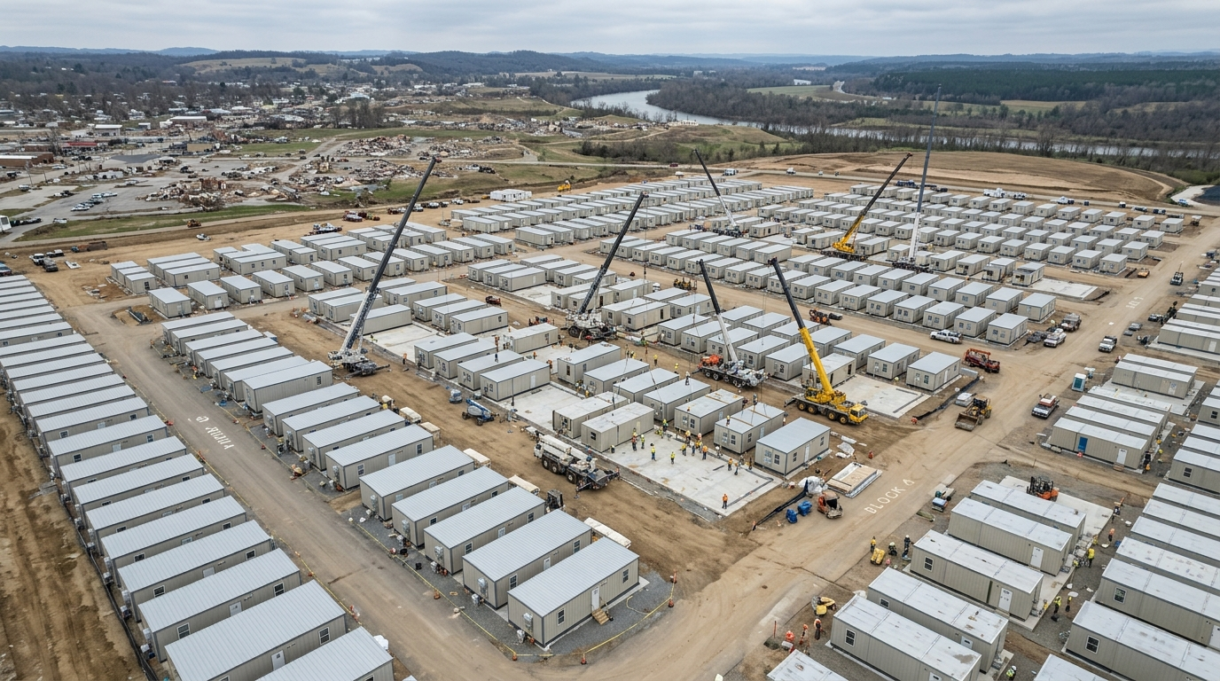
Under realistic conditions, a basic modular disaster-relief unit can be delivered and habitable within 3 to 7 days once it lands on-site — but that number is misleading if you ignore everything before it. The full timeline, from a government or NGO placing the order to families actually sleeping in a unit, typically runs 2 to 4 weeks for standard configurations, and closer to 6-8 weeks if you need full plumbing, insulation, or climate-specific finishes. The bottleneck is almost never the assembly. It’s manufacturing capacity, shipping logistics, and site prep — and that’s exactly where most relief programs get blindsided.
Ask a manufacturer how fast their units deploy and you’ll usually get the flashiest number: 24 hours, 48 hours, sometimes even a same-day claim. Technically true. Practically incomplete.
That number describes on-site assembly time only — bolting panels together, locking in the roof, connecting a pre-wired electrical harness. It says nothing about how the unit got to the site in the first place. A disaster zone in coastal Southeast Asia and a flood-hit region in Eastern Europe have wildly different customs procedures, road access, and port congestion. One region’s ’48-hour deployment’ can mean a 3-week total project when you factor in everything upstream.
If you’re planning a relief housing program, the number that matters is total time from order confirmation to occupancy — not the marketing headline about assembly speed.
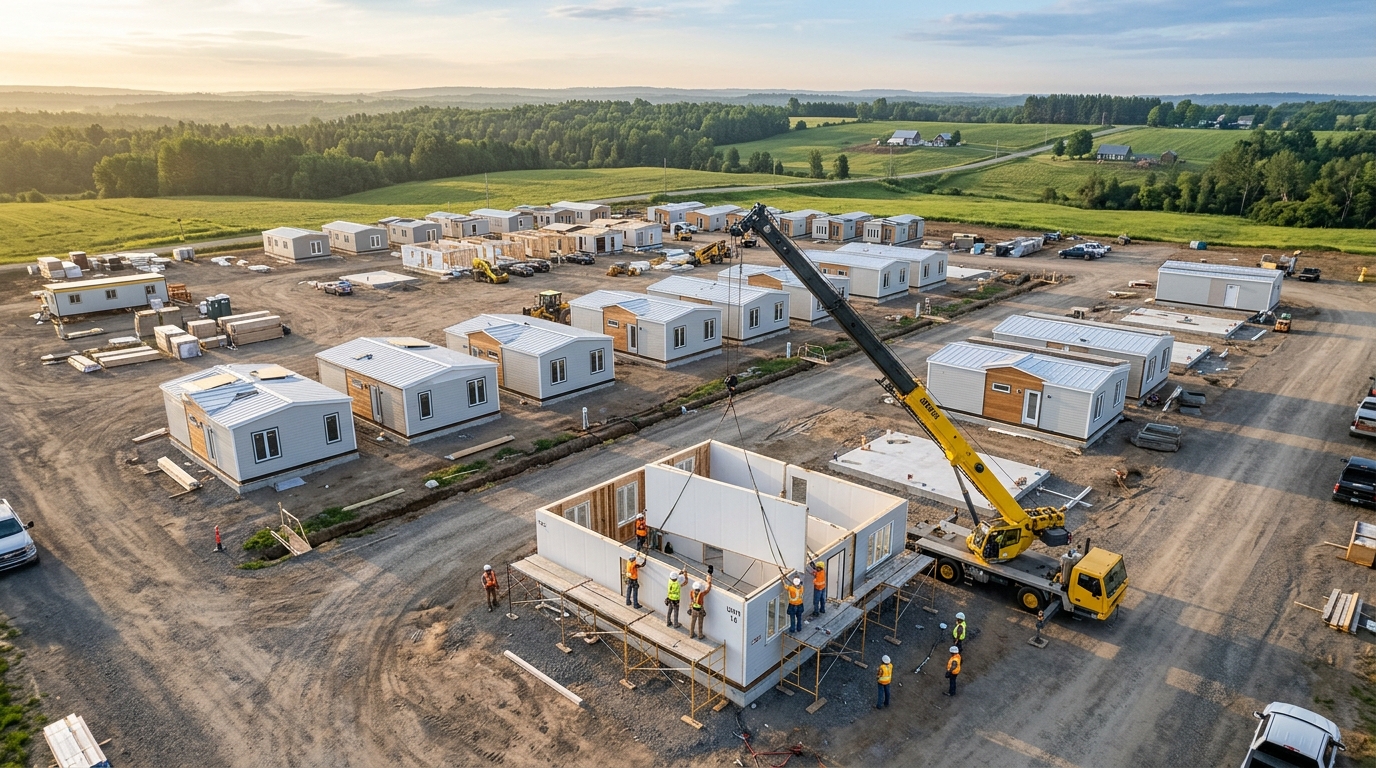
Here’s what actually happens between the purchase order and the first family moving in, based on standard container-based and panelized modular projects:
Notice something? Assembly is the shortest phase, not the longest. Programs that plan their timeline assuming assembly speed equals total speed almost always miss their occupancy date by 2-3 weeks.
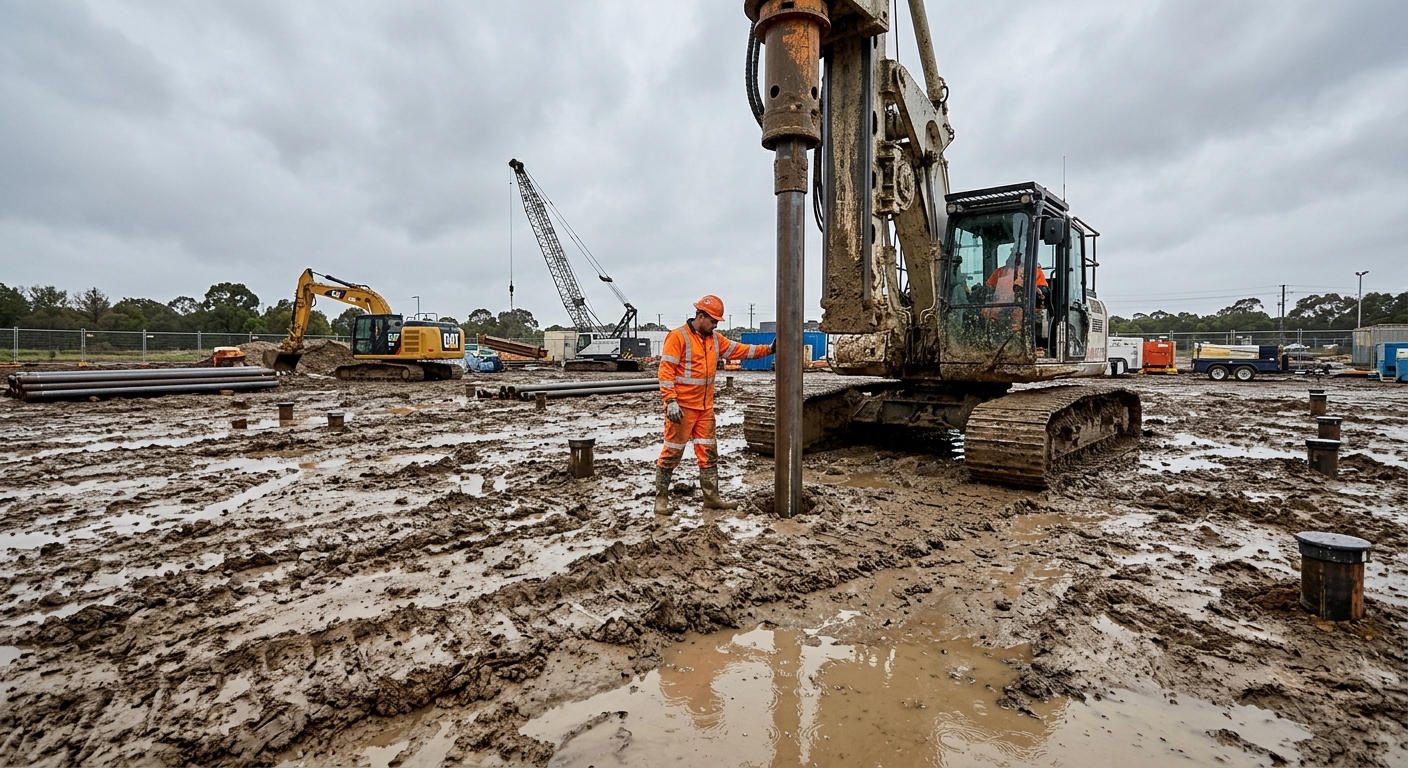
Screw piles can go in within a day on stable soil. But flood-prone or waterlogged disaster zones — which describes most disaster zones — often need pile foundations that take longer to install and cure. Choosing the wrong foundation type for site conditions is one of the most common planning mistakes; this comparison of strip, pile, and screw pile foundations is worth reviewing before you commit to a timeline.
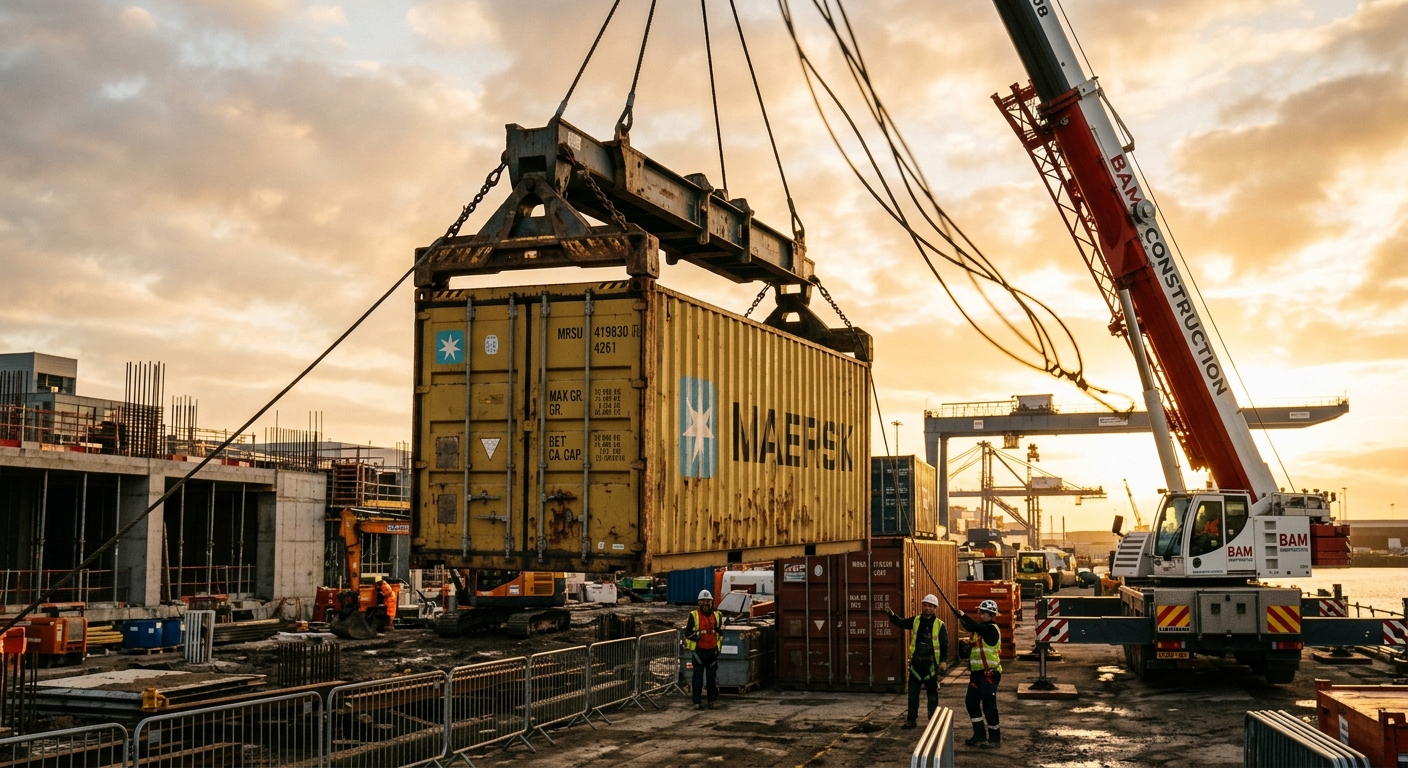
Emergency-use classification can fast-track customs in some countries, but not automatically. NGOs and government agencies need pre-arranged import permits before the crisis hits, not after. Waiting to sort paperwork after an order ships is how a 10-day shipment becomes a 5-week ordeal.
Units that arrive with electrical, plumbing, and insulation already installed at the factory deploy dramatically faster than shell units that need on-site fit-out. It costs more upfront but often pays for itself in labor and time saved during a crisis window when every day matters.
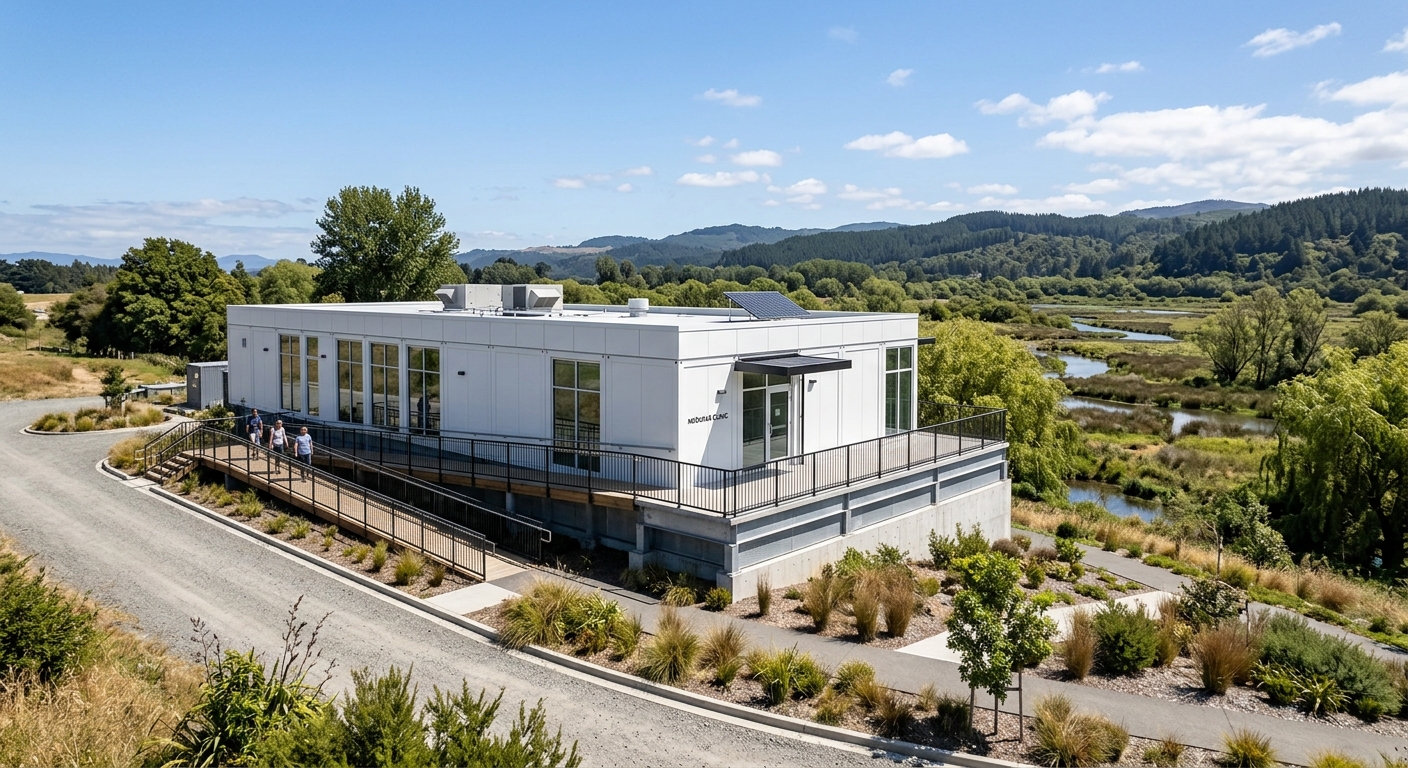
Consider a scenario common across flood-prone regions in South and Southeast Asia: a government disaster agency needs 40 modular clinic units operational within 30 days of a major flood event. The agency pre-arranges customs clearance for medical-use structures during the dry season — before flood season even starts. Units are manufactured in standard configurations already stocked at the factory rather than custom-built from scratch.
Result: manufacturing takes 5 days, shipping and customs another 12 days (helped enormously by pre-cleared permits), site prep on pre-identified elevated ground runs in parallel, and final assembly wraps in 4 days. Total: 21 days from order to functioning clinics — well inside the 30-day target.
The lesson isn’t that the units are magic. It’s that the pre-planning — permits, standard configurations, site selection — did most of the heavy lifting. This mirrors the approach covered in our look at how governments deploy modular classrooms and clinics for public infrastructure at speed.
Not every supplier can hit these timelines, and that’s the honest truth. Speed comes from infrastructure decisions made years before any disaster order comes in.
When vetting a supplier for emergency housing capacity, ask directly: how many units can you ship within 72 hours of order confirmation, and from which regional warehouse? If they can’t answer specifically, they’re not built for disaster response — they’re built for standard project timelines.
A unit deployed in a temperate, dry region moves faster than the same unit deployed after a cyclone in a humid coastal zone. Terrain access alone can add days: helicopter-lifted delivery to remote mountain sites, barge transport to island communities, or convoy escorts through conflict-adjacent regions all extend the timeline beyond what a spec sheet suggests.
Remote and difficult-access deployments share a lot in common with the challenges covered in fast-deployable worker camp projects for mining and oil & gas sites — the core lesson being that site access planning has to start before manufacturing does, not after.
If a supplier quotes you ’24-hour deployment’ without qualifying it, push back and ask for the full order-to-occupancy timeline including shipping and customs assumptions for your specific region. Reputable manufacturers will give you a phased breakdown, not a single headline number.
It’s also worth locking in pricing and lead-time commitments in writing before a crisis hits — waiting until disaster response is underway to negotiate terms is how relief budgets balloon. This is the same principle covered in our guide on locking down fixed prefab pricing, and it applies just as much to emergency procurement as to standard developer projects.





Arabic

English

Spanish
Fill out the form below and our team will get back to you within 24 hours with a tailored solution.
