
APEX EcoBuilt
Leading Manufacturer of Aluminum Systems & Modular Housing
APEX EcoBuilt
Leading Manufacturer of Aluminum Systems & Modular Housing

 10 Sep, 2026Knowledges
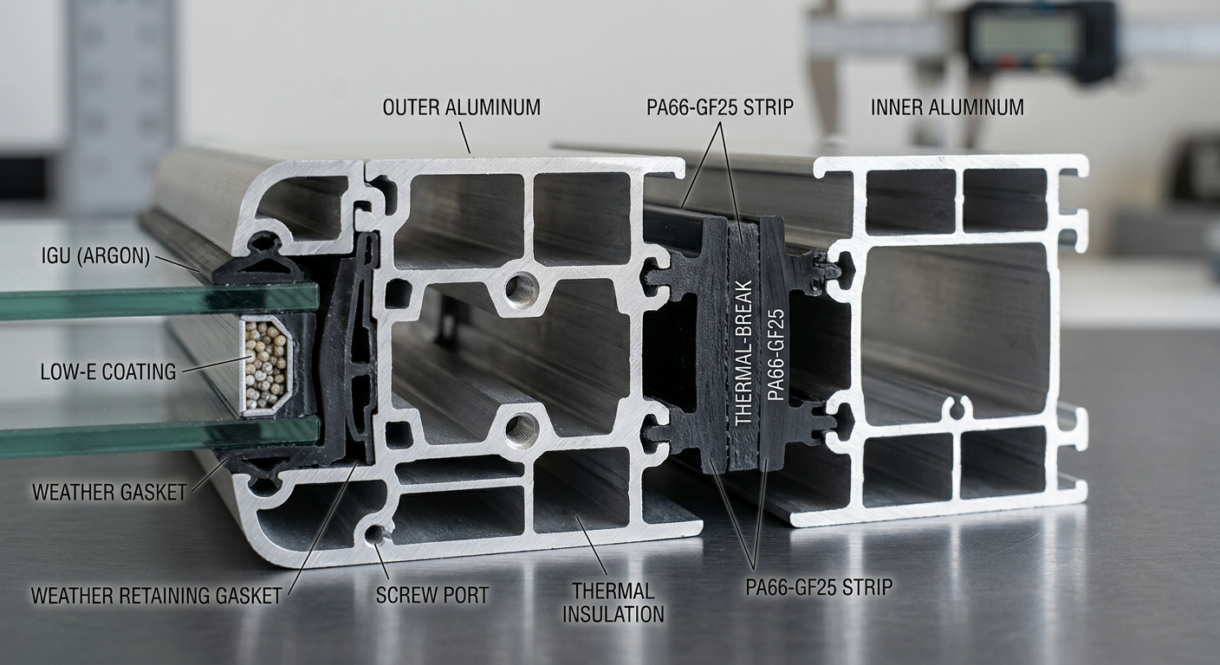
Aluminum as a construction material has moved from a rare, costly metal to one of the most widely specified building materials in the world — lightweight, corrosion-resistant, and fully recyclable, which is why aluminum in construction is increasingly treated as a sustainable construction material rather than a premium one. The aluminum building material properties that matter most — density, corrosion behavior, stiffness, and recyclability — are covered below. Architects and engineers specify it primarily for weight savings and corrosion resistance, not for stiffness — a distinction that shapes where it fits in a building and where it doesn't. Building and construction now absorbs roughly a quarter of global aluminum demand, covering everything from window frames to curtain wall skins on high-rises.
Aluminum was too expensive for mainstream construction until Charles Martin Hall patented the Hall-Héroult electrolytic reduction process in 1886. In 1884, aluminum sold for about $12 per pound — closer to a precious metal than a building material. By 1900, industrial-scale electrolytic production had pushed the price down to around $0.30 per pound, a decline of more than 97% in under two decades. That collapse in cost is what made the metal viable for buildings at all.
The Empire State Building (1930–1931) was among the first major structures to use aluminum extensively — in its spire, interior details, and trim. Decades later, window and facade retrofits on buildings of that era routinely switched to aluminum framing, an early real-world demonstration of aluminum's role in upgrading older buildings for better thermal and maintenance performance.
Aluminum weighs about one-third as much as steel for a comparable structural role, but its modulus of elasticity — a measure of stiffness — runs around 69 GPa versus roughly 200 GPa for steel. That lower stiffness is why aluminum sections for a given span are often built thicker or deeper than a steel equivalent, trading some material efficiency for the weight savings. The two most common construction-grade alloys show that trade-off directly. 6061-T6 vs 6063-T5 aluminum specs explains why 6061-T6, with a yield strength around 276 MPa (40,000 psi), gets specified where higher structural loads matter, while 6063-T5, yielding around 145 MPa (21,000 psi), extrudes into finer detail and becomes the standard choice for window frames, door frames, and architectural trim.
Untreated aluminum forms a natural oxide layer that resists rust, and anodizing hardens the surface further for coastal or industrial exposure. This is the property that keeps maintenance schedules light compared to unprotected ferrous metals over the life of a building envelope.
Aluminum reflects heat rather than absorbing it, which matters for roofing, siding, and shading elements exposed to direct sun. How much that translates into actual energy savings depends heavily on glazing, coatings, and thermal-break detailing — a system-level question, not a raw-material one.
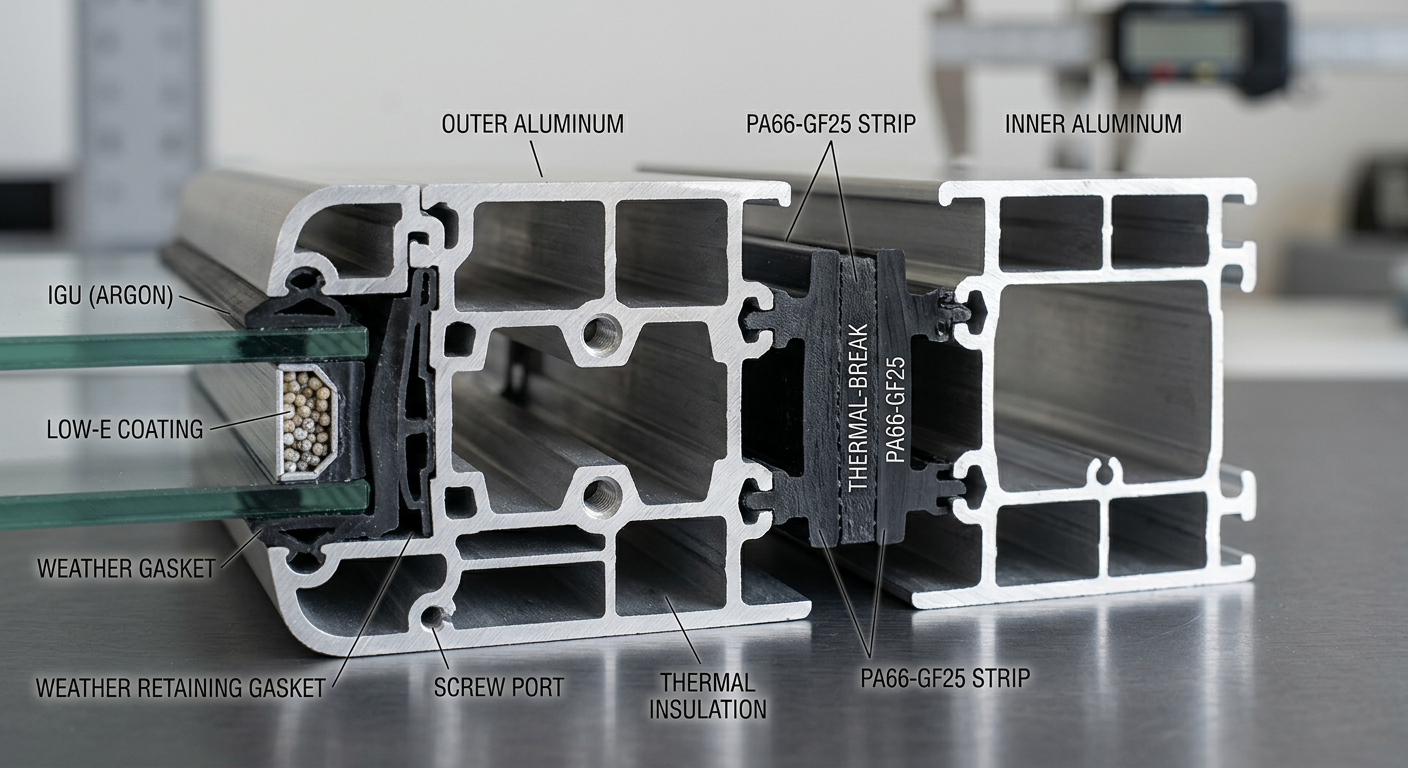
Recycling aluminum takes roughly 5% of the energy needed to produce new metal from ore, and a large share of the aluminum used in buildings today already comes from recycled stock. Recycled content varies by product — mill-finish extrusions often run closer to virgin-heavy billet, while some sheet and panel products reach 50–70% recycled content — but the infinite-recyclability trait holds across grades and finishes, which is why aluminum keeps showing up in green-building material specs. The full range of aluminum building materials for facades, windows, ceilings, and trim spans mill-finish extrusions through anodized and powder-coated panels.
Questions about matching alloy or finish to one of these applications can go straight to APEX EcoBuilt.
Aluminum's advantages are consistent across applications: it's lightweight, corrosion-resistant, recyclable without performance loss, and easy to extrude into custom profiles for design-driven facades.
The trade-offs are real too. Aluminum typically costs more upfront than steel by volume, and its coefficient of thermal expansion — about 23 µm/m·K compared to roughly 12 µm/m·K for steel — means joints and long spans need expansion allowances that steel assemblies don't require as urgently. Aluminum construction advantages, limitations, and when to use it breaks down why those trade-offs play out differently depending on whether the application is a curtain wall, where weight savings dominate, or a load-bearing frame, where stiffness dominates.
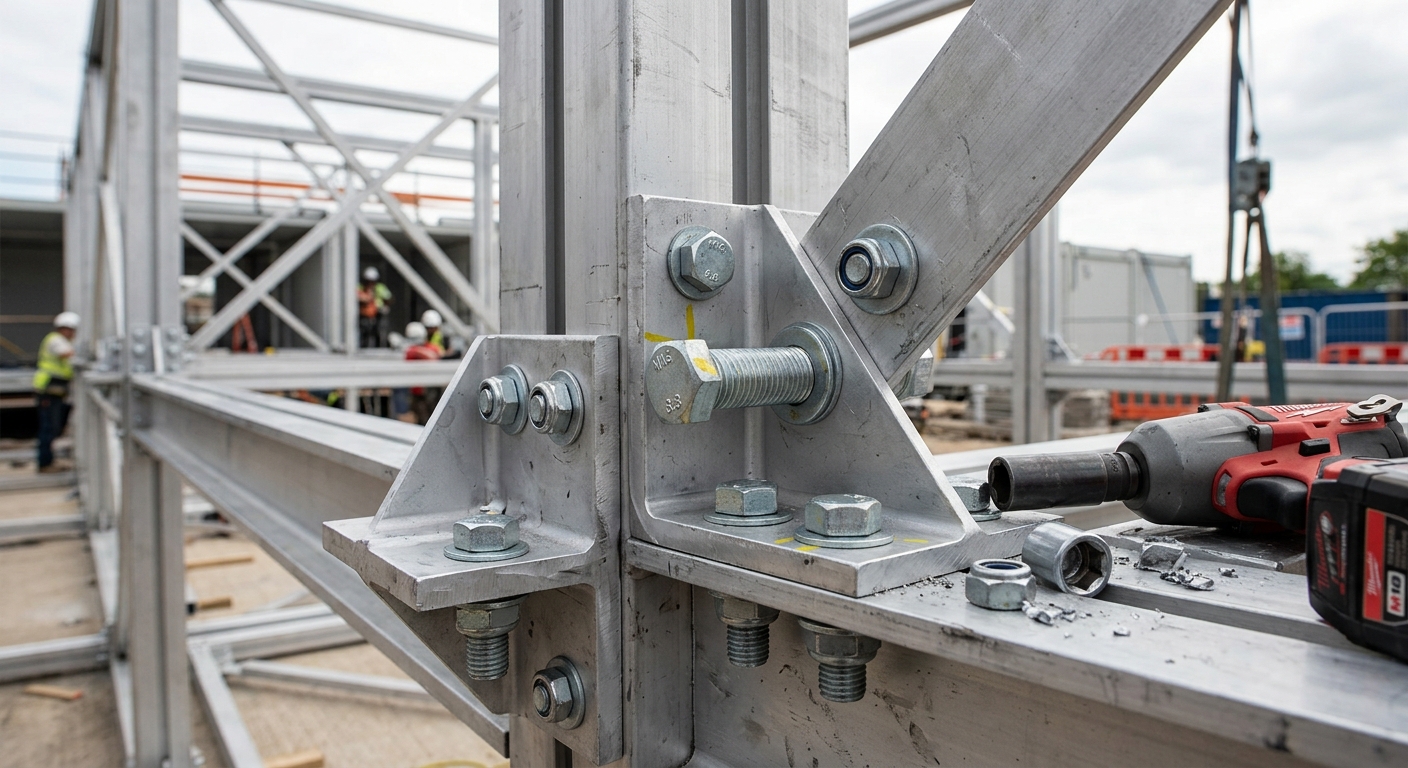
The combination that made aluminum useful in 1930 — low weight, corrosion resistance, formability — is the same combination driving its use today, plus a recyclability profile that fits directly into green-building goals. Manufacturers like APEX EcoBuilt supply aluminum systems across both facade and modular building applications for developers, contractors, and OEM brands. Contact APEX EcoBuilt to talk through which alloy, finish, or system fits your project.
Is aluminum used for construction?
Yes. Aluminum is used extensively in construction — facades, windows, doors, roofing, ceilings, and structural framing — and the building sector consumes roughly a quarter of global aluminum demand, a share that has grown steadily as buildings prioritize lightweight, low-maintenance envelopes.
What is a disadvantage of aluminium?
Aluminum typically costs more upfront than steel by volume, and its modulus of elasticity (about 69 GPa) is roughly a third of steel's (200 GPa), so structural designs often need thicker or deeper sections to match steel's load-bearing performance for the same span.
Why don’t we build houses out of aluminum?
Aluminum is more commonly used for building components — windows, siding, framing accents — than full structural framing in houses, because wood and steel remain cheaper for typical residential loads. Aluminum earns its place instead in modular, prefab, and architectural applications where weight and corrosion resistance matter more.
What was the old name for aluminum?
Aluminum's original name was "alumium," proposed by Sir Humphry Davy in 1808, though Davy never isolated the metal itself — that breakthrough came from Friedrich Wöhler in 1827. Davy revised the name to "aluminum" in 1812, and British chemists later changed it to "aluminium" to match the "-ium" pattern of other elements; both spellings remain in use today.
What are the pros and cons of aluminum as a construction material?
Aluminum construction advantages, limitations, and when to use it covers how pros like low weight, corrosion resistance, and full recyclability weigh against cons like higher material cost and lower stiffness, and how that balance shifts depending on the application.
Is aluminum more expensive than steel for the same structural span?
Per pound, aluminum usually costs more than steel, and because its stiffness is roughly a third of steel's, matching the same span can require thicker or deeper sections. Aluminum still often wins on total installed cost in weight-sensitive work like curtain walls, where lower loads reduce the supporting structure and foundations needed.





Arabic

English

Spanish
Fill out the form below and our team will get back to you within 24 hours with a tailored solution.
