
APEX EcoBuilt
Leading Manufacturer of Aluminum Systems & Modular Housing
APEX EcoBuilt
Leading Manufacturer of Aluminum Systems & Modular Housing
 11 Sep, 2026Industry
Reviewed by APEX EcoBuilt's modular engineering team.
What is a capsule house? It's a compact, factory-built living unit delivered as a finished module — typically framed in aluminum or steel with insulated wall and roof panels — rather than built piece-by-piece on site. That metal shell is what separates a capsule house from a stick-built tiny home: less on-site labor, faster placement, and a frame that doesn't warp, rot, or attract pests the way timber can.
Most capsule houses arrive pre-wired for electrical hookup, with compact plumbing fixtures routed to a single wet wall to simplify connection to municipal or septic systems. HVAC is usually a mini-split sized for the small footprint. Off-grid versions add solar panels, battery storage, and water tanks for sites without utility access — common for remote camps or backcountry glamping. Units typically ship by truck or container and are lifted into place by crane, so site access and a level pad matter as much as the unit itself; see modular building foundation options before ordering. If you're mapping out utility hookups for a specific site, contact us with your location and use case.
There's no single verified figure for how long a capsule house lasts — it depends on frame material, climate exposure, and maintenance rather than a fixed number. Steel- and aluminum-frame units generally outlast timber-frame tiny homes because metal doesn't warp, rot, or draw pests. Corrosion protection (hot-dip galvanizing in coastal or humid climates), tight panel seams, and a proper foundation rather than placement directly on grade all extend service life — skipping any of them shortens it. Sites in high-wind or seismic zones should also confirm the frame's rated performance; see seismic design for modular buildings for what that involves. For units built specifically for repeated guest turnover, explore capsule options engineered for long-term hospitality deployment.
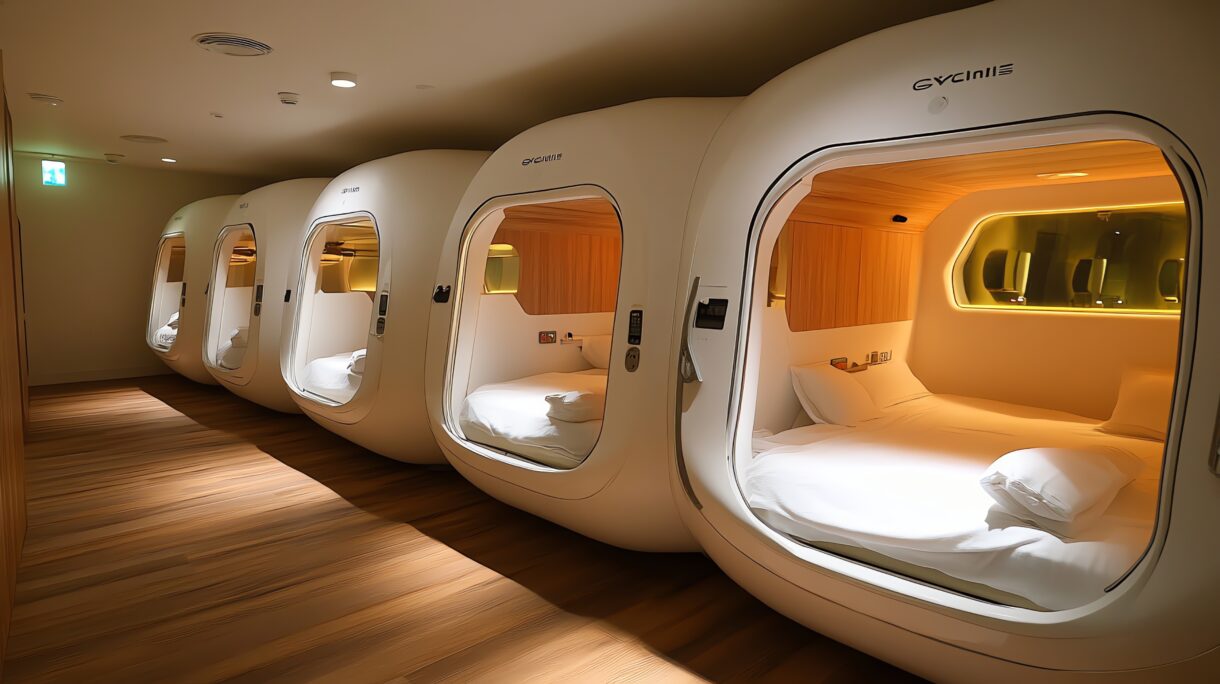
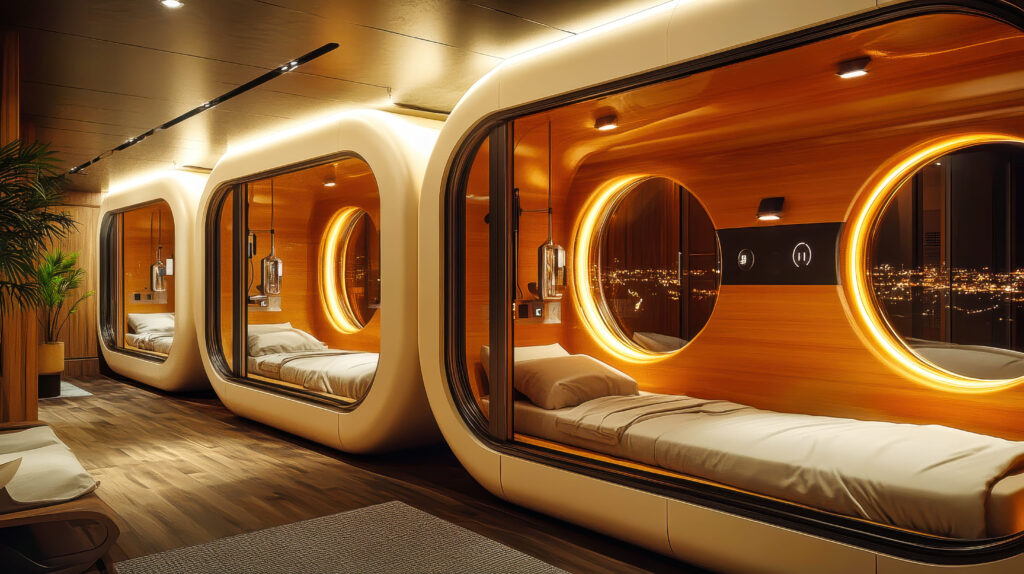
Capsule hotels — a format popularized in Japan — remain the clearest commercial use case: stacked sleep pods that let operators serve more guests per square meter than standard rooms.
Outside hospitality, capsule houses also show up as temporary or remote-site housing and as compact living for students or urban buyers where land cost rewards a small footprint.
Pricing swings widely by size, finish, and whether a unit is domestically built or imported — what a capsule house typically costs breaks down what drives that range. If you're sourcing units for a hospitality or housing project, contact us to discuss specs for your site.
Are capsule homes legal in the US?
It varies by jurisdiction. Many municipalities reference IRC Appendix Q, covering compact dwellings, or handle capsule units under local accessory dwelling unit (ADU) ordinances. Some cities haven't updated code language at all, so confirm classification with the local building department before purchasing.
What is the average cost of a capsule house?
Pricing varies widely by size, finish, and sourcing origin. The capsule house cost breakdown covers what drives that range in more detail.
Are there capsule homes available in the US?
Yes — availability has grown through modular manufacturers and specialty suppliers serving hospitality, backyard ADU, and remote-site markets. Selection and delivery timelines vary by supplier and region.
What are the disadvantages of capsule houses?
The main trade-off is space — cooking, working, or hosting guests is harder in a compact footprint than in a full-size home. Zoning friction in cities unprepared for modular housing, plus an adjustment period for full-time occupants, are the other common friction points.


Arabic

English

Spanish
Fill out the form below and our team will get back to you within 24 hours with a tailored solution.
