
APEX EcoBuilt
Leading Manufacturer of Aluminum Systems & Modular Housing
APEX EcoBuilt
Leading Manufacturer of Aluminum Systems & Modular Housing
 03 Aug, 2026Knowledges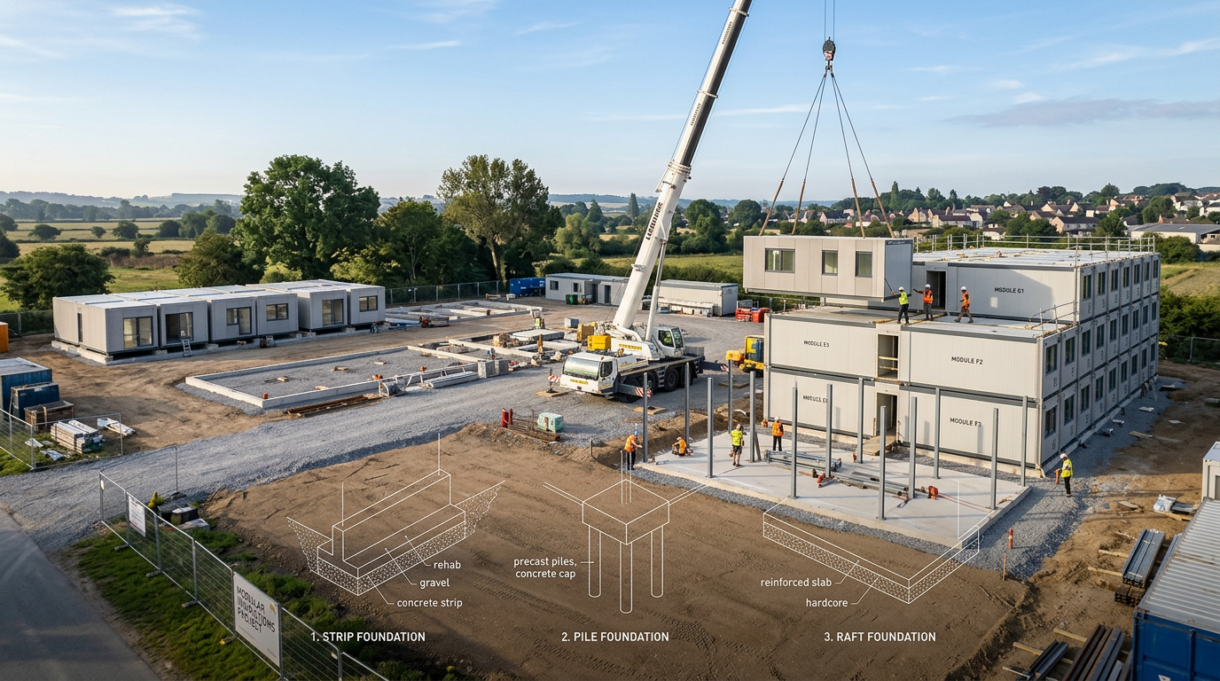
Pick a strip foundation when soil is firm and the building is permanent. Pick driven or bored piles when the ground is soft, waterlogged, or carries heavy loads. Pick screw piles when you need speed, minimal disturbance, or the option to relocate the building later. The rest of this guide explains how to actually make that call — based on soil, load, climate, and project timeline.
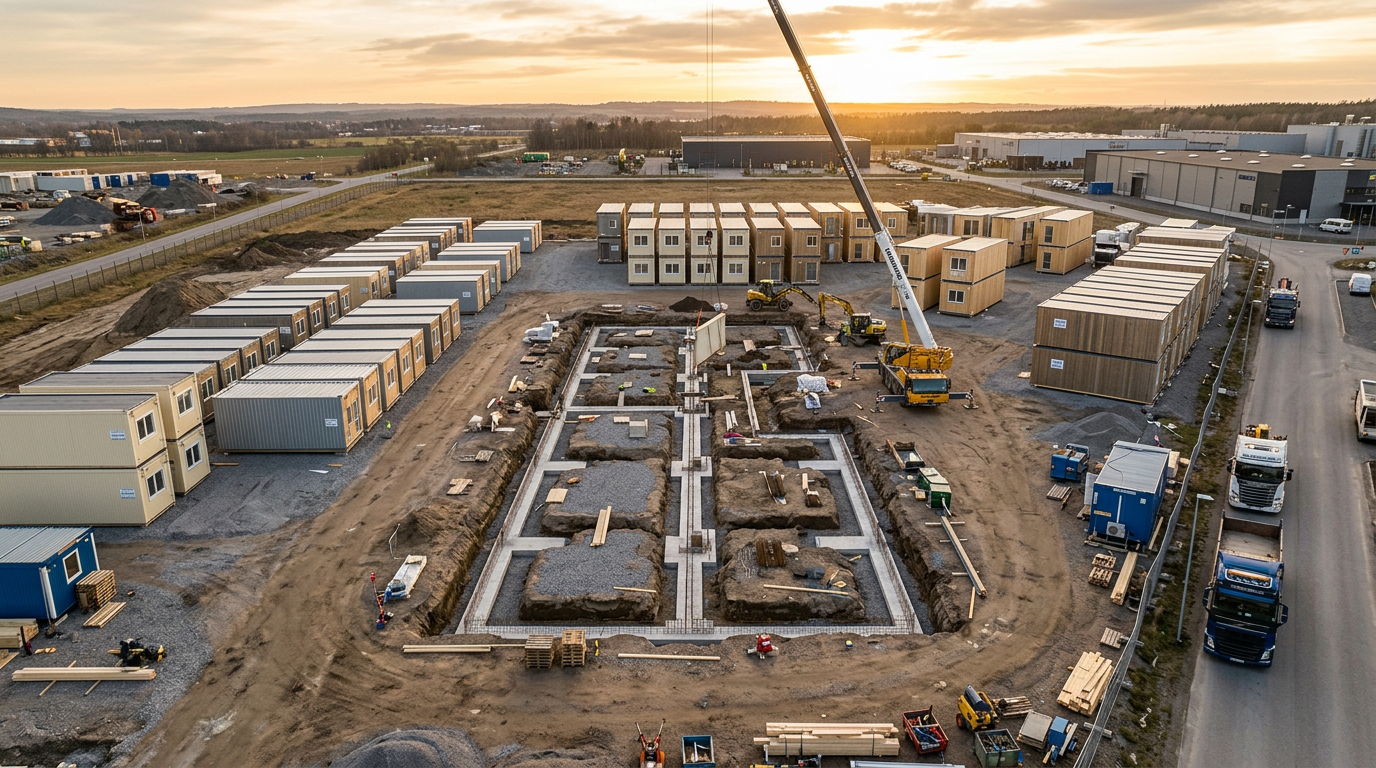
Here’s a number that surprises most first-time modular buyers: foundation work can account for 8–15% of total project cost — and it’s the single biggest source of schedule slippage. A modular building can land on site in days. If the foundation isn’t ready, those days become weeks.
Get it wrong and the consequences compound. Differential settlement of just 20 mm across a 12 m module can crack drywall, jam doors, and break service connections. We’ve seen contractors install perfect modules onto a slab that wasn’t level — and spend three weeks shimming, re-leveling, and arguing about who pays.
The foundation also dictates whether your building is truly “modular” in spirit. A poured strip foundation locks the structure to that site forever. Screw piles let you unscrew the building five years later and move it. That choice should be made before the first module leaves our factory, not after.
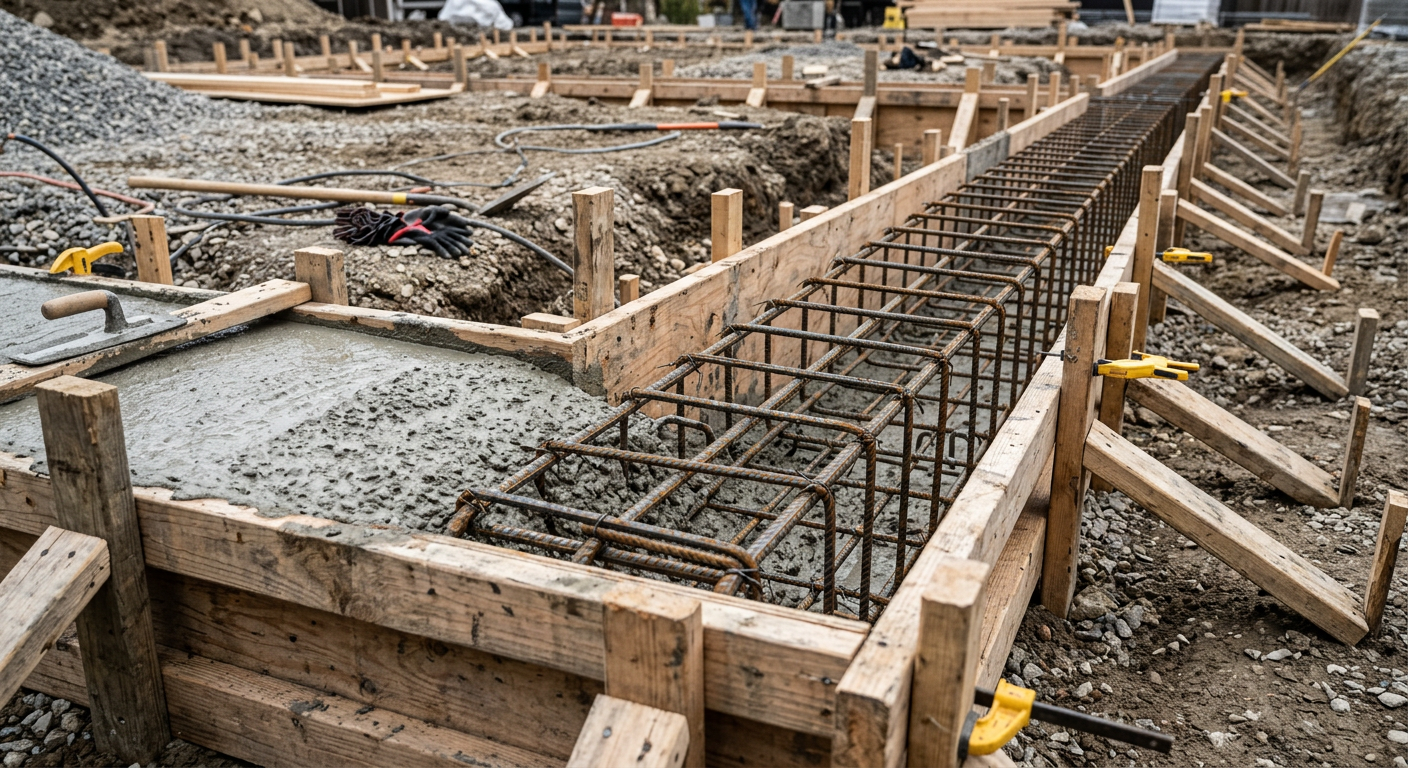
Strip footings are continuous bands of reinforced concrete poured under load-bearing walls — usually 600–1000 mm wide and 300–600 mm deep. They spread the building’s load across competent soil and are the default choice when ground conditions allow.
Strip footings hate inconsistent soil. If half your site sits on rock and the other half on backfill, you’ll get differential settlement no matter how well you reinforce. A government client we worked with in Central Asia ran into exactly this — half a former agricultural plot, half compacted road base. They switched to a raft foundation mid-project after the geotech report came back. Lesson: do the soil investigation first, design the foundation second.
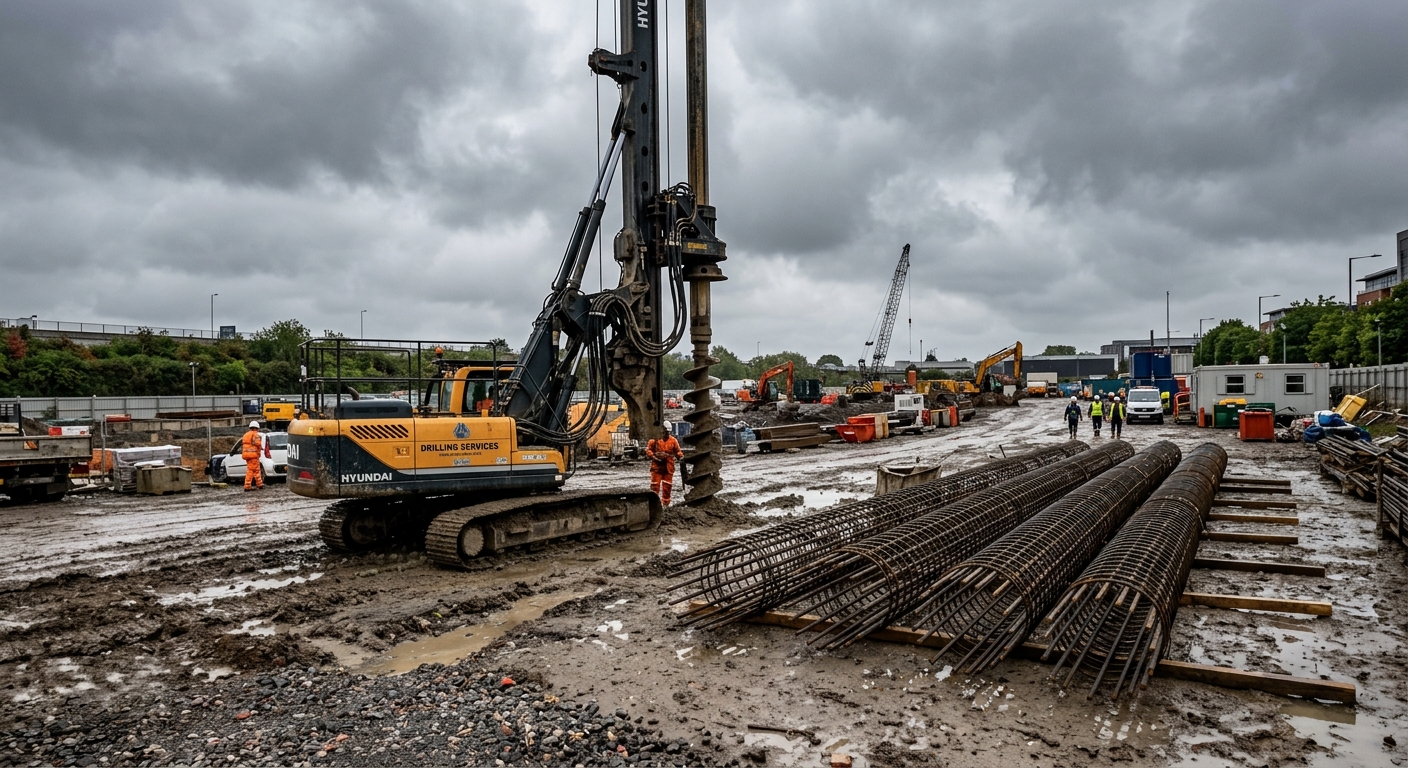
Piles transfer building loads through weak surface soils down to a competent layer — bedrock, dense sand, or stiff clay — sometimes 10 to 30 meters below grade. There are three common types for modular work:
Soft clay, peat, fill over weak strata, high water tables, or seismic zones with liquefaction risk. If your geotech report shows SPT N-values under 10 in the top 5 meters, you’re almost certainly piling.
For instance, a real estate developer building a four-story modular dormitory on reclaimed coastal land in Southeast Asia couldn’t use strip footings — the top 8 meters were marine clay. Bored piles down to 22 meters added roughly $180/m² to the foundation cost, but they avoided the alternative: 50–100 mm of settlement over a decade and a building no one would insure.
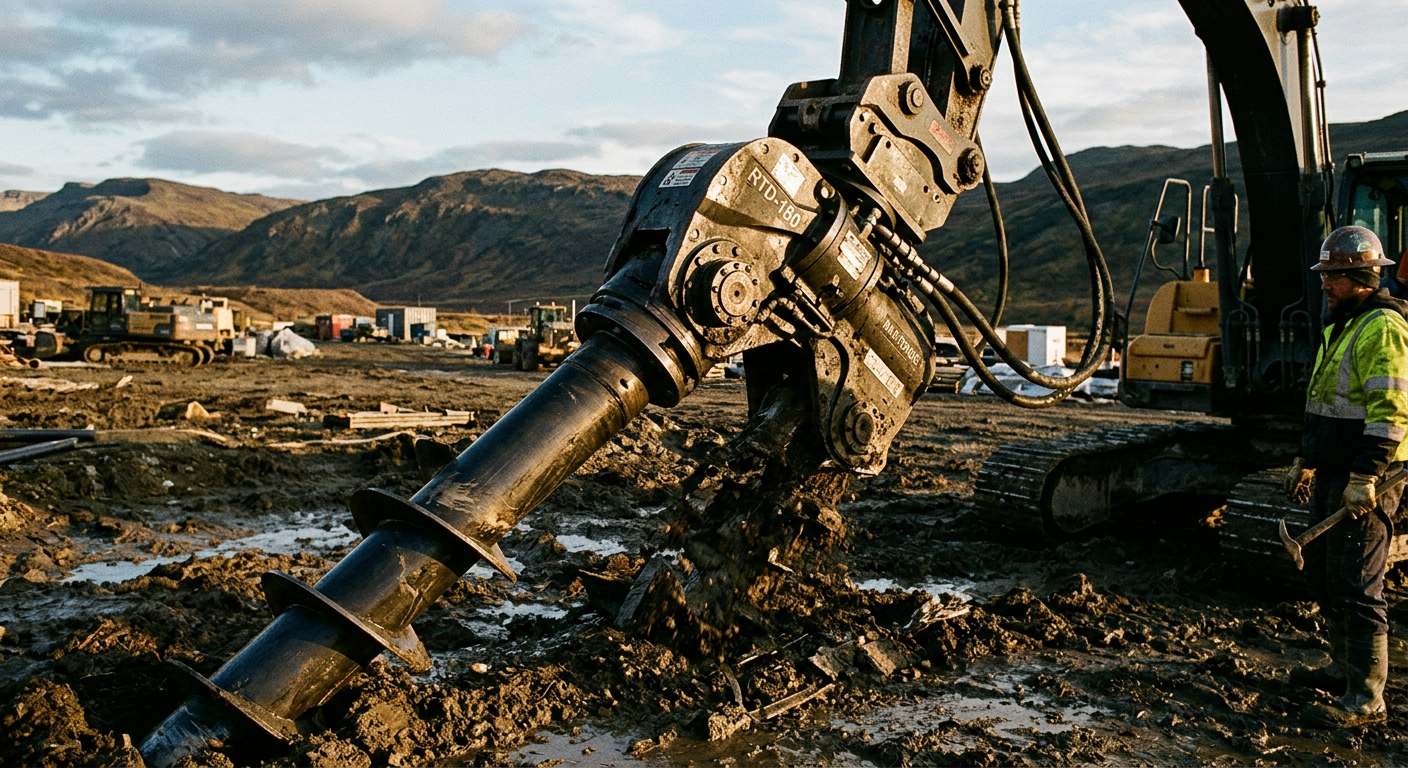
Screw piles (also called helical piles) are steel shafts with one or more helical plates welded to the bottom. Hydraulic machinery screws them into the ground like giant wood screws. No concrete. No curing. No excavation. A two-person crew can install 20–40 piles in a day.
Screw piles are excellent for one to three-story modular buildings up to roughly 150 kN per pile. They struggle in dense rock or sites with shallow obstructions (old foundations, buried debris). And the installer matters enormously — torque-to-capacity correlation requires calibrated equipment and an experienced operator, not a guy with a borrowed machine.
A mining client deploying a 60-person camp 400 km from the nearest city used screw piles installed by a two-truck crew in 36 hours. Concrete trucks couldn’t reach the site at all. When the contract ended four years later, they pulled the piles, trucked them to the next project, and reused 90% of them. Try doing that with a concrete slab.
The foundation decision is downstream of one document: the geotechnical report. Skip it and you’re guessing with six-figure consequences.
If the report shows expansive clays (plasticity index above 30), you’ll need either deep piles or moisture control measures — strip footings will heave seasonally. If it shows organic content above 5%, that layer cannot carry load and must be excavated or bypassed. If there’s any mention of karst, sinkholes, or mine workings, stop and bring in a specialist before specifying anything.
For projects in extreme climates, foundation selection also interacts with envelope design — see our notes on specifying for Middle East heat and sand for an example of how site conditions cascade into every system choice.
Foundation pricing varies wildly by region, but the ratios are reasonably stable. For a typical 200 m² single-story modular building on competent soil:
But headline cost is misleading. Factor in:
The cheapest foundation on paper is rarely the cheapest foundation in total. We’ve seen projects where switching from strip to screw piles cut total project duration by 18 days, more than offsetting the higher unit cost.
The modules themselves influence the choice. Heavier doesn’t always mean piles, and lighter doesn’t always mean screw piles.
Total dead+live load typically 4–6 kN/m². Screw piles or shallow strip foundations work. This covers most worker camps, site offices, and modular classrooms.
Loads jump to 15–25 kN/m². Strip foundations need careful design; bored piles or large-diameter screw piles become more common. This is the sweet spot for modular hotels and staff housing.
Piles, almost always. Loads concentrate at column lines and demand deep transfer. Strip footings can’t compete here.
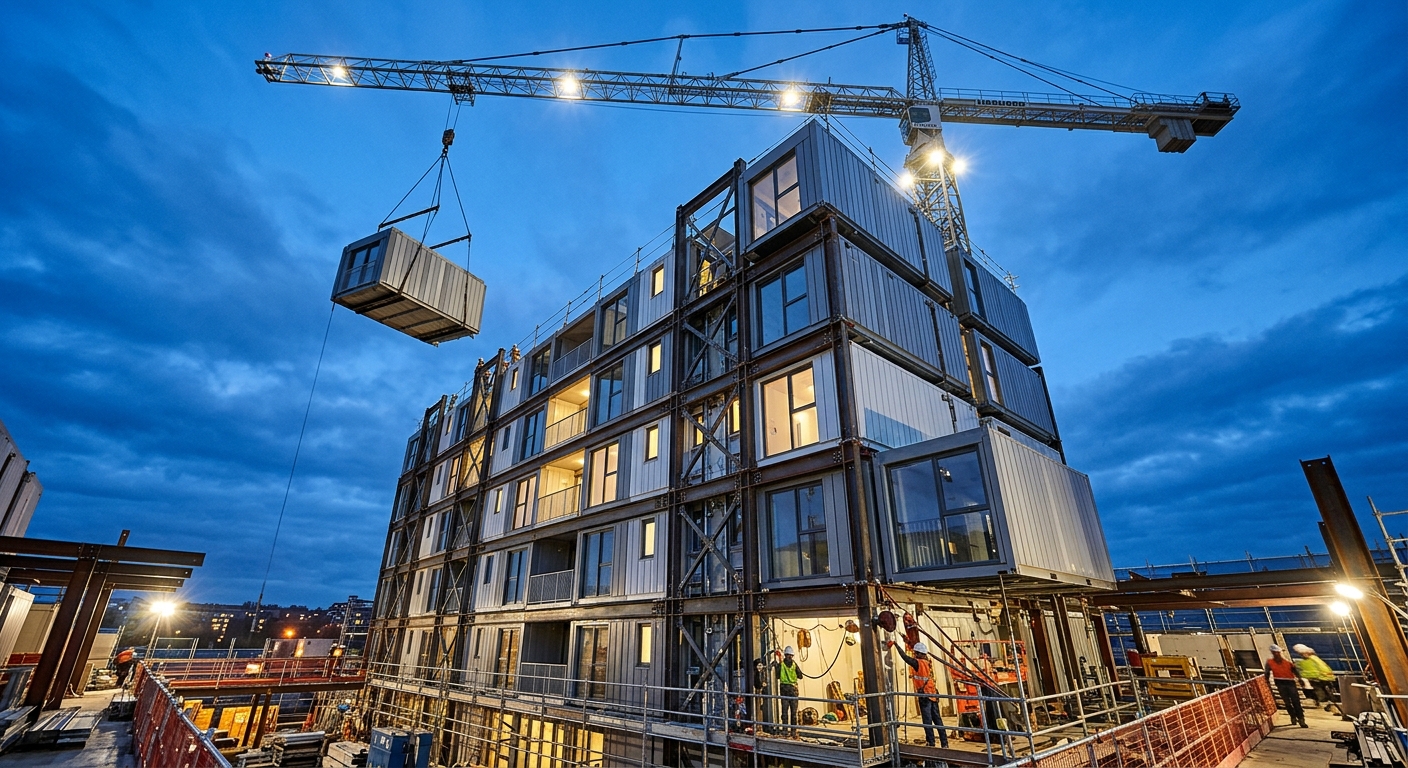
When you combine modular cores with curtain wall facades, foundation tolerances tighten. The curtain wall anchors expect ±5 mm at the slab edge. Achieving that with screw piles requires a structural ring beam — adding cost but preserving the schedule benefit.
Two sites with identical soil reports can demand completely different foundations because of climate.
Strip footings must extend below frost depth — sometimes 1.5–2.5 m in northern Canada or Mongolia. At that depth, screw piles or piles become cost-competitive simply because excavation is so brutal. In permafrost, adfreeze-rated screw piles are often the only viable choice — they avoid thaw bulb formation that would destabilize concrete.
Parts of the Middle East, India, and Australia have black cotton soils that swell 10–15% when wet. Strip footings on such soils will crack within years. Piles bypassing the active zone (typically 3–5 m deep) are the standard fix.
Anywhere groundwater sits within 2 m of grade, dewatering for strip foundations becomes a major cost. Piles — particularly driven piles — sidestep the problem entirely.
Foundations must transfer lateral loads, not just vertical. This usually means tied pile caps, grade beams between piles, or reinforced raft slabs. Screw piles can work but need lateral capacity verification, not just axial.
If you want a shortcut for the initial conversation with your engineer, work through these questions in order:
None of this replaces a stamped engineering design. But it gets you to the right conversation, with the right specialist, faster.
The foundation is the only part of a modular project that can’t be fixed in the factory. Everything we build at our 150,000 m² facility — modules, panels, connections — assumes the foundation is level, accurate, and built for the actual loads. If it isn’t, even a perfect module becomes a problem on site.
The good news: with the right soil data and the right foundation choice, modular delivery can be dramatically faster and cleaner than traditional construction. We’ve seen sites go from bare ground to weather-tight building in under two weeks using screw piles and pre-staged modules. That’s the version of modular construction the brochures promise — and it starts with this decision.
If you’re planning a project and unsure which foundation strategy fits your soil, climate, and timeline, our engineering team is happy to review your site data and recommend an approach. Get in touch with the site details, or browse our application case studies to see how foundation choices played out on real projects across 80+ countries.





Arabic

English

Spanish
Fill out the form below and our team will get back to you within 24 hours with a tailored solution.
