
APEX EcoBuilt
Leading Manufacturer of Aluminum Systems & Modular Housing
APEX EcoBuilt
Leading Manufacturer of Aluminum Systems & Modular Housing

 13 Jul, 2026Knowledges
To vet an overseas modular building manufacturer properly, work through 12 verification points covering legal status, certifications, factory capacity, engineering depth, QC discipline, logistics readiness, and after-sales support — and never skip the live factory audit, even if it’s a video walk-through. The cheapest quote is almost never the safest one, and most failed projects can be traced to two or three skipped checks at the sourcing stage. Below is the exact checklist our project managers use when buyers ask us how to compare us against other suppliers.
Start with the boring stuff, because it filters out 30% of suspect suppliers in five minutes. Pull the manufacturer’s business license, registration number, and tax ID. In China, cross-check on the National Enterprise Credit Information Publicity System. In the EU, use the company registry of the country of incorporation.
Look at the registration date. A modular factory claiming “20 years of experience” with a 2023 incorporation date is a trading company, not a manufacturer. That distinction matters when something goes wrong on site and you need someone with engineering authority — not a middleman — to make a decision.
Also check registered capital versus their pitch. A company quoting a $4M project with $50K in registered capital cannot absorb a major claim. That’s not a deal-breaker, but it tells you to insist on bank guarantees or escrow.
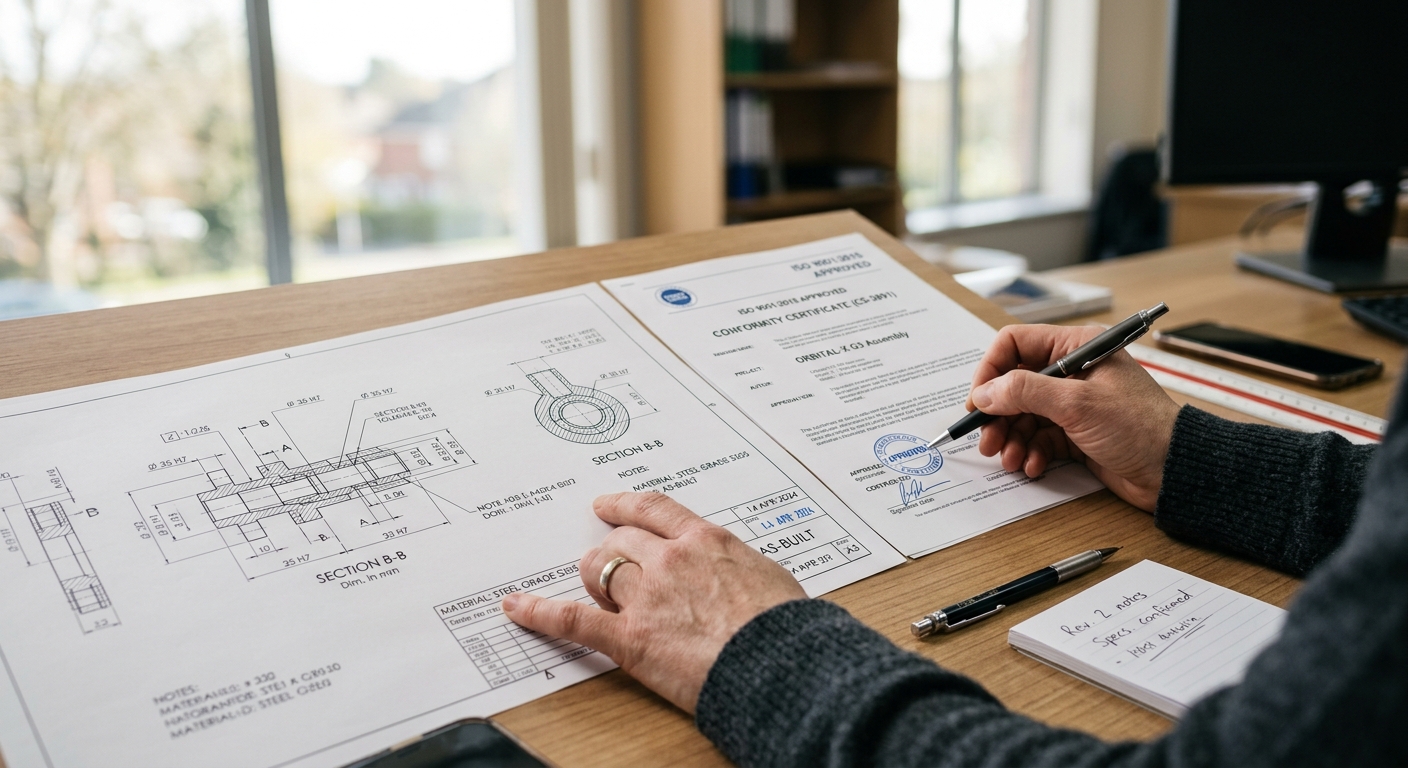
Anyone can paste an ISO9001 logo on a brochure. Ask for the actual certificate, then call or email the issuing body to confirm the number is active and covers modular building manufacturing — not just “general assembly”.
For modular projects, the minimum stack you should see:
One Middle East developer we worked with discovered their previous supplier had a valid ISO certificate — but only for window frames. The modular line wasn’t covered. The buildings shipped, the inspector flagged it, and the project sat in customs for nine weeks.
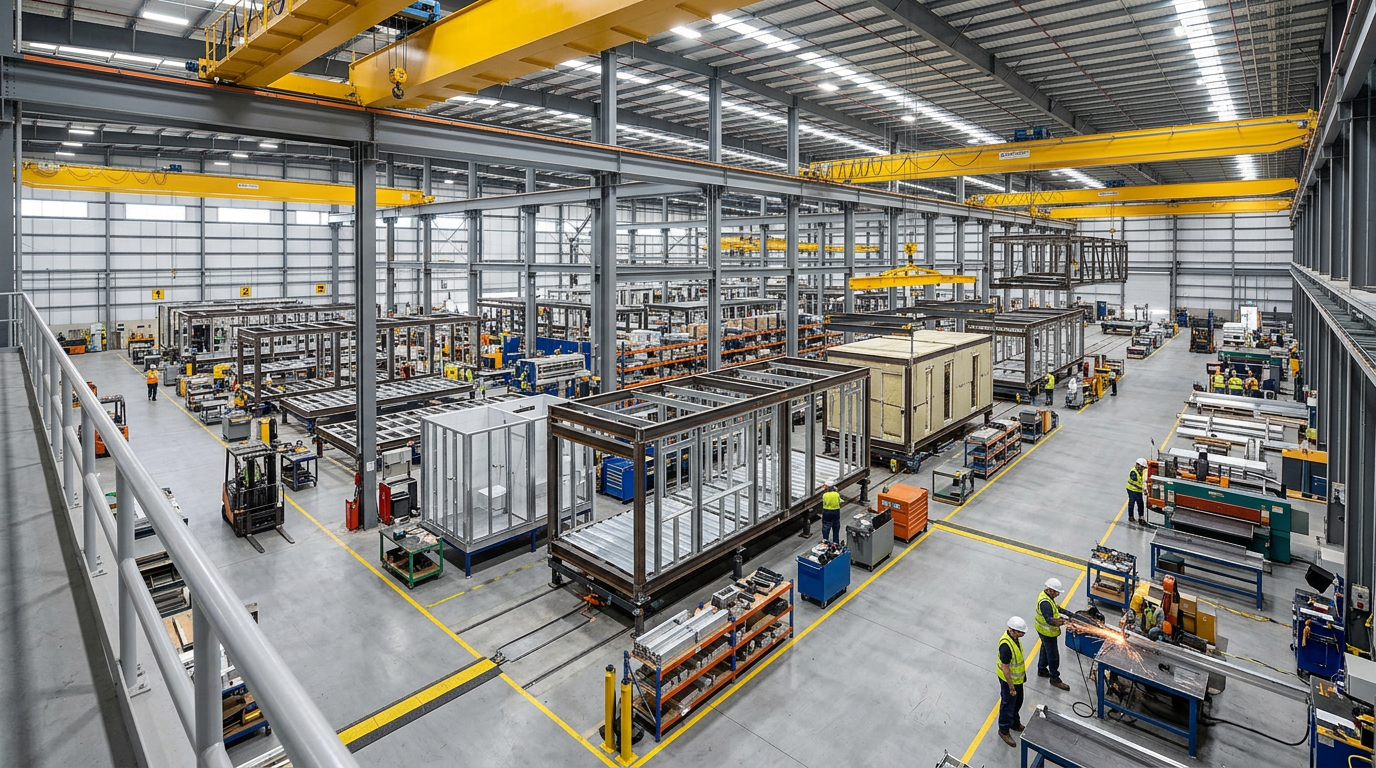
Brochure photos are useless. They’re often three years old, sometimes not even the supplier’s own factory. Insist on either a physical visit or a live, unscripted video walk-through where you control where the camera points.
What to look for during the walk:
A 150,000 m² facility looks very different from a 5,000 m² shed, and that scale dictates what you can actually deliver. You can read more about how this plays out on our manufacturing capabilities page.
“We can deliver 500 units a month” is meaningless without context. The real questions:
Ask for a Gantt chart of current commitments. A serious manufacturer will share a redacted version. If they refuse, assume they’re either disorganized or already overbooked.
For example, a contractor building a 220-room modular hotel in Saudi Arabia needs roughly 110 modules at 2-room configurations. A factory promising 30-day delivery on that volume is either lying or cutting QC corners. Realistic lead time for that scale is 90–120 days from final design freeze.
Most buyers focus on the factory and forget that modular projects live or die on the engineering side. Ask: how many in-house structural, MEP, and architectural engineers does the supplier employ? What software do they use — Tekla, Revit, SolidWorks? Can they generate stamped drawings for your jurisdiction, or do you need to engage a local engineer of record?
Patents are a quick proxy for genuine engineering capability. A factory with 100+ active patents has real R&D. A factory with three has likely copied catalog products. This also predicts how willing they are to customize — for module dimensions, finishes, and MEP routing — versus pushing you toward whatever standard SKU they already produce.
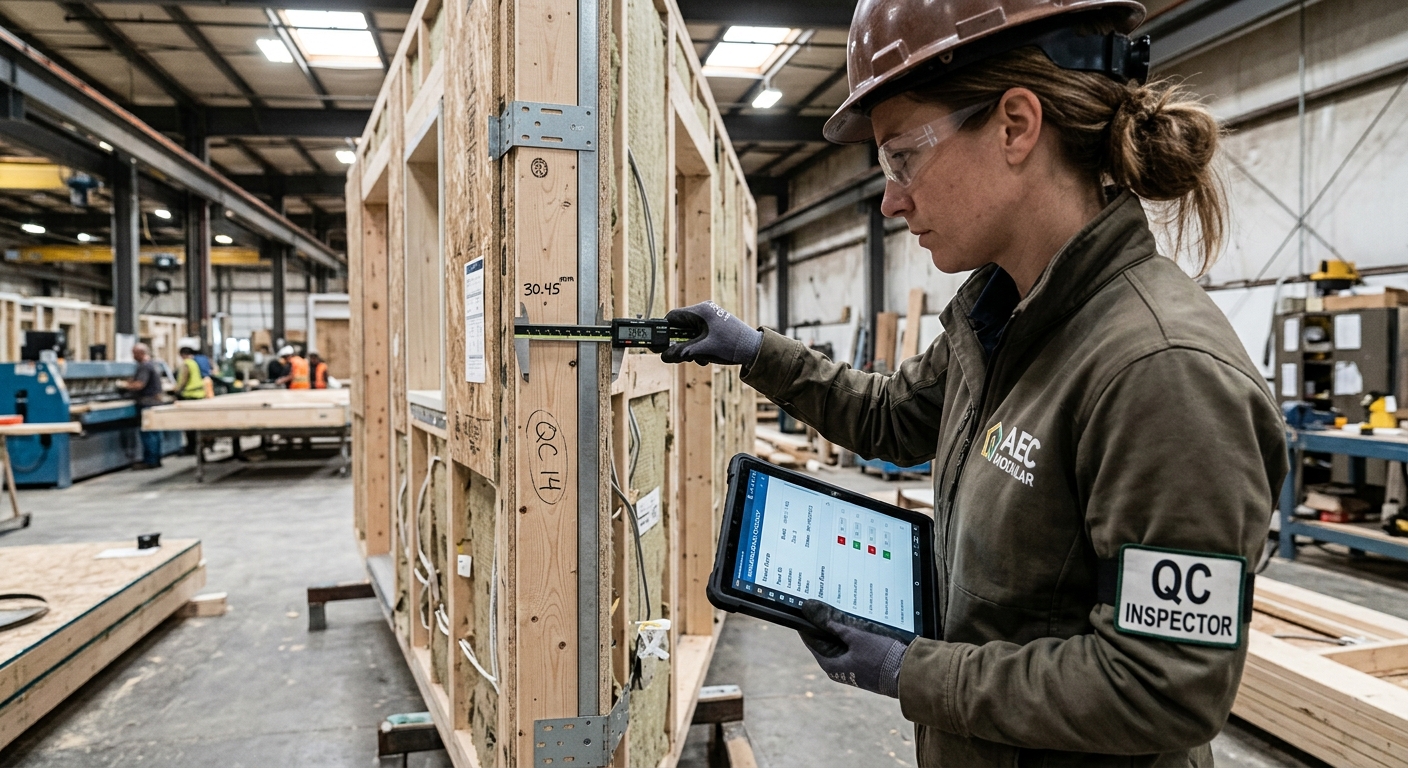
Don’t ask “do you have QC?” Of course they’ll say yes. Instead ask for:
A healthy NCR rate for modular manufacturing sits between 1.5% and 4%. Below that, they’re hiding things. Above 6%, the line isn’t under control.
Also confirm whether they accept third-party inspection — SGS, BV, TÜV, or your own appointed inspector. Suppliers who push back on third-party QC are telling you something. Listen.
Reference logos on a website are decoration. Ask for three project references in the last 24 months that match your project type and destination region. Then call. A 15-minute call with a past client tells you more than any sales pitch.
Useful questions to ask the reference:
If you’re vetting a supplier on carbon performance claims, our breakdown of modular vs. traditional eco construction gives you the questions to validate sustainability numbers — they’re easy to fudge.
Cheap modular comes from cheap inputs. A reputable manufacturer can name their aluminum extrusion supplier, their steel mill, and their insulation source — and produce mill test certificates (MTCs) per batch.
Specific things to confirm:
Ask whether they keep MTCs on file for at least 10 years (the typical structural warranty period). A factory that can’t trace a 2022 aluminum batch in 2026 will leave you stranded if a structural issue surfaces in year seven.
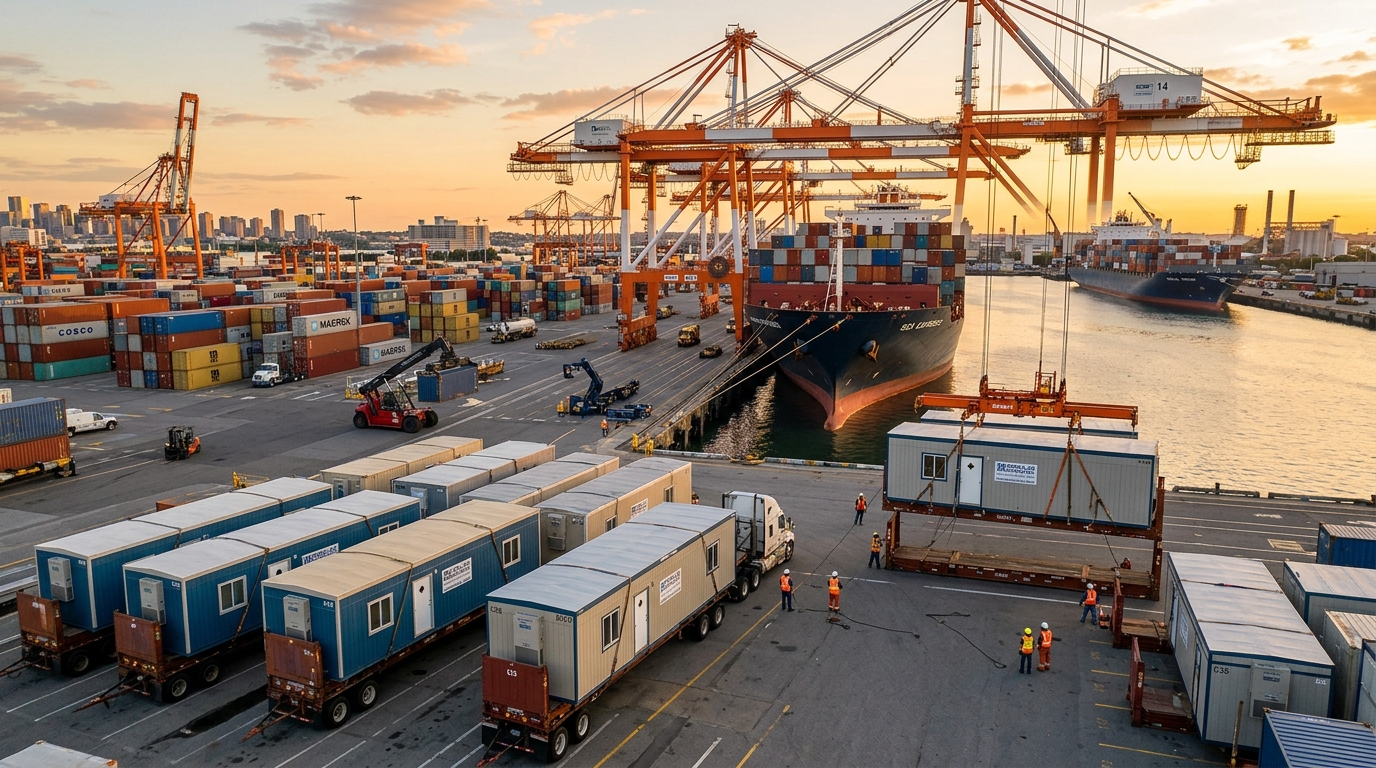
Manufacturing is half the job. Getting modules to a port, into containers (or on flat-racks for oversized units), through customs, and onto a vessel is the other half — and it kills timelines more often than production does.
Ask which countries they’ve shipped to in the last two years. Ask which Incoterms they routinely work under (FOB, CIF, DAP, DDP). Ask who handles their export documentation, certificate of origin, and any commodity-specific paperwork. A supplier who’s only shipped domestically will learn export logistics on your project — at your expense.
For instance, a remote site operator commissioning 40 modular accommodation units for a mining camp in Chile needs DAP-to-port-of-Antofagasta, with HS code documentation matching Chilean import classifications. A manufacturer who’s never shipped to South America will miss the SAG fumigation requirement on timber packaging — and the shipment sits in quarantine for three weeks.
“10-year structural warranty” means nothing without the exclusions. Read the fine print. Common warranty traps:
Negotiate these before signing. A 5-year structural, 2-year MEP, 1-year finish warranty is the realistic baseline. Anyone offering “25-year everything” is bluffing — they won’t exist in 25 years, or the clause will be unenforceable.
Send a deliberately tricky technical question during your evaluation phase. Time the response. A serious supplier replies within 24 hours with a substantive answer — not a sales rep saying “let me check.”
This matters more than you think. During production, you’ll have weekly questions: a finish change, an MEP routing query, a delivery date confirmation. If pre-sale response time is 48 hours, post-sale will be 96. Multiply that across a 6-month build, and you’ve lost weeks.
Also confirm: who is your single point of contact, what’s their direct line, what’s the escalation path, and what time zone do they work in? “We’ll assign someone after the contract” is unacceptable.
The last point everyone forgets. What happens when a window seal fails in year three, or a façade panel needs replacing after a storm in year five? A real manufacturer keeps tooling, drawings, and spare extrusion dies for at least 10 years.
Specific commitments to lock down:
If they can’t answer these, your “25-year building” becomes a 5-year disposable. Browse our completed projects and solutions to see how long-term support gets structured into the contract from day one.
Run all 12 points on every shortlisted supplier, score each from 1–5, and weight by importance to your project. A supplier scoring under 40/60 is a risk you don’t need. Between 40 and 50 is workable with strong contract protections. Above 50, you’ve found someone you can build with.
The biggest mistake we see buyers make? Doing 8 of the 12 checks well, skipping 4, and getting burned on exactly those 4. Discipline is cheap. Project failure is not.
If you’d like a structured walk-through of your specific project — module count, destination, timeline — our team will run the same checklist on ourselves and any supplier you’re comparing us to. Reach out via our contact page, or browse who we are and the patents, certifications, and 80+ countries of delivery experience behind it.




Arabic

English

Spanish
Fill out the form below and our team will get back to you within 24 hours with a tailored solution.
